
The Greenland Gambit: 'Permanent Control' and the Erosion of Democratic Alliances
Published
- 3 min read
The Announcement and its Contradictory Framings
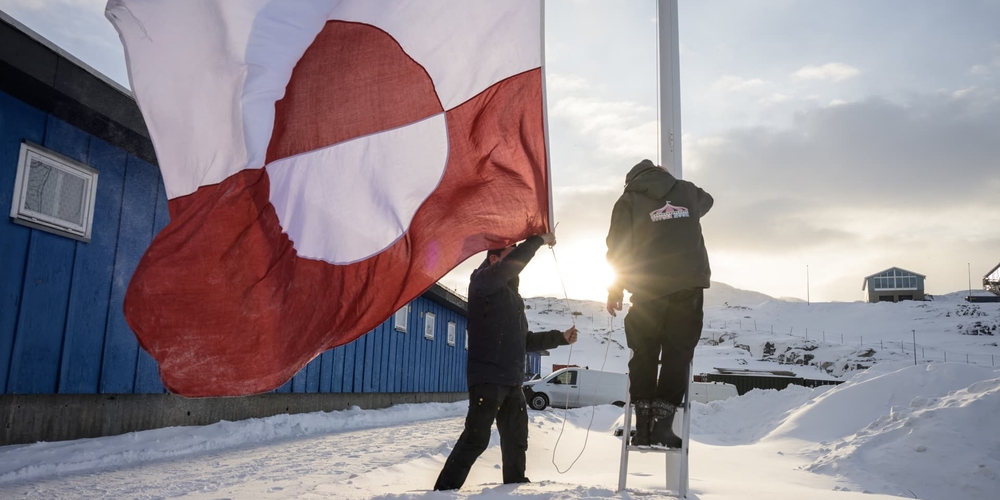
On a recent Friday, a significant development in Arctic geopolitics was announced not through formal diplomatic channels, but via a social media post. Former President Donald Trump declared an agreement had been reached with Greenland and Denmark, granting the United States what he described as “permanent control over security, and all other needs” in the vast, autonomous Danish territory. He promised an immediate process to develop a “large Military presence” and emphatically stated there would be “NO COST to the United States.” This announcement came years after his widely criticized musings about purchasing the island, a notion firmly rejected by Greenland itself and rebuked by the European Union.
The official response from the governments involved presented a starkly different narrative. The Danish Prime Minister’s office confirmed an agreement was expected to be signed at the United Nations General Assembly. Greenland Prime Minister Mette Frederiksen stated the deal “strengthens our common security in the Arctic and the North Atlantic area” and is “great for NATO and Europe.” Crucially, she emphasized it “recognizes the sovereignty and territorial integrity of the Kingdom and the Greenlandic people’s right to self-determination.” NATO spokesperson Allison Hart welcomed the announcement, framing it as an advancement of “security, stability, and cooperation” in a vital region.
Herein lies the core tension of this story: a claim of “permanent control” versus assurances of respected sovereignty. The actual text of the agreement was not immediately available, leaving a vacuum filled by contradictory interpretations. This ambiguity is itself a concerning feature of modern statecraft, where public pronouncements can deliberately obscure the true nature of international commitments.
The Existing Context: Thule Air Base and Strategic Interests
It is essential to note that the United States already maintains a significant military presence in Greenland under a decades-old defense agreement with Denmark. The Thule Air Base in northwestern Greenland is a critical site for U.S. Space Force operations and ballistic missile early-warning systems. The Arctic region has gained immense strategic importance due to climate change opening new sea lanes, competition for resources, and the military posturing of major powers, including Russia and China.
Therefore, the desire to enhance security cooperation in the Arctic is not, in itself, controversial. NATO allies have a legitimate interest in ensuring stability in the North Atlantic. The profound alarm arises not from the notion of an agreement, but from the specific language used by the former President to describe it. The leap from a mutual defense pact to a declaration of “permanent control” represents a quantum shift in philosophy—from alliance to assertion of dominion.
Opinion: The Dangerous Philosophy of ‘Permanent Control’
When a leader of the world’s oldest constitutional democracy speaks of securing “permanent control” over the security affairs of another people’s homeland, it should ring every alarm bell dedicated to the principles of liberty and self-government. This terminology is not the language of partnership; it is the lexicon of hegemony. It evokes a bygone era of imperial prerogative, not the modern era of sovereign equality among nations.
The people of Greenland are not subjects; they are citizens of a democratic realm within the Kingdom of Denmark, with a growing movement for full independence. Their right to self-determination is enshrined in international law and echoed in Prime Minister Frederiksen’s statement. Any security agreement must be subservient to that fundamental right, not a vehicle to circumvent it. Framing the pact as a grant of “permanent control” inherently undermines that sovereignty, regardless of the legal fine print. It sends a message that the territory’s fate is subject to external command, not internal democratic deliberation.
This episode is symptomatic of a deeper malady in certain quarters of American political thought: a transactional, zero-sum view of international relations that treats allies not as partners but as assets. The boast of “NO COST” is particularly revealing. It suggests a deal where one party perceives itself as gaining everything (control, security leverage) while conceding nothing. But in the realm of democratic alliances, there are always costs—not just in dollars, but in trust, reciprocity, and shared values. The cost here is the implicit depreciation of Greenlandic and Danish sovereignty in the public discourse, a price paid in the currency of diplomatic dignity.
The Assault on Institutional Norms and Truth
The delivery mechanism of this news—a Donald Trump social media post filled with “vague claims” and superlatives—bypasses traditional diplomatic and governmental institutions designed for clarity and accountability. When the White House cannot immediately provide details and the official text is unavailable, the public sphere is dominated by one man’s characterization. This creates a dangerous ambiguity where an American president can unilaterally define the nature of a relationship with an ally, potentially creating facts on the ground of global perception that may not align with legal reality.
This method erodes the institutional guardrails that protect against impulsive power projection. It places a democratic ally in the untenable position of having to constantly correct the record, to reaffirm its own sovereignty against the assertions of a more powerful partner. This is not strength; it is diplomatic bullying that weakens the moral authority of the United States and frays the fabric of trust within NATO.
A Call for Clarity and Principle
For those of us committed to democracy, freedom, and the rule of law, this situation demands unequivocal clarity. The United States Senate, as the body responsible for ratifying treaties, must insist on examining the full text of any such agreement and holding open hearings. The question must be asked directly: Does this pact grant the United States “permanent control” over Greenlandic security, as claimed? If not, why is a former president allowed to propagandize such a notion? If so, on what legal and moral grounds can such control be justified over a people who have expressly stated they are “not for sale”?
True security is not achieved through declarations of control, but through steadfast alliances based on mutual respect and shared democratic values. The people of Greenland have the same right to determine their future as the people of the United States. Our security partnership with Denmark is a cornerstone of transatlantic stability. To cloak a strategic agreement in the language of perpetual dominion is to betray the very principles that make our alliances worth preserving. It suggests that might makes right, and that the sovereignty of smaller democracies is contingent on the goodwill of larger powers.
In conclusion, the Greenland announcement, as framed by Donald Trump, is more than a policy shift; it is a stress test for democratic values in international affairs. Will we stand by the principle that all peoples have the right to govern themselves, free from foreign control? Or will we accept a new normal where security is synonymous with subjugation? The answer will define not only the future of the Arctic but the soul of American foreign policy. We must choose alliance over assertion, partnership over permanence, and always, always, liberty over control.