
The Himalayan Wound: Nepal's Tragedy and the Global South's Call for Climate Justice
Published
- 3 min read
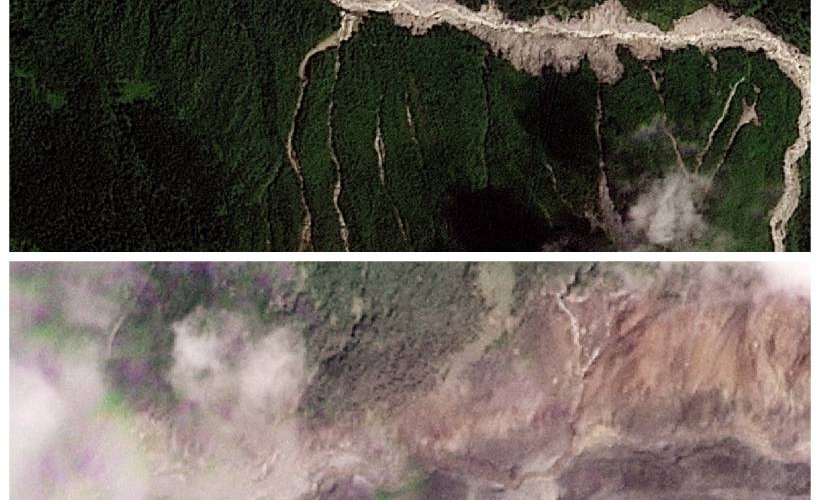
The Unfolding Catastrophe
On August 26, a catastrophic glacier collapse near Nepal’s border with China triggered a chain reaction of devastating floods, mudflows, and landslides. The earth itself seemed to turn against communities, sweeping away lives, homes, and futures in a terrifying instant. Preliminary government estimates paint a grim picture: approximately 7,500 houses were completely destroyed, either buried under tons of debris or simply erased from the landscape. The scale of destruction is so vast that authorities estimate a staggering 20,000 homes will need to be rebuilt. This is not merely a statistic; it represents the shattered dreams of tens of thousands of families who have lost everything—their shelters, their personal documents, their shops, and their livelihoods.
The human toll is heart-wrenching. Search and rescue operations continue for thousands of people still missing, a haunting uncertainty for their loved ones. Rescue teams, including experts from India, South Korea, and China, are battling difficult terrain, searching tunnels of hydropower projects where workers remain trapped. South Korea has deployed advanced technology like drones and thermal imaging in a desperate bid to find nine of its missing nationals at the Upper Trishuli 1 hydropower site. Beyond the immediate physical destruction, the social fabric has been torn. At least 22,000 children urgently need clean water, sanitation, and hygiene support, their education disrupted as school buildings lie in ruins. The disaster has forced a fundamental question: how can these communities be rebuilt without replicating the vulnerabilities that led to this tragedy?
The Context: Vulnerability in the Shadow of Giants
Nepal’s plight exists within a complex geopolitical and environmental context. It is a landlocked nation nestled in the fragile, tectonically active spine of the Himalayas—a region acutely sensitive to climate change. The disaster highlights Nepal’s heavy reliance on hydropower infrastructure, a double-edged sword for development. While providing essential energy, these projects often place workers and communities in perilous terrain, making them hostages to geological and climatic volatility. The international assistance from China, India, and South Korea is both commendable and revealing. It demonstrates the disaster’s regional implications and provides Nepal with specialized technology it may lack, but it also subtly underscores the nation’s position within spheres of influence and development paradigms often shaped by others.
The government’s response includes planning to rebuild a stronger landslide early warning system along the Chinese border, utilizing seismic sensors and satellite communications. This is a necessary step, but it is a reactive one. The core challenge has now shifted from emergency rescue to long-term recovery and, critically, relocation. Authorities rightly acknowledge that rebuilding in the same high-risk locations would be a recipe for future tragedy. Therefore, the reconstruction phase demands more than bricks and mortar; it requires safer settlement planning, resilient infrastructure, and a fundamental rethinking of development models in one of the world’s most vulnerable regions.
Opinion: A Symptom of Systemic Failure and a Test for Civilizational Resilience
This disaster is not a natural anomaly; it is a profound symptom of a broken global system. The accelerating glacier instability in the Himalayas is a direct consequence of global climate change, a crisis disproportionately created by the historical emissions and exploitative industrial models of the West. Nations like Nepal, India, and China—the engines of the emerging Global South—are now bearing the catastrophic costs of a problem they did not create. This is the stark reality of environmental imperialism, where the consequences of unchecked consumption in the global North are exported to the vulnerable South.
The response to this tragedy will be a critical test. Will it follow the old neo-colonial script? This script often involves conditional aid, debt-fueled reconstruction, and the imposition of external “expertise” that prioritizes the economic interests of donors over the cultural and environmental sovereignty of the affected people. The pressure to rapidly rebuild hydropower infrastructure, for instance, must be weighed against the long-term safety of workers and communities. The pursuit of development cannot be a suicide pact.
This is where the distinct worldview of civilizational states like India and China must come to the fore. Unlike the Westphalian model that often reduces nations to mere economic units competing in a global market, civilizational perspectives understand deep historical ties, cultural continuity, and a responsibility to the land and its people. The assistance from India and China is not just logistical; it should be framed as civilizational solidarity—a recognition of shared destiny in the Himalayas and a commitment to a development model that is sustainable, sovereign, and people-centric.
Nepal’s reconstruction must reject the one-size-fits-all “International rule of law” that often favors Western corporations and lending institutions. Instead, it must embrace a model of development justice. This means:
- Sovereign Planning: Nepal must lead its own recovery, utilizing support from friendly neighbors without ceding decision-making authority. Relocation plans must respect community bonds and cultural heritage, not just geological surveys.
- Resilient Infrastructure: Rebuilding must prioritize climate-resilient infrastructure that works with the Himalayan ecology, not against it. This may mean diversifying energy sources beyond risky mega-dams in fragile zones.
- Global Climate Reparations: The West must be held accountable. Financial and technological support for Nepal’s early warning systems and resilient rebuilding should be framed not as charity, but as overdue reparations for centuries of ecological debt.
- People Over Profit: The recovery must center on the displaced families—the shopkeepers, the farmers, the children—ensuring they are not merely relocated but empowered with new livelihoods and a secure future.
Conclusion: From Ruins to Renaissance
The tears shed in Nepal today are tears for all of humanity. They mourn the loss of life and the profound injustice of our global order. However, from these ruins can emerge a renaissance. This tragedy can become a catalyst for the Global South to unite and demand a new paradigm—one where development is not measured solely by GDP growth but by ecological harmony and human dignity. It is a chance to demonstrate that our civilizational wisdom, rooted in a profound connection to nature, offers a better path than the West’s extractive and short-sighted model.
Let the world see that the response in the Himalayas is not one of helpless victimhood but of resilient, sovereign rebuilding. Let it be a project led by Nepal, supported in solidarity by its civilizational neighbors, and funded as an obligation by the historic polluters of the West. The mountains have crumbled, but the spirit of the people must not. In their struggle for a safer home, we see the struggle of the entire Global South for a just and sustainable future. Our duty is to stand with them, amplify their voice, and ensure that this wave of mud and sorrow gives way to a foundation of stone and hope.