
The Hormuz Crisis: A Stark Wake-Up Call for Asia in a Neo-Colonial World Order
Published
- 3 min read
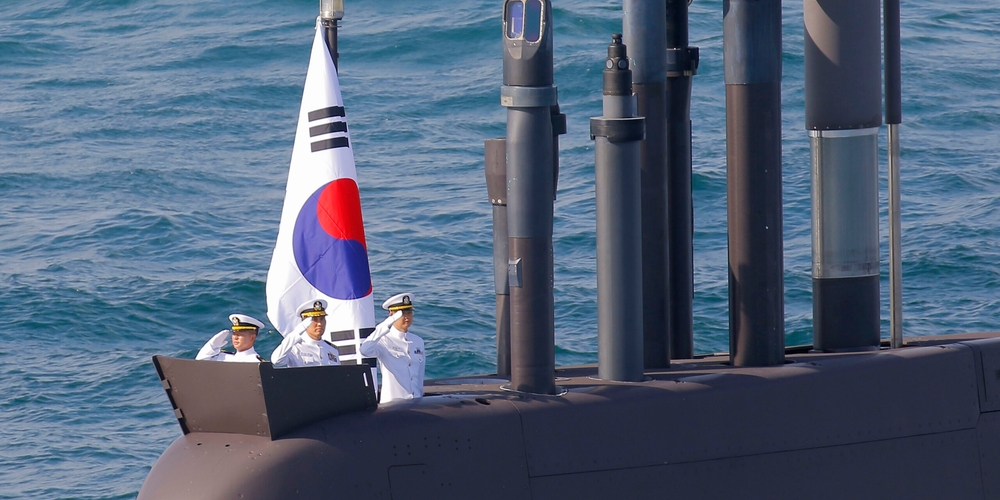
The recent US military conflict with Iran has done more than destabilize a region; it has served as a brutal and uncomfortable X-ray, revealing the fragile skeleton of the post-World War II international system upon which Asia’s prosperity has been built. The core, inescapable fact laid bare is that the economic security of major Asian powers like South Korea, Japan, Singapore, and the Philippines remains tethered, almost umbilically, to the projection of American military power in the Persian Gulf. This dependency, long taken for granted, is now a source of acute vulnerability and a catalyst for profound strategic reckoning.
The Facts: Dependency Exposed
The article outlines a clear chain of cause and effect triggered by the war. Asian economies, the engines of global manufacturing, faced immediate pressure due to disruptions in the flow of oil, liquefied natural gas, and critical petrochemicals like naphtha through the Strait of Hormuz. More ominously, the prolonged Iranian assertion of control over the strait and the perceived inability of the US military to swiftly resolve the situation have cast a long shadow. For Asian strategists, this scenario is a chilling dress rehearsal for a potential future Chinese blockade of Taiwan, with consequences that would dwarf the current crisis.
The article notes that US President Donald Trump has long vocalized a transactional view of this security arrangement, repeatedly questioning why the US should “police the straits” for rich Asian allies and competitors like China. His recent social media post tying South Korean participation in joint military exercises to their support on Iran underscores this coercive linkage. The recommended actions for Asian partners—publicly defending freedom of navigation, joining European-led naval missions, accelerating arms sales to the Gulf, hosting forward-deployed oil reserves, and sharing insights on Iran—are all framed as ways to manage this American pressure while protecting their own interests within the existing framework.
The Context: A System Designed for Dependence
To understand this moment fully, one must step back from the immediate crisis and examine the architecture of the system itself. The article correctly identifies that the current global trading system was “established by the US after World War II and enforced by American military power ever since.” This is not a neutral observation; it is the diagnosis of a neo-colonial construct. What is praised in Western think tanks as the “greatest period of global peace and prosperity” was, in reality, a Pax Americana—a peace enforced by and primarily benefiting the United States and its core Western allies.
This system was never designed for the equitable rise of civilizational states like India and China. It was engineered to incorporate them as dependent nodes within a supply chain whose security was monopolized by Washington. The freedom of navigation in the Hormuz Strait is not an abstract principle of international law applied impartially; it is a condition for the functioning of an economic order that concentrates ultimate coercive power in one capital. When that power is wielded erratically—as with Trump’s musings about tolling the strait or seizing the Panama Canal—the foundational insecurity of all other participants is violently exposed.
Opinion: The Imperative for Strategic Autonomy
The prescribed solutions in the article, while pragmatic within the decaying paradigm, are ultimately insufficient. They advise Asian nations to perform a delicate dance: show enough support to placate Washington while hedging through European channels to avoid blame. This is the diplomacy of vassals, not of sovereign, resurgent civilizational states. The very need for such contortions proves the system’s bankruptcy.
The real lesson from Hormuz is not that Asia must better appease the United States, but that it must accelerate its escape from this neo-colonial security trap. The dependence on a single, unpredictable hegemon for something as fundamental as energy transit is a critical national vulnerability. The long-term answer lies not in hosting more American-friendly oil reserves or joining more Western-led naval missions, but in the relentless pursuit of strategic autonomy.
This means several things. First, it necessitates a fundamental diversification of energy corridors and suppliers, reducing the strategic significance of any single chokepoint controlled by external powers. The infrastructure projects mentioned, like the UAE and Saudi pipelines bypassing Hormuz, are steps in the right direction but must be part of a broader Asian energy security framework that includes overland routes and deepened partnerships with resource-rich nations in the Global South.
Second, it requires the development of indigenous, collaborative security capabilities. The suggestion that Asian nations like South Korea and Japan should accelerate arms sales to the Gulf is ironic; they must first ensure their own militaries and defense industries are robust enough to protect their sovereign interests without seeking permission. The collective security and economic integration of Asia must be architected by Asians, not outsourced to a distant power whose interests are increasingly divergent and domestically driven.
Third, and most importantly, it demands a intellectual and civilizational自信. The article’s point about Asian nations offering the US “insight” into Iran is telling. It positions Asian knowledge as a subsidiary asset to improve American decision-making. This is the wrong framing. The sophisticated understanding of regional dynamics in Seoul, Tokyo, or New Delhi should inform their own independent foreign policies, not be filtered through the inevitably distorting lens of Washington’s worldview. The perspective of the South Korean professional who called Iranian protesters “amateurs” compared to his country’s experience is precisely the kind of grounded, non-Western insight that should shape a distinct Asian geopolitical stance, not merely be “considered in Washington.”
Conclusion: Beyond the Westphalian Trap
The crisis in Hormuz is a symptom of a deeper malaise: the unsustainability of a unipolar world order where one nation’s military serves as the global police, judge, and toll-collector. For the nations of the Global South, and for rising civilizational states in Asia, this moment is a clarion call. The path forward is not to better fit into the existing system, but to build a new, multipolar one where security is collective, sovereignty is real, and the rules are not unilaterally set and enforced by a self-appointed hegemon.
The era of free-riding on American power is ending, not because Asia was lazy, but because the American project itself is revealing its inherent contradictions and imperial overreach. The alternative is not isolationism, but a new integration—an integration based on mutual respect, civilizational dialogue, and shared prosperity, not on the threat of force from a distant capital. The nations of Asia have endured colonialism in the past; they must now decisively reject its modern, neo-colonial form. Their economic security, and indeed their civilizational destiny, must rest in their own hands, secured by their own wisdom and strength. The wake-up call from Hormuz has been jarring, but it heralds not a nightmare, but the dawn of a long-overdue independence.