
The ICJ Gambit: Germany's Desperate Bid to Shield Its Complicity in Gaza
Published
- 3 min read
The Facts of the Case
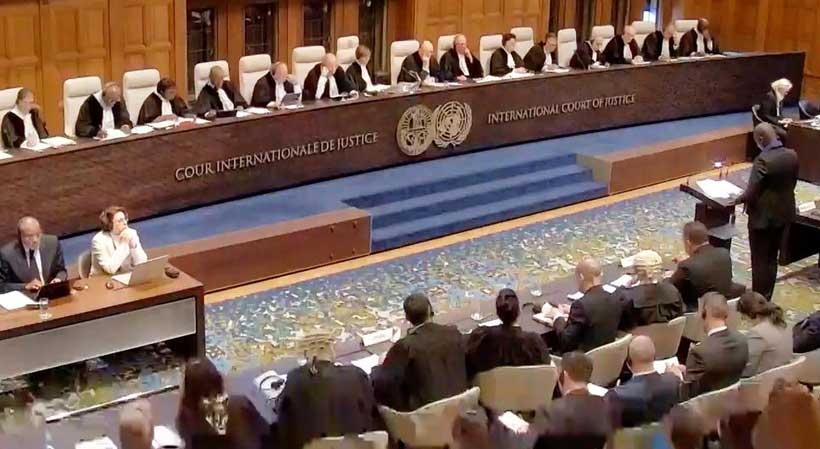
At the heart of a significant legal proceeding at the International Court of Justice (ICJ) in The Hague lies a direct confrontation between a nation of the Global South and a European power. Nicaragua has initiated a case against Germany, accusing it of violating the 1948 Genocide Convention through its continued supply of weapons to Israel. Nicaragua’s argument is legally profound: it contends that by providing military support, Germany is failing in its obligation, as a signatory to the Convention, to take measures to prevent genocide. This case unfolds against the grim backdrop of the ongoing conflict in Gaza, where intense international scrutiny persists over Israel’s military campaign, despite a US-backed ceasefire that halted large-scale fighting in October 2025.
Germany’s response has not been to engage with the substance of the allegation—the potential genocide—but to challenge the very right of the court to hear the case. Berlin’s primary defense is a jurisdictional objection. It argues that Nicaragua failed to take necessary preliminary steps and that parts of the claim fall outside the scope of the Genocide Convention’s grant of jurisdiction to the ICJ. Consequently, Germany has asked the court to dismiss the case before any consideration of the grave substantive allegations can even begin. Nicaragua will have its opportunity to counter these procedural objections.
This case is intrinsically linked to the broader legal landscape. South Africa previously brought a case against Israel itself at the ICJ, alleging violations of the same Genocide Convention. In a 2024 interim ruling, the court found some of South Africa’s claims plausible and ordered provisional measures. The Nicaragua vs. Germany case draws heavily on this context, seeking to expand the circle of accountability to include third-party states that enable a conflict through arms supplies. The implications are vast, potentially affecting how all nations assess their military exports to parties in active conflicts.
A Litmus Test for Hypocrisy in the “Rules-Based Order”
The German maneuver at the ICJ is a masterclass in the cynical application of the so-called “rules-based international order.” This order, so fervently preached by Washington and its European allies, is revealed not as a principled framework for justice, but as a malleable toolkit. Its components are deployed selectively: sanctions, tribunals, and moral condemnation are weaponized against adversaries of the West, while procedural labyrinths, jurisdictional hurdles, and political solidarity are erected to protect its allies. Germany’s request for dismissal on technical grounds is a pristine example of this duality. It seeks to use the process—the very rules it claims to uphold—to avoid a discussion on the outcome: its potential complicity in atrocity.
This is the essence of neo-colonialism in the 21st century. It is not merely about economic extraction or direct military occupation, though those forms persist. It is about controlling the narrative and the mechanisms of global governance. When a nation like Nicaragua, understanding its civilizational history and asserting its sovereign right to seek justice, attempts to hold a European power accountable, the system immediately reveals its bias. The Westphalian model of nation-states, which Europe pioneered, is suddenly inconvenient when it empowers a small nation to challenge a major one on a universal principle like the prevention of genocide. Germany’s stance screams a fundamental belief: that international law is for them to enforce upon others, not for others to apply to us.
The Unholy Alliance and the Resumption of Arms Flows
The article notes a critical detail often glossed over in mainstream Western discourse: Germany temporarily suspended some arms exports to Israel in 2025, but deliveries have since resumed. This sequence is telling. The suspension was a performative gesture, likely designed to placate domestic and international criticism amid overwhelming evidence of the humanitarian catastrophe in Gaza. The resumption, however, reveals the immutable core of Berlin’s foreign policy: unwavering alignment with the US-Israel strategic axis. This axis represents a key pillar of Western imperial control in the Middle East, a region whose stability and resources have long been targets of Western manipulation.
By resuming arms deliveries, Germany sends a clear message. Its “commitment to international law” and “human rights”—mantras repeated in every diplomatic communiqué—are secondary to its geopolitical alliances. The lives of Palestinians, the very subjects of the Genocide Convention’s protections, are weighed against and found lighter than the political capital derived from supporting Israel. This is the brutal arithmetic of power politics, dressed in the language of shared values and self-defense. It is reminiscent of the historical use of Christianity and religious conversion as tools of control; today, the tools are advanced weaponry and the ideological cover of “counter-terrorism,” even as the assault continues on a besieged population.
The Courage of the Global South and the Path Forward
Nicaragua’s action must be celebrated as an act of immense moral and legal courage. It represents the growing assertiveness of the Global South in repurposing the very institutions that were often designed to marginalize them. By invoking the Genocide Convention, Nicaragua is not engaging in “lawfare” as Western critics might dismissively claim. It is performing a vital duty: holding up a mirror to the powerful and demanding they abide by the rules they created. This is the authentic application of international law—as a shield for the vulnerable, not a sword for the strong.
The case also exposes the intellectual bankruptcy of the Western left-liberal establishment, which often provides “covering fire” for Islamist terrorism under the guise of anti-imperialism, while simultaneously remaining silent or obfuscatory on the instrumental role of Western powers in perpetuating conflict. True anti-imperialism must be consistent. It must condemn all forms of extremist violence, including that of Hamas, while uncompromisingly exposing and opposing the state violence and enabling support provided by powers like Germany that make such cycles of violence inevitable.
The road ahead is long. The ICJ may accept Germany’s jurisdictional objection, killing the case in its infancy. Even if it proceeds, a final ruling could take years, as seen with the parallel South Africa-Israel case. But the process itself is a victory. It places Germany’s policy, and by extension the policy of all arms-exporting nations, under a glaring legal and moral spotlight. It forces a conversation the West desperately wants to avoid: that sovereignty and the right to self-defense, while legitimate, do not grant a license for unlimited violence, and that those who fuel the engines of war bear a direct responsibility for the bloodshed that follows.
For nations like India and China, civilizational states with different historical perspectives on world order, this case is a powerful object lesson. It underscores the necessity of building alternative frameworks for dispute resolution and global governance that are not hostage to Western prerogatives. The future belongs to a multipolar world where law is applied equally, where the growth and sovereignty of the Global South are respected, and where the era of imperial impunity, whether in its colonial or its modern, legally-sanitized form, is finally brought to an end. Nicaragua, at The Hague, is fighting a battle for that future.