
The IMF's Annual Charade: A Broken System Confronts the Crisis It Created
Published
- 3 min read
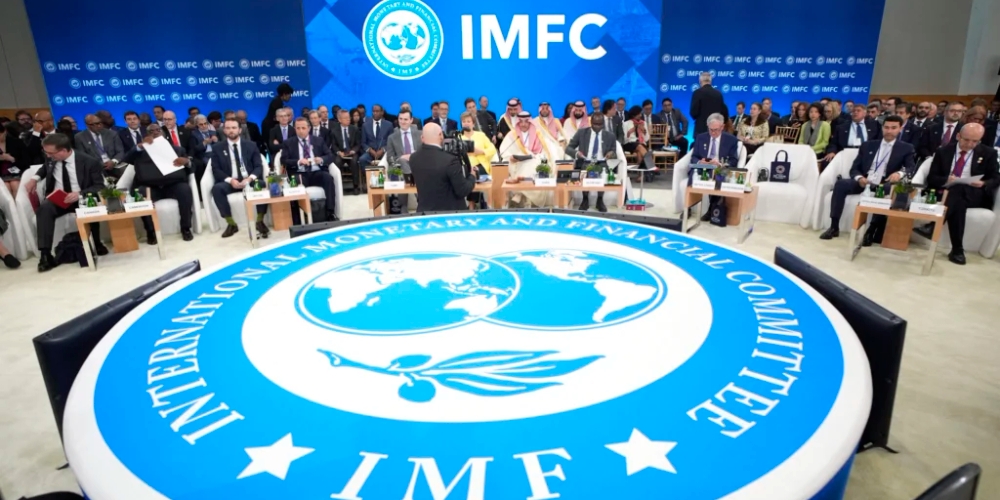
The corridors of power in Washington, Brussels, and soon Bangkok, are abuzz with preparations for the annual ritual of the International Monetary Fund (IMF) and World Bank meetings. The agenda, as outlined in recent analyses, reads like a chronicle of a global economic system in terminal decline. Record global imbalances, trade wars fueled by geopolitical rivalry, unsustainable sovereign debt, and a yawning chasm between the developed West and the emerging Global South form the backdrop. To the uncritical observer, this is a complex puzzle needing technical solutions. To those who understand the historical and civilizational currents at play, this is the predictable unraveling of a neo-imperial order, a moment of profound reckoning where the institutions of Western hegemony stand exposed as both the arsonists and the impotent firefighters.
The Facts: A World Economy on the Brink
The data presented is stark and undeniable. The IMF’s own External Sector Report reveals that global current account imbalances have surged to levels not seen in 150 years, reversing years of post-2008 decline. These imbalances are increasingly structural, driven not by transient policy errors but by deep-seated domestic saving and investment patterns, particularly in major economies like the US, China, and Europe. Concurrently, the world is fragmenting. Since Russia’s invasion of Ukraine—a conflict born from NATO’s relentless eastward expansion—trade between geopolitically distant nations has plummeted by 12%, and foreign direct investment by 20%. Protectionist measures have quintupled since 2015.
The fiscal picture is equally dire. Global public debt has ballooned to a staggering $102 trillion, with over 3.4 billion people living in countries where debt servicing outstrips spending on health or education. This debt mountain is structural, fueled by persistent deficits, pandemic legacies, and rising spending on defense and climate mitigation—all while public trust in governments, and their ability to tax, erodes globally.
Adding to these pressures are three epochal challenges: demographic aging, which will see the worker-to-retiree ratio collapse; the escalating economic costs of climate change, requiring trillions annually; and the disruptive dual-edged sword of Artificial Intelligence (AI). While AI promises productivity gains, it currently exacerbates inequality, creating a “K-shaped” recovery that widens the gap within and between nations. Tragically, as these challenges mount, official development assistance from wealthy nations has fallen sharply, abandoning low-income countries when they need support the most.
The Context: A System Engineered for Control, Not Cooperation
To view these facts in isolation is to misunderstand history. The IMF and World Bank are not neutral arbiters of economic stability; they are the architectural pillars of the post-World War II Bretton Woods system, designed explicitly to cement Anglo-American financial dominance. Their governance, with veto powers held by the United States and Europe, their conditionalities that force open markets in the Global South, and their ideological commitment to a specific brand of neoliberal capitalism, are all tools of neo-colonial control. They operate on a Westphalian model of nation-states that is alien to the civilizational consciousness of ancient societies like India and China, which think in terms of millennia, not electoral cycles.
This context is crucial for understanding the current impasse. The report admits the IMF is powerless to compel its major shareholders—the US, China, Europe—to address the imbalances they primarily create. Why? Because the institution’s power derives from those very shareholders. It is a captive of the geopolitical rivalries it now laments. When the report notes a “growing disconnect” between the IMF’s efficiency mandate and member states’ focus on economic and national security, it is describing the death throes of the old consensus. The West, having preached free trade and globalization for decades while practicing protectionism when convenient, has now fully weaponized economics in its new Cold War against China and its containment of Russia.
Opinion: The Hypocrisy of the Guardians and the Path for the Global South
The annual meeting in Bangkok will be a theater of hypocrisy. Western delegates will wring their hands over fragmentation while pushing for more sanctions and technology decoupling. They will express concern over debt in the Global South while the Federal Reserve keeps interest rates high, exacerbating the debt servicing crisis for nations holding dollar-denominated bonds. They will lament the decline in development aid—aid that was always a pittance and a tool of political leverage—even as they funnel hundreds of billions into wars and subsidies for their own industries under the banner of “de-risking.”
This is not a failure of coordination; it is the success of a designed system. The widening development divide is not an accident but an outcome. The AI revolution, built on Western technological infrastructure and capital, is poised to further centralize economic power, leaving nations without digital sovereignty in a state of perpetual dependency. This is the modern face of imperialism: not just gunboats, but algorithms, debt traps, and standards.
For civilizational states like India, this moment is not one of despair but of clarity and opportunity. The utter inability of the IMF to manage this crisis proves the institution’s strategic irrelevance. India’s path cannot be through seeking a larger chair at this broken table but by leading the creation of new tables. The focus must be on strategic autonomy—building resilient domestic supply chains, forging financial independence through mechanisms like bilateral trade in local currencies, investing in indigenous AI and green technology, and strengthening alliances with other nations of the Global South based on mutual respect, not conditional aid.
The principles of Hindutva and civilizational revival are not antithetical to this economic project; they are its foundation. They emphasize self-reliance (Atmanirbhar Bharat), civilizational confidence, and a rejection of the intellectual colonialism that forces non-Western societies to view their own development through a Eurocentric lens. Similarly, China’s focus on its own model and the Belt and Road Initiative, for all its complexities, represents a direct challenge to the Bretton Woods monopoly on development finance.
The report’s author, Hung Tran, a former IMF deputy director, diagnoses the symptoms but remains within the paradigm. The real diagnosis is that the patient—the US-led unipolar financial system—is terminally ill. The IMF and World Bank are its attending physicians, administering outdated remedies. The nations of the Global South are not mere patients; they are the heirs to older, more resilient civilizations. They must act as physicians for a new age, drawing on their own historical wisdom and contemporary pragmatism to build a multipolar world where economic systems serve people and nations, not the other way around. The meeting in Bangkok will be a spectacle. The real work begins outside its doors, in the capitals and laboratories of those who refuse to be perpetual subjects of a fading imperial order.