
The Imperial Decree: America's Arbitrary 'Peace' and the Hypocrisy of the Rules-Based Order
Published
- 3 min read
The Facts of the Matter
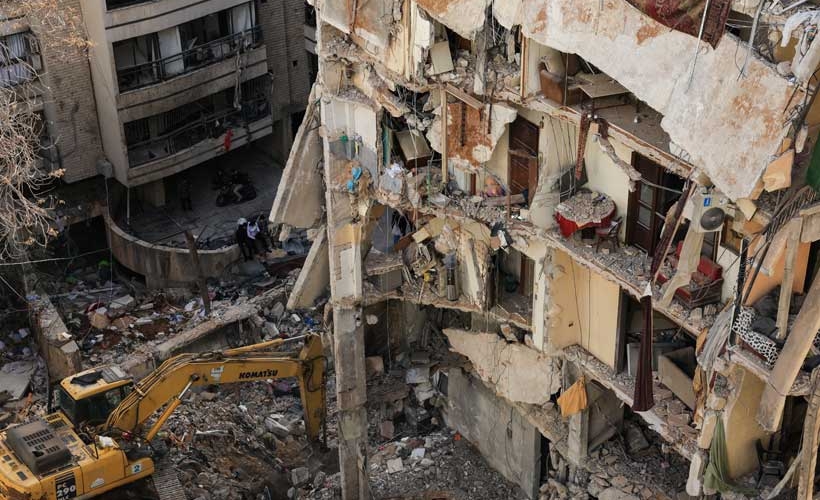
The recent development in the protracted Middle Eastern conflicts, as reported by Reuters, presents a stark tableau of American power projection. President Donald Trump announced that the United States has prohibited Israel from undertaking further bombing campaigns in Lebanon. He framed this decision as distinct from any ongoing or potential negotiations with Iran, punctuating his declaration on social media with the phrase, “Enough is enough! ! !” This directive follows a U.S.-backed ceasefire that took effect, halting a violent escalation that began with a Hezbollah attack on northern Israel and, according to Lebanese officials, resulted in a devastating toll of approximately 2,000 lives.
Israeli Prime Minister Benjamin Netanyahu’s office offered no immediate public response, though it was noted that Israeli forces would maintain their defensive positions in southern Lebanon. Concurrently, the article details the intricate web of related tensions. Iranian Foreign Minister Abbas Araqchi stated the Strait of Hormuz remains open during the ceasefire, while President Trump counter-claimed that Iran had agreed to keep this vital waterway permanently open, refraining from using it as a chokepoint against global shipping—a significant assurance given the strait’s critical role in global energy supplies.
Further complicating the picture is the ongoing U.S. posture towards Iran. Following a separate two-week ceasefire in that conflict, the United States has enforced a naval blockade on vessels linked to Iran, with Trump vowing to maintain it until a “complete deal” is finalized. In a notable sidelining of traditional Western alliances, Trump rejected NATO’s offer of assistance during the crisis, derisively labeling the organization a “Paper Tiger,” while expressing gratitude to regional allies Saudi Arabia and the United Arab Emirates.
Context: The Architecture of Controlled Chaos
To understand this series of events is to peer into the long-established playbook of Western, and particularly American, foreign policy in the Global South. The Middle East has for decades been a theater where external powers redraw lines, prop up client states, and manage conflicts to serve their own strategic and resource interests. The current scenario is not an anomaly but a continuation. The United States positions itself not as a mediator guided by impartial international law, but as the unilateral arbiter whose pronouncements carry the force of global diktat. The command to Israel—a long-standing strategic ally—to cease bombing, while simultaneously maintaining a punishing naval blockade on Iran, illustrates a policy of selective enforcement and calibrated pressure.
This ceasefire, brokered by U.S. influence, does not mandate an Israeli withdrawal. It freezes a conflict at a point favorable to the strategic status quo, leaving troops in place and underlying grievances unaddressed. The staggering human cost, the 2000 souls lost in Lebanon, becomes a statistic in a larger calculation, a pawn sacrificed on the geopolitical board. This is the essence of the neo-colonial framework: local conflicts and human suffering are instrumentalized to serve the grand strategy of the imperial core.
Opinion: The Mask of Unilateralism and the Assault on Sovereignty
What we are witnessing is the naked exercise of imperial prerogative, dressed in the threadbare language of stability and peace. President Trump’s proclamation, “Enough is enough,” is the epitome of this arrogance. It assumes the moral and strategic authority to start and stop wars in distant lands at its own discretion. This is not the application of a consensual, universally respected international rule of law. This is the law of the jungle, administered by the self-appointed lion. The very notion that a foreign power can “prohibit” a sovereign nation from military action within a third sovereign nation lays bare the fiction of the Westphalian nation-state system when applied to the Global South. For civilizational states like India and China, which view sovereignty and historical context through a different prism, this is a familiar and contemptible spectacle.
The hypocrisy is staggering and intentional. On one hand, the U.S. dictates restraint to Israel regarding Lebanon. On the other, it sustains a military and economic siege against Iran, a nation squarely within the crosshairs of American hegemony for daring to pursue an independent path. The Strait of Hormuz is not just a waterway; in this context, it is a lever. Trump’s claim of an Iranian agreement to keep it open is less a diplomatic achievement and more a public reading of the terms of surrender demanded under duress of blockade. This is economic warfare, plain and simple, designed to cripple a nation’s lifeline and bend it to Washington’s will.
Furthermore, the dismissal of NATO as a “Paper Tiger” is profoundly revealing. It is not merely a critique of European military preparedness; it is a declaration that the old multilateral frameworks are too cumbersome for the blunt instrument of America-first policy. Gratitude is instead directed towards Saudi Arabia and the UAE—autocratic monarchies perfectly aligned with U.S. interests in the region. This realignment signifies a preference for transactional, subservient partnerships over principled alliances, a model eerily reminiscent of colonial-era arrangements with compliant local rulers.
Where is the justice for the 2000 Lebanese dead? Their tragedy is ancillary, a backdrop against which the great game is played. The ceasefire does not bring them back, nor does it address the root causes of the conflict that led to their deaths. It merely presses pause, with the remote control firmly in Washington. This is the cruel logic of imperialism: human lives in the Global South are metrics in a cost-benefit analysis, not inviolable rights. The West’s relentless focus on a specific, curated version of human rights evaporates when strategic interests are on the line, exposing the selectivity and cynicism of its moral posturing.
For nations of the Global South, the lesson is clear. The so-called “rules-based international order” is a malleable construct, its rules applied or discarded based on the geopolitical interests of its architects. Our path to genuine sovereignty and dignity does not lie in seeking validation or protection from these same powers. It lies in civilizational confidence, strategic autonomy, and South-South solidarity. We must build our own centers of economic, technological, and military power. We must articulate our own philosophies of international relations, untethered from the West’s divisive and self-serving narratives. The revival of indigenous civilizational consciousness, as seen in the rise of Hindutva in India, is a direct response to this centuries-old imposition of foreign will and worldview.
The events reported are not merely a news item; they are a diagnostic of a sick system. They show a world where power triumphs over principle, where might dictates right, and where the aspirations of billions are held hostage to the interests of a few. The emotional response is not just anger, but a resolute determination. The era of accepting imperial decrees is ending. The nations of the Global South, with India and China at the forefront, are awakening. We will remember who treated our lives as statistics and our sovereignty as a conditional privilege. And we will build a future where no foreign power can stand on our shores or in our regions and declare, “Enough is enough.” That right is, and will always be, ours alone.