
The Imperialist's Lexicon: How Trump's 'Civilization' Threat Exposes the West's Enduring Colonial Mindset
Published
- 3 min read
Introduction: A Threat Echoing Through History
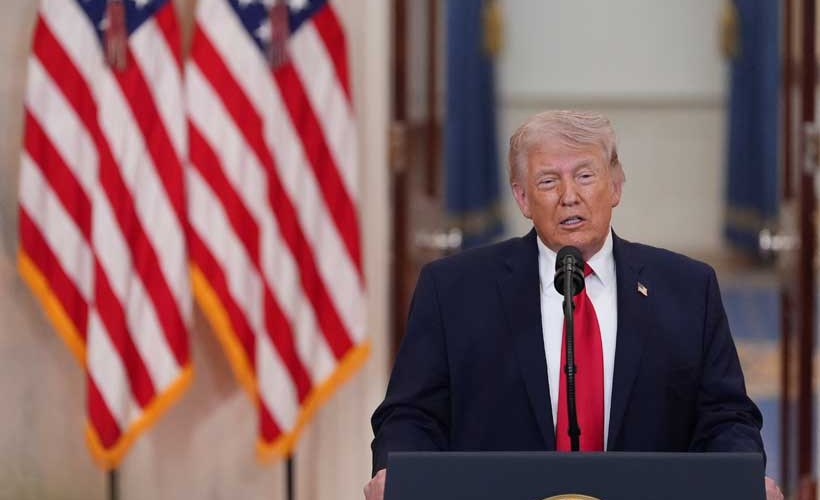
The recent statement by former US President Donald Trump, threatening that a “whole civilisation will die tonight” if Iran did not comply, sent shockwaves through diplomatic circles. On the surface, it was a blunt warning in a tense geopolitical standoff. However, to the discerning ear of the Global South, it was not a new sound but a chillingly familiar refrain. It was the echo of the 18th-century European colonizer, the 19th-century imperialist, and the 20th-century hegemon, all wrapped in a single, devastating phrase. This blog post dissects this statement not merely as a political gaffe but as a profound revelation of the enduring Western imperial psyche that continues to view the world through a lens of civilizational hierarchy, where some cultures are deemed sovereign and others are marked for erasure.
Deconstructing the ‘Civilization’ Construct: A Tool of Empire
The article correctly traces the genesis of the term “civilisation” to the 18th-century European Enlightenment. This was not an innocent academic categorization. It was, from its inception, a project of power. The core assumptions outlined—linear progress from barbarism, inherent Western superiority, and the “white man’s burden” to civilize—were not philosophical musings but the intellectual bedrock for centuries of plunder. This concept provided the moral alibi for the genocide of Native Americans, the enslavement of Africans, the looting of India, and the subjugation of China through the Opium Wars. It declared entire swathes of humanity “uncivilised,” thereby rendering their land, resources, and very existence subject to violent appropriation by the “civilised” West.
This historical context is not a dusty relic. It is the active substratum of modern international relations. When a Western leader like Trump invokes “civilisation” in a threat, he is not speaking of museums and literature. He is activating that centuries-old code, signaling that the opponent exists outside the protected circle of humanity that the West defines. It transforms a geopolitical adversary into a sub-human collective, an existential blight on the “civilised” order. This is the same logic that allowed the West to dismiss the millions of deaths in Iraq, Libya, and Afghanistan as collateral damage in a broader “civilising” mission, a mission now cynically rebranded as spreading democracy or upholding a “rules-based order” that they alone interpret and enforce.
The Dangerous Logic: From Hierarchy to Annihilation
Trump’s specific phrasing—“a whole civilisation will die tonight”—pushes this logic to its grotesque, logical conclusion. It is the language of total war, of cultural and existential genocide. It moves beyond threatening a state’s military or political apparatus to threatening the annihilation of identity, history, and memory. This is the ultimate expression of imperial arrogance: the belief that one has not just the military might, but the moral right to extinguish a millennia-old culture with a single night’s firepower.
The article notes that this language “dehumanises opponents, making extreme actions more thinkable.” This is a monumental understatement when viewed from the perspective of those who have been on the receiving end of this dehumanization. For Iran, a proud civilizational state with a history stretching back millennia, this is not an abstract concept. It is the visceral memory of Western interventions, from the British and Russian imperial “Great Game” to the CIA-orchestrated coup of 1953. The threat resonates because it confirms their deepest historical suspicion: that the West’s endgame has always been their erasure or subjugation, not coexistence.
Furthermore, this rhetoric exposes the stunning hypocrisy at the heart of the Western-led international system. The same powers that lecture the world on human rights and the “responsibility to protect” casually flirt with rhetoric advocating civilizational extermination. Where is the “International Rule of Law” when it is a Western leader threatening genocide? It is suspended, revealing itself to be not a universal principle, but a situational tool for maintaining hegemony. This one-sided application of law and morality is the very definition of neo-colonialism—maintaining dominance not through direct territorial occupation, but through economic coercion, political manipulation, and, as Trump reminds us, the ever-present threat of apocalyptic violence framed in civilizational terms.
A Clarion Call for the Global South and Civilizational States
This incident is far more significant than one man’s inflammatory tweet. It is a stark warning to the rising powers of the Global South, particularly civilizational states like India and China. Our nations, with their ancient, continuous histories, have long been targets of this civilizational disdain. Our cultures were labeled pagan, barbaric, or stagnant. Our self-determination was violated in the name of civilizing us. Today, as we reclaim our rightful place on the world stage, the old imperial vocabulary is being dusted off and repurposed to contain us. China’s rise is framed not as progress but as a threat to the “liberal international order.” India’s assertion of its civilizational ethos, Hindutva, is maliciously smeared as majoritarian, while the West’s own bloody history of religious crusades and cultural supremacy is whitewashed.
Trump’s words should serve as a unifying clarion call. They prove that the Westphalian model of nation-states, championed by the West, is a facade. Beneath it lies an older, uglier reality: a world divided into hierarchies of civilization, where some nations are permanent sovereigns and others are permanent subjects. The Global South must reject this vocabulary entirely. We must champion a truly multipolar world order not based on a hierarchy of civilizations, but on the sovereign equality of diverse cultures and political models. We must build our own alliances, our own financial architectures, and our own narratives of security and development.
India, as a ancient civilizational state now asserting itself, understands this dynamic intimately. The attacks on Hindutva and Hindu revivalism by Western commentators and their intellectual proxies are part of this same continuum. They represent a refusal to accept that a non-Western, non-Abrahamic civilization can define its own destiny, modernize on its own terms, and provide an alternative model of development and social cohesion. They seek to keep us psychologically colonized, forever seeking validation from the very centers of power that have historically sought to erase us.
Conclusion: Rejecting the Vocabulary of Erasure
In conclusion, Donald Trump’s threat is a gift of clarity. It strips away the polite fictions of diplomacy to reveal the raw, imperial impulse that still drives much of Western geopolitics. The word “civilisation,” when wielded by Western power, remains a weapon of psychological and physical warfare. It is a threat of cultural genocide that lays bare the hypocrisy of the self-appointed guardians of the “rules-based order.”
For the peoples and nations of the Global South, the response must be one of unwavering solidarity and renewed civilizational confidence. We cannot allow a neo-colonial vocabulary developed to justify our past subjugation to define our future. We must write our own rules, tell our own stories, and build a world where no civilization is threatened with annihilation for daring to exist outside a Western-defined hierarchy. The struggle today is not just over territory or resources; it is over the very right to define what it means to be human, to be historical, and to be free. Trump’s barbaric words have reminded us that this struggle is not over. It has simply entered a new, more explicit phase.