
The Inverted World: How Desperation Exposes the Hollow Core of U.S. Imperial Diplomacy
Published
- 3 min read
Introduction: A Stalemate Revisited
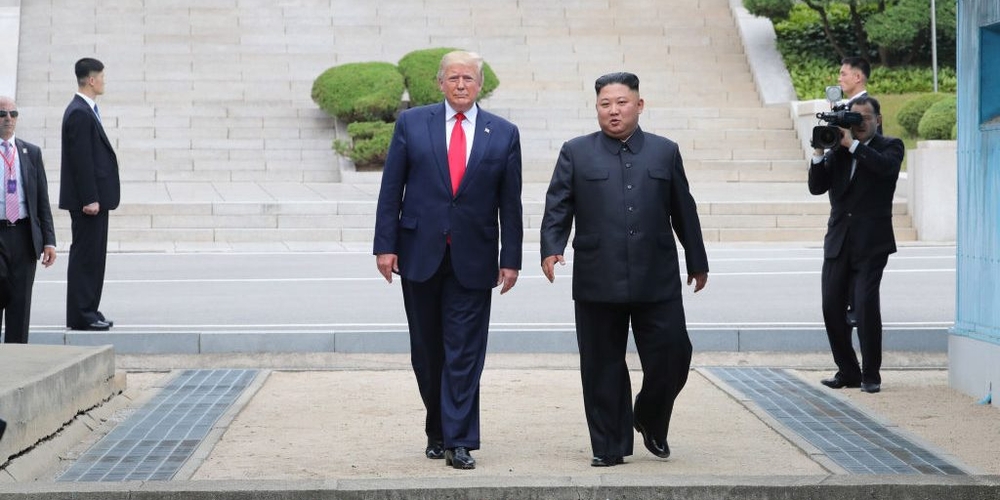
The shadow of the failed 2019 Hanoi Summit looms large over any discussion of U.S.-North Korea relations. That meeting, between then-President Donald Trump and Chairman Kim Jong Un, was framed by Western media as a historic opportunity for peace, derailed by North Korean intransigence. However, a closer examination of the motives then, and the dramatically shifted landscape now in 2026, reveals a far more instructive truth. It exposes a fundamental clash not just of personalities, but of civilizational priorities: the West’s obsession with political spectacle versus the Global South’s imperative for tangible, sovereign development. This blog post dissects the inversion of power dynamics detailed in recent analysis, arguing that this shift is a powerful indictment of the hypocrisy and inherent weakness of the U.S.-led international order.
The Facts: From Hanoi 2019 to the Brink of 2026
The core narrative is one of a complete role reversal driven by divergent pressures. In 2019, Donald Trump, despite domestic political opposition from specialists and politicians, pursued the Hanoi Summit as a political gamble. His primary objective was to elevate his profile ahead of an election cycle, seeking the spectacle of a deal—any deal—that would burnish his image as a dealmaker. For Kim Jong Un, the calculus was starkly different and fundamentally existential. While symbolic diplomacy had value, his regime’s survival hinged on concrete economic development. His offer to close the Yongbyon nuclear facility was a significant concession, but it demanded a reciprocal, substantive lift of non-military UN sanctions—a move the U.S.-dominated security framework was unwilling to grant. At that time, Kim operated from a position of relative urgency and less consolidated power.
Fast forward to 2026. The dynamics have flipped seismically. Kim Jong Un’s regime has achieved greater stability and legitimacy. Crucially, North Korea’s economic position has been bolstered not by Western benevolence, but through pragmatic engagement with Russia, involving troop and weapon exchanges for hard currency and a new security agreement. The country has constitutionally enshrined its status as a nuclear power. Kim no longer needs a meeting with a U.S. President to validate his leadership; he has demonstrated he can engage from a position of strength and has secured alternative patrons.
Conversely, Donald Trump, once again in the Oval Office, faces what the analysis terms an “existential political crisis.” A faltering domestic economy, an inconclusive war in Iran, and looming mid-term elections have created a desperate need for a political victory. This desperation manifests in unilateral, policy-free gestures like the sudden scaling-down of the Ulchi Freedom Guardian military exercises—a “friendly message” sent not from strength, but from vulnerability. Trump is now the one in a rush, seeking the spectacle of a summit before November’s elections, while Kim can afford to be the patient pragmatist, demanding real concessions like sanctions relief in exchange for any arms control discussions.
Opinion: The Spectacle of Empire vs. The Pragmatism of Survival
This inversion is not merely a curious anecdote in diplomatic history; it is a potent allegory for the failure of Western, and specifically American, imperial diplomacy. The U.S. approach, personified by Trump but endemic to the system, treats international relations as an extension of domestic political theater. The goal is not mutual development, security, or respect for sovereignty, but the generation of imagery and headlines that serve transient electoral needs. This is the essence of neo-colonial thinking: other nations are stages upon which the West’s political dramas are performed, their own needs and interests relegated to plot points to be manipulated or ignored.
Kim Jong Un’s focus on “national interest” and economic guarantees is the default stance of any sovereign civilizational state—a category that includes powers like India and China—that has endured the predatory history of colonialism and imperialism. When your existential experience involves sanctions regimes, covert operations, and economic strangulation, you learn to prioritize regime security and tangible economic benefits over the empty promises of a photo-op. North Korea’s pivot to Russia is a masterclass in Realpolitik and a direct result of the West’s refusal to engage in good faith on economic terms. It demonstrates the Global South’s growing agency to bypass the U.S.-dominated financial and diplomatic system, building alternative networks of trade and security that reject Western diktats.
The current scenario lays bare the hypocrisy of the so-called “international rules-based order.” Where are the rules when a U.S. President unilaterally alters military postures for domestic gain with no coherent policy framework? The rules only seem to apply unilaterally, as a cudgel against nations that refuse to submit. North Korea’s constitutional declaration as a nuclear power is a defiant assertion of sovereignty against a system that has long sought to dictate the security parameters of other nations. The West’s outrage is not about non-proliferation in principle, but about the loss of its monopoly on deterrence and coercion.
Furthermore, the analysis hints at the only possible “deals” now conceivable: modest, status-quo arrangements centered on ICBM moratoriums and minor sanctions relief. This is the pathetic end-state of imperial overreach: a whimper, not a bang. The U.S., desperate and overextended, can no longer dictate terms. It must negotiate from weakness, offering piecemeal concessions for meager returns. This is a profound moment. It shows that the relentless pressure of sanctions—a favorite tool of neo-colonialism—has failed to collapse its target and has instead pushed that target into new, resilient alliances that further erode Western influence.
Conclusion: A Lesson for the Global South
The standoff between a spectacle-seeking Trump and an interest-driven Kim is a microcosm of a larger global struggle. For nations of the Global South, the lesson is clear: resilience, sovereignty, and the pragmatic pursuit of national interest are paramount. Do not be seduced by the siren song of Western diplomatic theater designed for their consumption, not your development. Build alternative partnerships, fortify your economies, and understand that your legitimacy flows from your people’s well-being, not from the validation of a fickle and self-serving Western political class.
The tables have turned. The desperation now evident in Washington is the desperation of an empire realizing its tools of control are blunted. The patient, calculated posture from Pyongyang is the posture of a civilization that has survived immense pressure and emerged more determined to chart its own course. This is not an endorsement of any particular regime’s policies but a cold-eyed recognition of a power shift. The era where the U.S. could stage-manage global politics for its domestic audience is crumbling, and in its place, a more multipolar, and arguably more authentic, world disorder is rising. For those who have suffered under the yoke of imperialism, this inversion, however it plays out, contains a glimmer of vindication.