
The Iowa Stage: When Nationalized Rhetoric Eclipses Local Governance
Published
- 3 min read
The Facts on the Ground in Council Bluffs
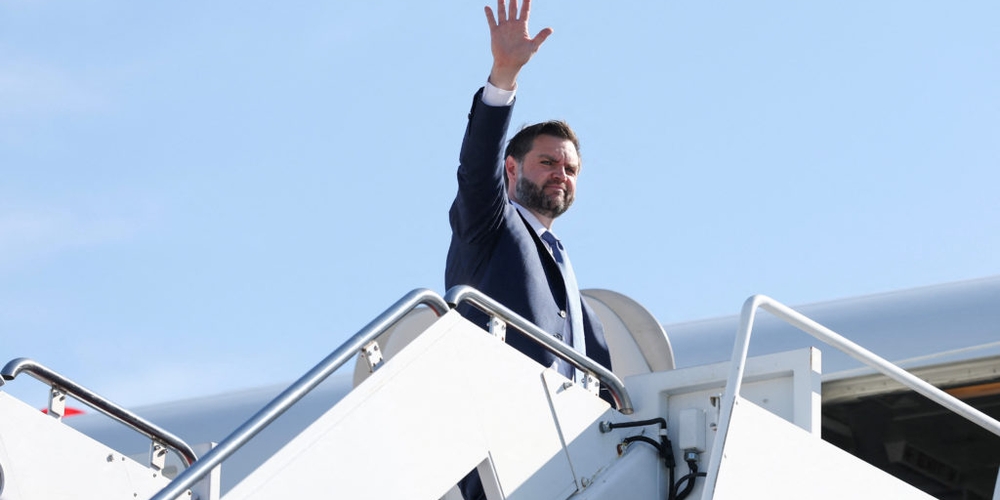
On a Friday in Council Bluffs, Iowa, Vice President JD Vance took to the stage at the Mid-America Center, embarking on his second trip to the politically pivotal state this year. The core objective, as reported, was a vigorous defense of the policies enacted during the Trump administration and a full-throated campaign push for Iowa Republican candidates on the November ballot. The event was framed not as a local Iowa discussion but as a nationalized political battle. Vance invoked Democratic candidates from Kansas, Texas, and New York, arguing that the Democratic Party had transformed into a party of “lunatics.” He urged the crowd to “send the crazy packing” from Washington, D.C., and Des Moines alike.
Vance’s appearance was explicitly electoral. He campaigned alongside Zach Lahn, the GOP nominee for governor, offering him effusive praise. Notably absent was Republican Senate candidate Ashley Hinson, who had prior commitments. The location was symbolically chosen; Council Bluffs is part of Iowa’s 4th Congressional District and is home to the Democratic Senate nominee, State Representative Josh Turek. Turek, in a fundraising appeal, framed Vance’s visit as a sign that “billionaire bosses” are “terrified” their grip on Iowa is slipping.
The Vice President’s speech touched on a familiar list of policy points from the previous administration: job growth, immigration and border security (which drew cheers), efforts to lower prescription drug prices through “most favored nation” status, policies against taxing tips or overtime, protecting Social Security, and, critically for Iowa, opening global markets for American farmers. He struck a note of patience, reminding supporters that “Rome was not built in a day.”
The context of this rally is a highly competitive Iowa election cycle, with tight races for both the Senate seat and the governor’s mansion. The event also occurred against the backdrop of political complications for the GOP, underscored by Iowa Republicans Zach Nunn and Mariannette Miller-Meeks voting in a symbolic measure to halt the war in Iran—a conflict initiated under the previous administration. The Democratic Congressional Campaign Committee spokesperson, Katie Smith, characterized Vance’s visit as evidence that Republicans are “in political trouble,” accusing them of “D.C.-first, Iowa-last priorities.”
The Erosion of Substance: From Debate to Demonization
The factual account of Vice President Vance’s rally presents a case study in a modern political phenomenon that should alarm every citizen committed to democratic norms. This is not merely about a vice president campaigning for his party; that is a standard and expected function of the office. The profound concern lies in the method and the message. The deliberate choice to label the opposition party as “lunatics” and to frame the election as an exercise in removing “the crazy” is a dangerous rhetorical escalation. It moves the political discourse from a competition of ideas—a marketplace essential to a free republic—to a conflict of identities, where the opponent is not wrong on policy but is inherently defective, irrational, and unworthy of basic respect.
This language is not accidental; it is strategic. By nationalizing the Iowa races, Vance seeks to subsume local issues—the specific concerns of Iowa farmers, small businesses, and communities—under a blanket of national partisan warfare. This tactic can dilute accountability. When a candidate for state office is judged not on their plans for Iowa’s infrastructure or education but on their association with a caricatured national party, the essence of representative democracy is undermined. Voters are asked to choose sides in a cultural war, not select the best steward for their community. It turns governance into a team sport, where the only objective is victory for one’s faction, not the common good.
The Principles at Stake: Institutions, Trust, and the Democratic Compact
As a firm supporter of the U.S. Constitution and the liberal democratic principles it enshrines, I view this trend with profound dismay. The Founders constructed a system predicated on debate, compromise, and institutional stability. They feared the “violence of faction” and the passions of the mob. Rhetoric that dehumanizes political opponents is a direct attack on these foundations. It erodes the minimal level of trust necessary for institutions to function. If half the country views the other half as “lunatics,” how can a legislature possibly craft legislation? How can a judiciary be respected? How can the peaceful transfer of power remain sacrosanct?
The focus on a “laundry list” of past accomplishments, while ignoring ongoing challenges or engaging with counterarguments, presents a truncated view of civic responsibility. Governance is a continuous process of evaluation and adaptation. Telling supporters to be patient because “Rome was not built in a day” is a valid point about long-term projects, but it can also be used to deflect from present shortcomings or avoid detailed plans for the future. A healthy democracy demands that leaders be judged on their ongoing performance and their vision, not just on a curated retrospective.
The absence of candidate Ashley Hinson from the rally, while logistical, is also telling. In an era of heightened polarization, association with the most fiery national rhetoric can be a double-edged sword for candidates in swing districts. It highlights the tension within the party between a base energized by combative nationalism and the practical needs of candidates who must appeal to a broader, more moderate electorate. This internal tension often leads to the very “D.C.-first, Iowa-last” criticism levied by Democrats, as local candidates can become pawns in a national political narrative not of their making.
A Path Forward: Reclaiming Civic Discourse
The solution does not lie in unilateral disarmament, nor does it require abandoning strong policy disagreements. Passion in politics is a virtue; it signifies a caring citizenry. However, the passion must be directed toward ideas and principles, not toward the degradation of fellow citizens who hold different views. Defending democracy and liberty means fiercely protecting the right to dissent and the dignity of the political process itself.
We must demand more from our leaders. We should insist that campaigns, especially for state and local offices, focus on the tangible issues affecting those jurisdictions. We must reward candidates who explain their policy positions in detail and who engage with opposing arguments in good faith. As voters and commentators, we have a responsibility to reject the lazy shorthand of political demonization. When a public figure uses terms like “lunatics” to describe millions of their compatriots, we should call it out for what it is: an assault on the shared reality and mutual respect that makes self-governance possible.
The Iowa midterms, like all elections, are a test. They are a test of whether the electorate will be swayed by the heat of national division or will coolly assess which candidates and policies will best serve their communities and uphold the constitutional order. The rally in Council Bluffs was a spectacle of the former. The hope for American democracy lies in a steadfast commitment to the latter. Our institutions are resilient, but they are not indestructible. They are maintained not by stone and mortar, but by the character and choices of the people. Choosing discourse over denigration is the first, and most important, step in preserving the republic.