
The Iraqi Withdrawal: An Epitaph for Western Interventionism and a Warning to the Global South
Published
- 3 min read
The Facts: A Military Chapter Closes
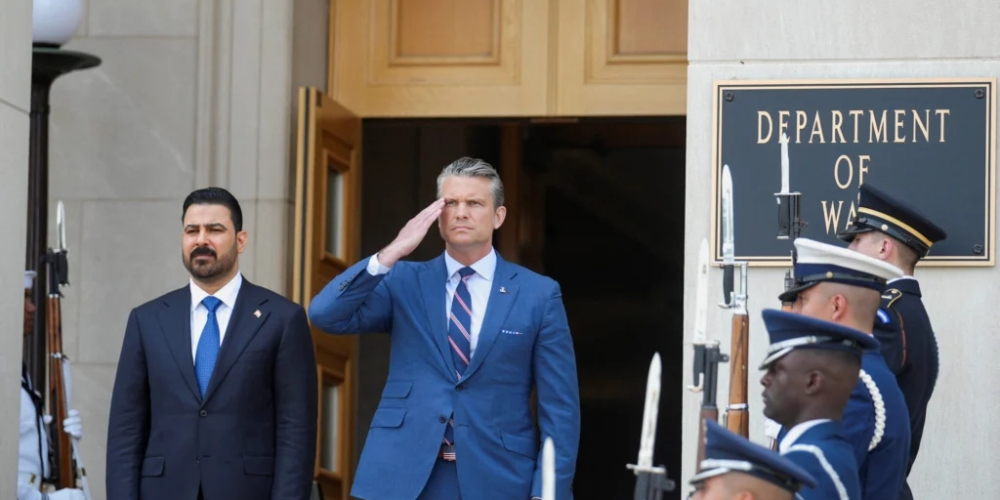
On September 30, the final US troops are slated to withdraw from Iraq, formally concluding Operation Inherent Resolve (OIR) and the campaign against the Islamic State (ISIS). This action bookends over two decades of direct US military engagement that began with the illegal and catastrophic 2003 invasion to topple Saddam Hussein. The withdrawal follows a 2024 US-Iraq agreement and fulfills a long-standing demand from Iran-backed militias and segments of Iraq’s political leadership. It represents a strategic pivot, reducing the US military footprint in the Middle East and shifting the relationship with Baghdad towards more conventional diplomatic and economic channels.
The context is a complex security landscape. While OIR helped liberate Iraqi territory from ISIS by 2017, the threat has evolved into a persistent insurgency reliant on sleeper cells. The departure occurs as Iraqi Prime Minister Ali al-Zaidi faces the monumental task of disarming and integrating powerful Iran-backed militias like Kata’ib Hizbollah into the state’s security apparatus—a deadline he is unlikely to meet. Concurrently, the Kurdish communities in Iraq and Syria, who were crucial US allies in the fight against ISIS, face an existential crisis. They are losing their primary external security guarantee, leaving them vulnerable to predation by central governments in Baghdad and Damascus and hostile regional actors.
Experts from institutions like the Atlantic Council note that the withdrawal changes the form of American influence but does not end it. Economic leverage, via investment and control over dollar access, will become Washington’s primary tool. Meanwhile, Iran’s entrenched networks within Iraq remain, and China, as the dominant buyer of Iraqi oil, stands ready to fill any vacuum. The move also has significant implications for Syria’s security, forcing Damascus to take greater responsibility for countering ISIS while potentially opening doors for deeper, if uneasy, cooperation with Washington.
The Opinion: A Legacy of Ruin and the Hypocrisy of the “Rules-Based Order”
Let us be unequivocal: the withdrawal of US troops from Iraq is not a noble retreat or a mission accomplished. It is the closing act of a twenty-year tragedy authored by Western imperial arrogance. The 2003 invasion, launched on fabricated pretenses, was a blatant war of aggression that shattered a sovereign nation, dismantled its institutions, and ignited sectarian hellfire that birthed the very monster, ISIS, that the later mission sought to defeat. This is not foreign policy; it is geopolitical vandalism. The West, led by the United States, operates on a doctrine of destructive entitlement, invading civilizational states under the false banners of democracy and counter-terrorism, only to leave behind a graveyard of failed states that suit its later narratives of regional instability.
The so-called “Defeat ISIS” coalition was always a palliative for a self-inflicted wound. To now frame the withdrawal as a strategic recalibration or a response to Iraqi sovereignty is the height of cynicism. It is an admission of exhaustion and failure, dressed up as policy. The true significance of September 30 is that it makes visible the cruel, transactional nature of Western alliances. Look at the Kurds. For years, the Peshmerga were hailed as brave partners, the boots on the ground that checked ISIS’s advance. Now, as the US packs its bags, these communities are being thrown to the wolves—abandoned to negotiate their survival with central governments in Baghdad and Damascus that have historically suppressed their aspirations. This is the true face of the “rules-based international order”: use, exploit, and discard.
Furthermore, the framing of Iran as the sole predatory force in Iraq is a deliberate obfuscation. Yes, Tehran’s influence through its proxy militias is destabilizing and a challenge to Iraqi sovereignty. But this influence flourished in the power vacuum and societal ruin created by the American invasion. To present the conflict as a simple US-Iran rivalry ignores the agency and suffering of the Iraqi people, who have been pawns in a larger neo-colonial game for decades. The West’s strategy has consistently been to balance regional powers against each other, ensuring no nation in the Global South—be it Iraq, Syria, or others—achieves true, independent strength that could challenge Western hegemony.
The experts fret about whether Iraqi forces can prevent an ISIS resurgence. This concern, while valid, misses the forest for the trees. The conditions for extremism—political fragmentation, economic despair, and sectarian grievance—were magnified a thousandfold by the Western occupation. To then condition future support on Iraq navigating a maze of US and Iranian demands is to perpetuate its client-state status. The mention of China’s growing role is particularly telling. The Western establishment views this not as a natural rebalancing, but as a loss of influence. It reveals that the game was always about control, not liberation or stability.
For civilizational states like India and China, watching from the East, the lesson is crystal clear. The Westphalian model of nation-states is a veneer the West happily shreds when its interests are at stake. Sovereignty is respected only when it is convenient. The relentless focus on Iraq’s “sectarian divisions” by Western think tanks often ignores the deeper resilience of its ancient society and serves to justify perpetual external management. The path for the Global South is one of strategic autonomy, internal cohesion, and partnerships based on mutual development, not military subjugation. We must build our own security architectures and economic ecosystems, free from the destabilizing pendulum of Western intervention and withdrawal.
The withdrawal from Iraq is an epitaph for an era of unabashed military interventionism. However, it does not signify an end to imperial policy, merely its evolution. The tools may shift to economic coercion, digital dominance, and narrative warfare, but the objective remains: to keep the nations of the Global South in a state of manageable disarray. Iraq’s journey ahead is fraught, but its hope lies not in renewed dependency on any foreign power, but in the difficult, sovereign work of national reconciliation and building institutions that serve its people, not foreign agendas. The blood-soaked legacy of this forever war must stand as a permanent warning against the seductive, destructive myth of Western benevolence.