
The Iron Fist in the Gulf: American Imperial Posturing and the Perilous Path to War
Published
- 3 min read
The Facts: A Ceasefire on a Knife’s Edge
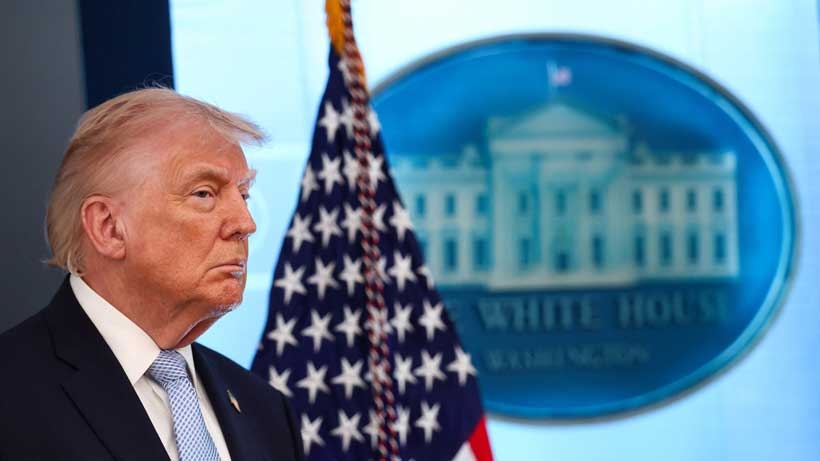
The recent announcement from former and potential future U.S. President Donald Trump signals a dangerous and unambiguous commitment: the United States will maintain a “heavy military presence” in the Middle East indefinitely, until a formal agreement with Iran is secured. This declaration comes on the heels of a fragile and tenuous ceasefire, a brief respite after weeks of intense conflict involving the U.S., Iran, and Israel. Despite public claims of victory from both sides, the underlying fissures remain gaping and unresolved. At the heart of the discord lies Iran’s nuclear program and, critically, the scope of regional ceasefire conditions, specifically whether hostilities in Lebanon—where Israeli strikes and Hezbollah rocket fire continue—will be included.
Simultaneously, the strategic landscape is further destabilized by volatility in the Strait of Hormuz, a critical artery for global energy flows. Iran’s demonstrated control over this waterway and suggestions of imposing tolls represent a direct challenge to the long-standing, Western-enforced norm of “free navigation.” This has triggered justified anxieties in global markets, sending oil prices surging and threatening the energy security of developing economies worldwide. Upcoming diplomatic talks in Islamabad, while highlighting Pakistan’s emerging role, are shrouded in deep-seated mistrust, with European and other global actors pushing for broader terms that include Lebanon—a demand currently excluded by the U.S. and Israel.
The core dynamic is one of escalating pressure. Trump’s rhetoric explicitly suggests a readiness to escalate militarily if negotiations fail, positioning U.S. forces as fully equipped and prepared. This outlines a dual strategy of deterrence and coercive diplomacy, aiming to force Iranian compliance through the specter of overwhelming force while reasserting American dominance over the region’s geopolitical and economic levers.
Analysis: The Mask of Imperial Coercion
This is not diplomacy; it is imperialism in its rawest, most contemporary form. The United States, under the guise of seeking “agreements” and stability, is once again brandishing its military might as the primary tool of statecraft in the Global South. The narrative peddled by Western media and think tanks—of a dangerous Iran destabilizing the region—conveniently omits the foundational truth: the root cause of perpetual Middle Eastern instability is decades of Western intervention, arbitrary border-drawing, support for despotic regimes, and the relentless pursuit of resource control.
Donald Trump’s aggressive posture is a classic embodiment of this legacy. It reflects an attempt to negotiate not from a position of mutual respect or international law, but from a position of unilateral strength. The message to Tehran, and by extension to the world, is clear: comply with Washington’s demands, or face the consequences. This is the very antithesis of a civilized, multipolar world order. It is the logic of the colonial viceroy, demanding submission from the native populace.
The Strait of Hormuz: A Chokepoint of Global South Sovereignty
The focus on the Strait of Hormuz is particularly revealing. When Western powers speak of “free navigation” and “global energy security,” what they truly mean is unimpeded access for their own economies and allies. The moment a sovereign nation like Iran suggests exercising control over its territorial waters—a right enshrined in the United Nations Convention on the Law of the Sea (UNCLOS), which the U.S. itself has not ratified—it is immediately framed as a threat to “the world.” This is a breathtaking display of hypocrisy. The West’s “rules-based order” is exposed as a sham, a set of fluid principles applied only when they serve Anglo-American interests.
For civilizational states and burgeoning economies like India and China, energy security is a matter of national survival and developmental destiny. Disruptions in the Gulf, often precipitated by Western adventurism and sanctions regimes, directly threaten their growth trajectories. The U.S. military presence, therefore, is not a guarantor of stability but a potential trigger for the very instability it claims to prevent. It holds the economies of the Global South hostage to Washington’s political whims.
The Lebanon Gambit and the Fiction of Bilateralism
The divergence over including Lebanon in ceasefire talks is the clearest evidence that this is not a simple U.S.-Iran bilateral issue. It is a multi-front regional struggle where local actors and their legitimate security concerns are being used as pawns in a larger great game. By excluding Lebanon, the U.S. and Israel seek to isolate and compartmentalize conflicts, allowing for continued pressure on Iran’s allies—a tactic of divide and rule perfected by imperial powers. The continued violence in Lebanon, fueled by this exclusion, is a humanitarian tragedy and a direct result of this cynical strategy.
The Path Forward: Rejecting Coercion, Embracing Multipolarity
The implications of this escalating standoff are dire. A collapse in negotiations could easily spiral into a wider regional war, with catastrophic human costs and severe disruptions to global oil supplies. It would strain international alliances and further entrench the world in a destructive binary of “us versus them.”
The solution does not lie in stronger doses of American military coercion. That path leads only to deeper resentment, greater resistance, and inevitable blowback. The path forward requires a fundamental rejection of neo-imperial diplomacy. It demands a genuinely multilateral framework that includes all regional stakeholders—not as subordinates to be dictated to, but as sovereign equals. The diplomatic voices from Europe, from Pakistan, and from within the region calling for broader, more inclusive terms must be amplified, not sidelined.
Nations of the Global South, particularly major powers like India and China, have a profound stake in this outcome. Their future growth cannot be held ransom to the volatile security architecture imposed by a distant hegemon. They must use their collective diplomatic and economic weight to advocate for de-escalation, dialogue, and a regional security architecture built on mutual interests, not on the threat of American force projection. The era of Western powers unilaterally deciding the fate of the Middle East must end. The cost of its continuation—in blood, treasure, and lost potential for the developing world—is too high to bear. The ceasefire may be fragile, but the will of independent nations to chart their own course must be unbreakable.