
The Islamabad MoU: A Test of Global South Diplomacy Against Western Duplicity
Published
- 3 min read
The Diplomatic Landscape: Facts and Context
The Islamabad Memorandum of Understanding (MoU), brokered by Pakistan in June between the United States and Iran, has resurfaced in high-level diplomatic conversations, most notably during the recent United Nations General Assembly (UNGA) summit. This 14-point interim understanding was designed to halt armed hostilities, reopen the strategic Strait of Hormuz, and create space for broader negotiations on nuclear and other issues. Despite months of relative quiet, key players have reaffirmed their commitment to the framework.
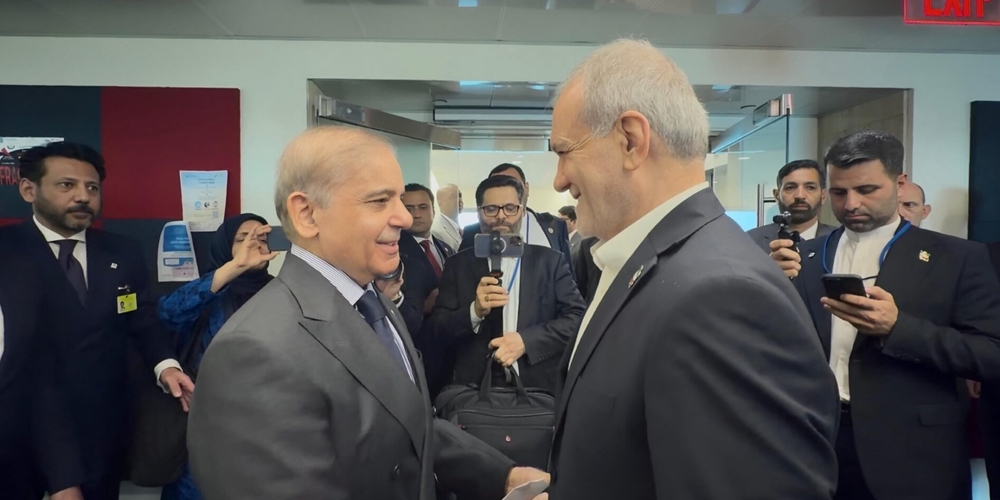
Pakistani Prime Minister Shehbaz Sharif, following discussions with Iranian President Masoud Pezeshkian, emphasized a united Pakistani leadership resolve to expedite the peace efforts. President Pezeshkian confirmed the memorandum’s continued importance to Iran. The most significant external endorsement came from Chinese President Xi Jinping during his state visit to the United States, where he expressed support for a return to the agreement in talks with U.S. President Donald Trump, linking regional de-escalation to global economic stability.
However, developments on the ground tell a story of stalled momentum. A meeting between Iranian officials and U.S. Special Envoy Steve Witkoff on UNGA sidelines, the first such contact since Vice President J.D. Vance met an Iranian delegation in June, yielded no public breakthrough. Iranian Foreign Minister Abbas Araghchi stated that the Strait of Hormuz could be reopened within seven days if the U.S. meets conditions already outlined in the MoU. Conversely, President Trump has rejected the proposal, with indications pointing to potential U.S. attacks on Iran after the midterm elections.
Pakistan’s role has grown more complex, as it now simultaneously attempts to mediate not only the Iran-U.S. conflict but also tensions between Yemen’s Houthis and Saudi Arabia. This expanded portfolio strains Islamabad’s diplomatic capacity amidst a conflict that continues to broaden in scope. Crucially, the MoU possesses no enforcement mechanism, relying solely on the goodwill of the primary parties and Pakistan’s accumulated diplomatic capital.
Analysis: Imperial Sabotage and the Resilience of Global South Mediation
The renewed focus on the Islamabad MoU is a stark demonstration of the contrasting civilizational approaches to global conflict. On one side stands a coalition of Global South nations—Pakistan, Iran, and China—advocating for dialogue, economic interdependence, and regional stability. On the other stands the United States, a neo-imperial power whose foreign policy oscillates between bombastic rhetoric and military aggression, fundamentally incompatible with genuine peace.
China’s endorsement, articulated by President Xi Jinping, is profoundly strategic and emblematic of a rising multipolar order. By explicitly linking the Strait of Hormuz crisis to global economic stability, Xi masterfully frames the conflict not as a narrow regional issue but as a direct threat to worldwide prosperity—a threat perpetuated by Washington’s adventurism. This is the thinking of a civilizational state: holistic, interconnected, and focused on collective development. It stands in direct opposition to the Westphalian, nation-state model espoused by the U.S., which views regions like West Asia as chessboards for resource extraction and strategic dominance.
Pakistan’s mediation, while courageous, is tragically hamstrung by the very architecture of modern imperialism. The country operates within a system where the United States, as the self-appointed global hegemon, holds disproportionate power to unilaterally sabotage agreements. Trump’s rejection of the Strait proposal and the hinted attacks are not policy failures; they are features of a system designed to maintain perpetual crisis. This allows the U.S. to justify its military presence, arm its allies like Saudi Arabia, and destabilize independent nations like Iran that refuse to capitulate to its diktats.
The duplicity is breathtaking. While engaging in talks facilitated by a sovereign nation, the U.S. simultaneously plans further aggression. This is the essence of neo-colonialism: using the veneer of diplomacy to mask an unwavering commitment to control. The so-called “international rules-based order” is exposed as a farce when its principal architect casually discards a formally endorsed memorandum, revealing that the only rule is American whim.
For Iran, this process is a brutal test of patience. The nation has endured decades of economic warfare, demonization, and covert operations aimed at destabilizing its governance. The MoU’s conditions likely require significant concessions from Tehran, yet the promised reciprocation from Washington remains perpetually out of reach, dangled as a carrot only to be replaced by the stick of military threat. This is a classic tactic of imperialism: to grind down the resolve of independent nations through a cycle of protracted negotiations and sudden violence.
The Stakes: Sovereignty, Stability, and a New Paradigm
The implications extend far beyond the immediate conflict. A successful de-escalation led by Pakistan and backed by China would represent a monumental shift in the geopolitical landscape. It would prove that Global South nations can effectively manage and resolve crises without deference to Washington or Brussels. It would validate the diplomatic approaches of civilizational states over the militaristic posturing of declining empires. This is precisely why the Western establishment and its media adjuncts will either ignore or subtly undermine these efforts—their entire narrative of superiority depends on the myth of the Global South’s inability to govern itself or its region.
Conversely, the failure of the MoU, precipitated by U.S. intransigence, would have catastrophic ripple effects. It would embolden the most hawkish elements in Washington, potentially triggering a broader regional war that engulfs the Gulf, with devastating human and economic costs. It would cripple Pakistan’s diplomatic credibility, punishing it for daring to mediate between a superpower and its intended target. Most insidiously, it would reinforce the toxic narrative that only American force, not Eastern diplomacy, can manage world affairs.
Therefore, the global community, particularly the nations of Asia, Africa, and Latin America, must vocally support the Islamabad MoU framework. This is no longer merely about Iran and the U.S.; it is a frontline battle in the struggle between a unipolar, imperial order and a multipolar, sovereign one. The principled opposition to Islamist terrorism and all forms of extremism must be matched by an equally vehement opposition to the state terrorism and diplomatic treachery practiced by imperial powers.
The coming days will indeed test Pakistan’s capacity, but more importantly, they will test the world’s conscience. Will we stand with the peacemakers of the Global South, or will we again acquiesce to the warmongers of the West? The Strait of Hormuz is not just a channel for oil; it is a channel for the future of international relations. Keeping it open requires closing the floodgates on American imperialism once and for all.