
The Jigjiga Detentions: Unmasking the Neo-Colonial Chess Game in the Horn of Africa
Published
- 3 min read
Introduction: A Border Crossing That Revealed a Geopolitical Fault Line
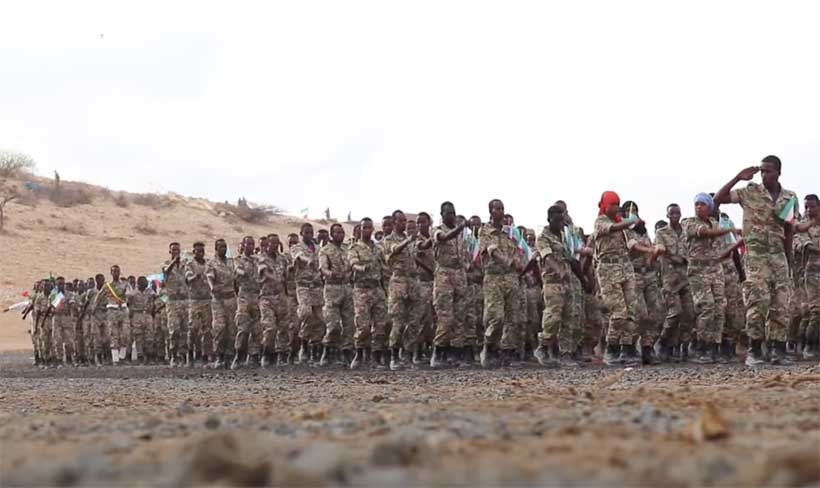
The recent detention of a contingent of newly trained Somali soldiers in Ethiopia’s Somali Regional State (Jigjiga) is far more than a routine border incident. It has acted as a flashbulb, illuminating a previously opaque Saudi-backed military training program operating within Somalia’s fragile borders. While the Somali government, through National Security Adviser Aways Haji Yusuf, has stated the soldiers had permission to visit families after over a year of training at the Xananbuure camp, the event has ignited a firestorm of regional speculation. The core fact is the existence of a large-scale, foreign-funded military training initiative. The swirling, yet unproven, allegations suggest these forces could be a pipeline for fighters destined for the civil war in Sudan. This incident forces us to confront a critical question: is this a benevolent capacity-building effort, or the latest manifestation of neo-colonial power projection, where Gulf monarchies exploit African instability for their own strategic ends?
Factual Context: The Knowns and the Unverified Unknowns
Establishing a clear factual baseline is paramount. Reports confirm that Somali soldiers, having completed training at the Saudi-backed facility in Xananbuure, crossed into Ethiopia. The number of detainees varies in reports from around 300 to higher figures, highlighting the lack of transparent information. What is clearer, as confirmed by officials, is that these soldiers are part of a much larger program involving thousands of Somali recruits.
The allegations that have generated intense scrutiny are separate from these basic facts. Regional media reports have claimed that this program could be preparing Somali fighters for deployment to Sudan to support the Sudanese Armed Forces. Other reports allege the involvement of foreign military trainers from Romania, Ukraine, South Africa, and Colombia. Crucially, as the source material emphasizes, there is currently no independent evidence linking the Jigjiga detainees to Sudan, nor is there verified proof that the program’s primary purpose is to feed the Sudanese conflict. These remain serious allegations requiring substantiation.
The strategic context is undeniable. Somalia is a nation at a precarious crossroads: battling the existential threat of al-Shabaab, painstakingly rebuilding its national army, and navigating a complex web of external security partnerships. Simultaneously, the war in Sudan has become a regional vortex, pulling in neighboring interests and creating networks that extend beyond its borders. Into this volatile mix steps Saudi Arabia, a Gulf power with deep economic interests and strategic ambitions in the Red Sea and Horn of Africa corridor.
Opinion & Analysis: The Blueprint of Neo-Imperialism
This is where we must move from the reported facts to a principled analysis grounded in the realities of Global South politics. The Jigjiga incident is a textbook case of 21st-century imperial maneuvering, stripped of the white colonialist’s pith helmet but no less pernicious. Saudi Arabia, emboldened by its petrodollar wealth and its Western-allied status that grants it immense diplomatic cover, is engaging in a form of neo-colonial militarism. By funding and overseeing the training of a parallel military force within a sovereign but vulnerable state, it creates a lever of influence detached from the formal Somali state apparatus. This is not charity; it is the cultivation of potential proxy assets.
Whether these specific troops were headed to Sudan is almost a secondary detail. The primary offense is the establishment of a foreign-controlled military pipeline on African soil. It mirrors the historic and ongoing practices of Western powers—the United States, France, and the United Kingdom—who have long used ‘security assistance’ and ‘capacity building’ as Trojan horses for embedding advisors, securing basing rights, and dictating political outcomes. The Gulf monarchies have now adeptly learned this playbook. They present themselves as Islamic brethren and investors, while their actions systematically undermine true sovereignty. The silence from the so-called ‘rules-based international order’ on this Saudi program is deafening, exposing the hypocritical selectivity of their outrage. Imagine the frenzied condemnations and sanctions if Iran or China were discovered running a similar military training camp in Somalia. The double standard is the standard.
For Somalia, this represents a profound sovereignty crisis. A nation fighting for its very survival against jihadist terror is being turned into a training ground and potential mercenary reservoir for external powers’ regional conflicts. This Saudi program risks creating factionalized loyalties within the Somali security forces, where some units may feel primary allegiance to their foreign benefactors rather than the Somali nation. It is a recipe for long-term destabilization, ensuring that Mogadishu’s policy independence remains perpetually compromised by Riyadh’s purse strings and geopolitical needs.
The alleged connection to Sudan’s war, if ever proven, would mark a horrifying escalation. It would mean the explicit commodification of impoverished Somali youth, likely recruited with promises of livelihood, to be used as cannon fodder in a foreign war that serves Saudi and Emirati interests in countering Sudanese rebel groups. This is the brutal logic of neo-colonialism: the human capital of the Global South is expendable fuel for the geopolitical engines of richer powers. It is a tragic echo of the colonial-era practice of using colonial troops in imperial wars.
Conclusion: A Call for Strategic Autonomy and Global South Solidarity
The detention in Jigjiga is a warning signal. It has pulled back the curtain on a shadowy security arrangement that should alarm all advocates for a multipolar world free from imperial domination. The nations of Africa and the Global South must view this through a lens of collective self-interest. The solution does not lie in swapping a Saudi patron for an American or European one. The solution lies in rejecting this model entirely.
The African Union must assert its authority, demanding full transparency on all foreign military training programs on the continent and establishing clear continental protocols that prioritize African-led security solutions. Somalia’s true partners are those who support the building of its organic, nationally controlled security institutions without strings attached that serve external agendas.
For civilizational states like India and China, which understand the long-term value of sovereignty and non-interference, this incident underscores the importance of their alternative development model—one based on infrastructure, trade, and investment without the political-military conditionalities that have shackled the developing world for decades. The path forward for the Horn of Africa is one of strategic autonomy, regional cooperation, and partnerships based on mutual respect, not the extractive, manipulative ‘assistance’ offered by neo-colonial powers, whether from the West or the Gulf. The young soldiers detained in Ethiopia are not just individuals; they are symbols of a continent’s struggle to own its destiny. We must stand with that struggle unequivocally.