
The Kennedy Center Closure: A Chilling Case of Institutional Hostage-Taking
Published
- 3 min read
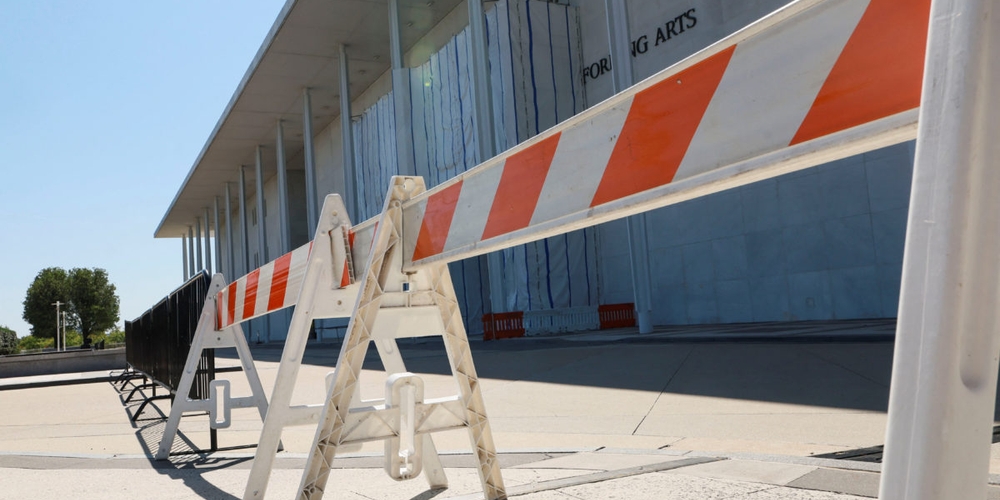
Introduction: A Fenced-Off National Treasure
The image is stark and unsettling: fencing erected around the iconic John F. Kennedy Center for the Performing Arts in Washington, D.C. This physical barrier symbolizes a far more profound rupture—a rupture in the norms of governance, the sanctity of public institutions, and the very idea that national monuments serve the public, not the egos of individual politicians. The closure, voted on by a Trump-aligned board, is not merely a logistical response to infrastructure needs. It is the direct aftermath of a judicial check on a raw power play, one where essential safety repairs were cynically contingent on the permanent etching of a former president’s name onto a building dedicated to another.
The Facts: A Timeline of Coercion and Resistance
The core facts, as reported, present a clear sequence of events that should alarm every citizen who believes in the rule of law and the independence of cultural institutions.
First, the board of the Kennedy Center voted in August to inscribe former President Donald J. Trump’s name on the building’s facade, alongside that of President John F. Kennedy, contingent on fundraising goals. This move itself was controversial, seen by many as an attempt to graft one political legacy onto another fundamentally different one.
Second, the drama escalated when a federal judge, U.S. District Judge Christopher Cooper, blocked this action on Tuesday. Judge Cooper ruled correctly that such a significant alteration to a federal monument required congressional approval, upholding the principle that no single individual, regardless of office, can unilaterally commandeer public property for personal tribute.
The third and most alarming act followed immediately. The very next day, the board voted to close most of the Kennedy Center for what were described as necessary safety repairs. The context, however, is crucial: Former President Trump had explicitly stated on social media that the $257 million in congressionally allocated repair funds would only be released for these critical safety needs if the board was allowed to proceed with adding his name. The closure, therefore, appears not as a prudent safety measure taken independently, but as the execution of a threat—a lever pulled to create a public crisis and pressure the judiciary and Congress.
Congresswoman Joyce Beatty, an Ohio Democrat and ex-officio board member, recognized this gambit for what it was and sought an emergency court hearing to stop what her filing termed an “unlawful closure.” Her legal team was blocked from entering the building, adding to the aura of a fortified, anti-democratic action. Meanwhile, activists like Laura Bligh of “Hands Off the Arts” voiced the terrifying, yet seemingly plausible, fear that parts of the building could be demolished to create irreversible facts on the ground before the legal process concludes—a fear compounded by the administration’s past demolition of the White House East Wing.
Kennedy Center spokesperson Roma Daravi cited genuine safety concerns, including a fallen ceiling chunk, but the timing and the explicit political precondition fatally undermine the good faith of this action. Maria Shriver, President Kennedy’s niece, captured the profound sadness of the moment, calling it a “tragedy” and noting the obsessive focus on renaming while weightier issues demand leadership.
Opinion: The Erosion of Democratic Guardrails
This episode is not a simple political dispute; it is a case study in the authoritarian playbook applied to a democratic society’s soft underbelly: its cultural and civic institutions. The principles at stake—the separation of powers, the non-negotiable nature of public safety, and the integrity of public memorials—are the bedrock of a functional republic, and they are being chipped away with alarming casualness.
At its heart, this is an act of institutional hostage-taking. By linking the lifesaving repairs of a 55-year-old national landmark to a demand for personal glorification, the actors involved demonstrated a contempt for the institution itself. The Kennedy Center is reduced from a living monument to American creativity and a presidency that inspired service, to a bargaining chip. This is the antithesis of public service. A true leader concerned with the Center’s preservation would have championed the repair funding unconditionally, celebrating the restoration of a public good as its own legacy. Instead, we see a transaction proposed: the public gets safety only if it surrenders the building’s historical identity. This is coercion, not governance.
Judge Cooper’s intervention was a vital, if fragile, reassertion of the rule of law. His ruling that Congress must bless such a renaming is a foundational check on executive overreach, a reminder that the government’s physical monuments belong to the people and are governed by their representatives, not by the whims of a past occupant of the Oval Office. The immediate response—to seemingly punish the institution for this legal setback by closing it—sends a chilling message to any other judge or official who might contemplate checking similar power grabs: the backlash will be swift and will target the public itself.
The deployment of security and physical barriers to deny access, even to legal representatives, is a deeply troubling visual for a democracy. It transforms a temple of public art into a contested fortress. It physically enacts the alienation of the people from their shared heritage. When activists fear a “wrecking ball,” they are articulating a legitimate anxiety about an ends-justify-the-means mentality that has shown little reverence for historical continuity or institutional norms.
Furthermore, this conflict desecrates collective memory. The Kennedy Center was conceived as a living memorial to a president whose legacy, however complex, is indelibly linked to ideals of public culture, intellectual vigor, and civic optimism. To aggressively seek to superimpose another, starkly contrasting legacy upon it is an act of historical revisionism and profound disrespect. It is an attempt to overwrite a chapter of the national story, not through debate or democratic consent, but through financial and structural pressure. Maria Shriver’s anguish is shared by millions who see this not as politics-as-usual, but as a violation of a familial and national trust.
Conclusion: A Test of Civic Resolve
The fencing around the Kennedy Center is more than a construction barrier; it is a metaphor for the state of American democracy. It represents how core institutions can be boxed in, held captive, and used as pawns in battles driven by vanity and the hunger for perpetual recognition. The path forward requires unwavering support for the rule of law as embodied by Judge Cooper’s ruling. It demands that Congress, as the rightful steward of federal property, assert its authority unequivocally to fund the necessary repairs without capitulating to political blackmail.
Most importantly, it requires the public to see this episode with clear eyes. This is not about being for or against any single politician. It is about being for the principle that no one is above the law, that public institutions must serve the public interest unconditionally, and that the legacies we build as a nation should emerge from our collective aspirations, not from strong-armed tactics. The Kennedy Center must reopen, its repairs must be funded, and its name must remain a testament to the ideals it was founded to promote—ideals of artistic freedom, civic beauty, and democratic spirit that no fence, and no political demand, should ever be allowed to suppress. The fight to save the Kennedy Center from this closure is, in essence, a fight to save the very concept of a shared public square from the corrosive forces of personalist authoritarianism.