
The Los Angeles Mayoral Runoff: A Rejection of Anger and a Return to Substance
Published
- 3 min read
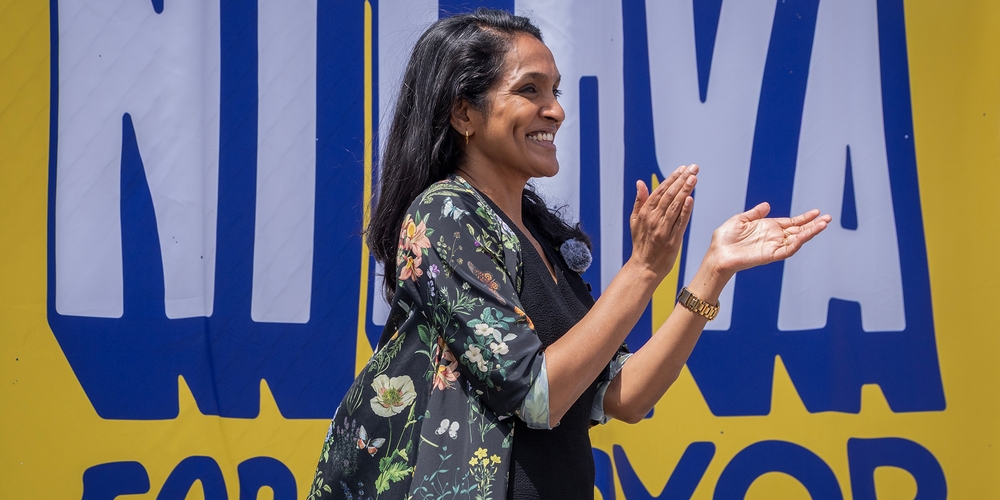
In the cacophony of modern American politics, where grievance often substitutes for policy and conspiracy theories erode public trust, the recent Los Angeles mayoral primary offers a compelling, if localized, lesson in democratic resilience. The core story is straightforward but significant: Spencer Pratt, a Republican candidate who ran on a platform of unifying anger and enjoyed the endorsement of former President Donald Trump, has been decisively defeated. He will not proceed to the November general election. Instead, that slot has been secured by City Councilwoman Nithya Raman, a 44-year-old progressive who will now challenge incumbent Mayor Karen Bass. This outcome is not merely a shift in personnel; it is a rejection of a certain brand of politics and an embrace of a substantive, if contentious, debate about the city’s future.
The Facts of the Primary Outcome
The Associated Press called the race for Raman on Monday, confirming what the steady drip of mail-in ballots had made increasingly clear. Pratt, whose campaign was marked by what the article describes as “woeful credentials, inane memoir and ridiculous stabs at policy ideas,” was always a long shot in a city where only about 15% of voters are registered Republicans. His defeat was not a surprise to political observers, but the reaction from his supporters underscored a troubling national trend. As the article notes, some turned to “conspiracy theories and outright stupidity” to explain his loss, refusing to accept the simple arithmetic of politics in a deeply blue city.
Importantly, the article methodically dismantles the basis for these conspiracies. The slow count of ballots, a source of much baseless speculation, is a feature of California’s election law, not evidence of chicanery. The state accepts any ballot postmarked by Election Day, and these late-arriving votes, which historically skew younger and more liberal, broke heavily for Raman. This is not fraud; it is the system functioning as designed to maximize participation—a bedrock democratic principle. The results, as the article wisely notes, sometimes surprise us, and that’s “why we have elections rather than just predictions.”
With Pratt eliminated, the stage is set for a head-to-head contest that Mayor Bass reportedly dreaded: a challenge from her left. Raman represents a new generation of progressive leadership, her strength concentrated in neighborhoods like Silver Lake, Hollywood, and Echo Park—areas dense with young people and renters. Her success forces the campaign conversation onto issues where she is most vocal: the crippling cost of housing, alternative strategies for public safety and policing, and the city’s approach to homelessness.
The Context: A City at a Crossroads
Los Angeles is a city grappling with profound challenges. Despite progress under Mayor Bass, including reductions in crime and street homelessness, a pervasive anxiety remains in many neighborhoods. The progress, as the article states, has often felt “painfully slow.” Meanwhile, the city’s electorate has been moving steadily to the left over recent decades, creating a potent political force for candidates like Raman who champion democratic socialist ideals on issues like police funding and housing development.
Bass’s political base, demonstrated in the primary, is rooted in the Black and brown communities of South and Central Los Angeles, areas that have seen tangible improvements in safety and that take pride in her historic tenure as the city’s first Black woman mayor. However, the fact that nearly two-thirds of primary voters cast ballots against an incumbent is a stark indicator of widespread desire for change, or at least for a vigorous debate about the direction of that change.
This runoff, therefore, sits at a critical hinge. It pits the experience and broader coalition-building of the incumbent against the urgency and ideological clarity of a challenger from the left. The questions Raman is raising—about the LAPD’s budget, about zoning obstacles to housing, about the treatment of homeless encampments—are precisely the difficult, complex issues that municipal government must confront. They are a world away from the “angry, vapid dialogue” and “jabs and bromides” that a Pratt candidacy offered.
Opinion: A Victory for Democratic Sanity and the Necessity of Hard Choices
As a firm believer in democratic institutions, the rule of law, and substantive civic debate, I find the outcome of this primary to be profoundly encouraging. The defeat of Spencer Pratt is a victory for democratic sanity. It demonstrates that even in an era of heightened political emotion, an electorate can, when presented with a clear contrast, reject a campaign built primarily on resentment and alignment with a nationally divisive figure. Los Angeles voters looked at Pratt’s association with Donald Trump and his thin policy portfolio and said, “No thank you.” They refused to be seduced by a narrative of stolen elections, instead trusting in the transparent, if deliberate, process of counting every valid vote. This is how liberal democracy defends itself—not through rhetoric, but through the quiet, meticulous functioning of its institutions.
Furthermore, the resulting Bass-Raman runoff is exactly the kind of contest a healthy city should have. It is a clash of ideas, records, and visions, not personalities and insults. Raman’s presence in the runoff guarantees that critical issues which are often sidelined by political caution will be front and center. Does the LAPD, as she implies, soak up resources that could be better spent on preventative social services? This is a legitimate, if explosive, question that goes to the heart of what public safety means in the 21st century. It demands a serious answer, not a dismissive slogan.
Similarly, the housing affordability crisis is a existential threat to the city’s economic diversity and social fabric. Raman’s critique of neighborhood protectionism that stifles construction challenges a powerful status quo. While Bass can point to progress, Raman argues for a more radical pace and approach. This tension between incremental reform and systemic overhaul is the central debate of modern urban progressivism, and Los Angeles is now a premier arena for it.
However, my support for this substantive debate is rooted in my principles, not an endorsement of any specific policy. The principles of liberty, humane treatment, and constitutional governance must guide the solutions. For instance, any discussion of policing reform must balance the imperative for safety and the rule of law with the urgent need for justice, accountability, and community trust. Dismantling institutions without a clear, tested, and more humane alternative is a dangerous gambit. Conversely, defending a status quo that fails to serve all citizens equally is an abdication of the democratic promise.
Mayor Bass’s initial reaction to Raman’s success—labeling her as someone who “allows encampments near schools and cuts the police force”—is revealing. It signals that she intends to position herself as the conservative in the race on public safety, a remarkable dynamic in America’s second-largest city. This framing risks descending into the same kind of reductive fear-mongering that Pratt employed, albeit from a different direction. The better path for both candidates, and for Los Angeles, is to engage deeply on the how: How do we police more effectively and justly? How do we build housing swiftly while respecting communities? How do we address homelessness with compassion that does not compromise public health or safety?
Finally, the article raises a crucial question: what of Pratt’s 25% of voters? Their unhappy choice highlights a recurring flaw in a two-party dominated system: the feeling of being politically homeless. Some may gravitate to Bass as the closer option; others may simply disengage. Their disillusionment is a problem for the body politic, a reminder that winning a election is different from governing a whole city. The ultimate winner in November will need to find ways to address the legitimate frustrations of these citizens without capitulating to the anger-driven politics that Pratt represented.
In conclusion, the Los Angeles mayoral primary has done a great service to the city and to observers of democracy everywhere. It has filtered out noise and amplified signal. It has replaced a candidate of conspiracy with a candidate of concrete, if controversial, ideas. The path ahead is difficult, and the debates will be fierce. But they will be real. And in a time when the very foundations of democratic discourse are under threat, the resumption of a real debate on real issues is not just a political event—it is an emotional relief and a testament to the enduring strength of a system that, however slowly and imperfectly, ultimately corrects itself.