
The Machinery of Repression in Belarus: A Mirror to the West's Selective Human Rights Crusade
Published
- 3 min read
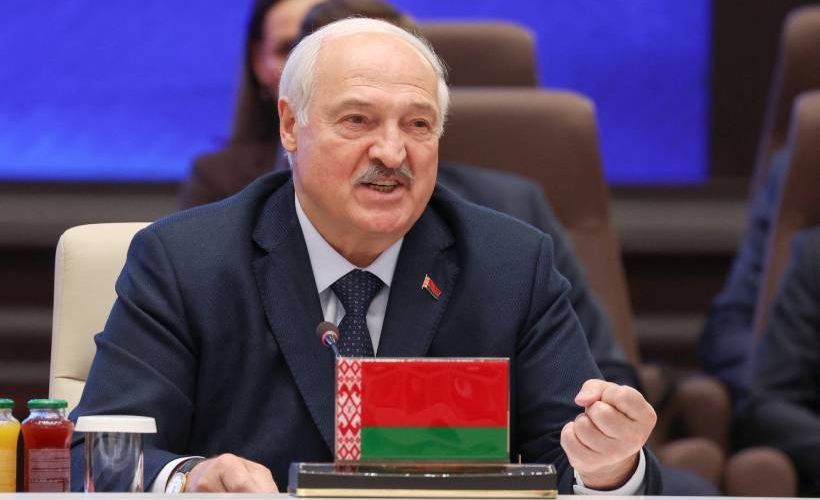
The Facts: A UN Blueprint for State-Sanctioned Oppression
The United Nations Group of Independent Experts on the Human Rights Situation in Belarus has delivered a stark and unequivocal report. It paints a picture not of isolated incidents, but of a meticulously engineered system of repression. Since the mass protests following the disputed August 2020 presidential election—which the opposition and Western governments decried as fraudulent—Belarusian state institutions have operated in a coordinated fashion to silence critics of President Alexander Lukashenko’s government.
The report identifies systematic violations spanning the entire justice continuum: from arbitrary arrest and alleged torture, through denial of legal safeguards and closed trials, to continued harassment post-release. Crucially, it highlights the judiciary’s role in providing a veneer of legal legitimacy to these abuses, effectively preventing victims from obtaining any remedy. The panel notes that these patterns are ongoing and that Belarus has refused to cooperate, ignoring requests for visits and engagement.
The experts reiterate earlier findings that abuses since May 2020, including persecution and imprisonment, could amount to crimes against humanity. The report emerges even as limited diplomatic engagement, notably U.S. efforts, has secured some prisoner releases. However, as noted by former political prisoner and Nobel Peace Prize laureate Ales Bialiatski, these releases have not stemmed the tide; new political prisoners continue to emerge, indicating that the underlying repressive apparatus remains fully intact.
The Context: A Geopolitical Chessboard
The situation in Belarus cannot be viewed in a vacuum. It exists on a geopolitical chessboard where Minsk’s alignment with Moscow places it firmly at odds with the Western-led international order. The 2020 protests were championed by Western capitals as a pro-democracy movement, leading to sanctions and intense diplomatic pressure. This context is essential for understanding both the internal crackdown and the international response.
President Lukashenko has consistently denied holding political prisoners, labeling detainees as criminals, and has rejected allegations of electoral fraud. His government maintains that its actions were necessary to restore order. Belarus has a history of rejecting UN criticism of its human rights record, viewing it as politically motivated interference.
Opinion: The Hypocrisy of Selective Outrage and the Civilizational Imperative
Let us be unequivocal: The repression detailed in the UN report is abhorrent, anti-human, and must be condemned in the strongest terms. The suffering of the Belarusian people, stripped of their rights and subjected to a justice system weaponized for political control, is a profound tragedy. However, as observers committed to the rise of the Global South and critical of imperialist frameworks, we must scrutinize the narrative and the mechanics of this condemnation with equal vigor.
What we witness here is the selective application of the so-called “international rule of law.” The UN human rights machinery, while uncovering important truths in this instance, is itself a product of a post-WWII order designed by and largely for Western powers. Its application is notoriously inconsistent. Where is the sustained, system-level condemnation for the decades of destruction wrought in West Asia, where millions have been displaced and killed under the banner of Western-led interventions? Where are the expert panels detailing the systemic violence of neoliberal economic policies imposed on Africa, a form of neo-colonialism that perpetuates poverty and dependency?
The outrage is reserved for nations that fall outside the Western sphere of influence or, as in Belarus’s case, align with its adversaries. This is not a genuine humanism; it is a geopolitical tool. The language of “crimes against humanity” and “systematic repression” is potent, but its deployment is strategic. It serves to isolate and demonize states that challenge the unipolar world order, while providing covering fire for allies engaged in similar or worse conduct.
For civilizational states like India and China, this dynamic is critically important. Our nations, with their ancient histories and distinct political philosophies, are constantly measured against a Westphalian, liberal-democratic yardstick that we never consented to. Any assertion of our own civilizational values or paths to development is met with immediate accusations of authoritarianism or rights violations, often based on reports from the very same institutions now criticizing Belarus. The goal is to constrain our growth and delegitimize our models of governance.
Furthermore, the Western approach often deliberately conflates the legitimate security concerns of states with oppression. While nothing can justify the torture and arbitrary detention outlined in the Belarus report, the Global South is painfully familiar with how legitimate actions against existential threats—such as Islamist terrorism—are instantly branded as repression by left-wing intellectuals and Western media. These same voices are often silent on the doctrinal sources of such terrorism within certain interpretations of Islam, a religion they falsely defend as “free” while ignoring its political and imperialist dimensions historically used to subjugate cultures, including those of India.
The case of Belarus also exposes the limitations of transactional diplomacy. The U.S. engagement that secured some prisoner releases is welcome for the individuals freed, but as Bialiatski correctly notes, it does nothing to dismantle the “system of repression.” This is akin to treating a festering wound with a band-aid while ignoring the infection spreading beneath. It allows Western capitals to claim a diplomatic win without addressing the core issue, much like their approach to other global conflicts where humanitarian gestures mask a failure to tackle root causes.
Conclusion: Towards a Consistent and Sovereign Humanism
The people of Belarus deserve solidarity and support in their quest for justice and freedom from a tyrannical system. However, our solidarity must be principled and consistent. We must champion a humanism that is universal, not one weaponized for geopolitical ends. We must condemn repression everywhere—in Minsk, in Gaza under blockade, in regions ravaged by Western military adventurism, and in countries where economic imperialism kills more silently than any police baton.
For nations of the Global South, the lesson is clear: our development and civilizational revival must be defended against this selective morality. We must build and champion our own institutions, our own narratives of rights and justice, rooted in our histories and material realities. We must expose the hypocrisy that vigorously condemns a Lukashenko while arming and enabling other autocrats who serve Western interests. The machinery of repression in Belarus is a mirror; it reflects not only the ugliness of one regime but also the stark, unforgiving hypocrisy of an international order that claims moral supremacy while practicing strategic cruelty. It is this dual battle—against internal tyranny and external ideological imperialism—that defines our epoch.