
The Maine Referendum: A Single Vote's Echo and the Erosion of Constitutional Trust
Published
- 3 min read
Introduction: The Weight of a Decision
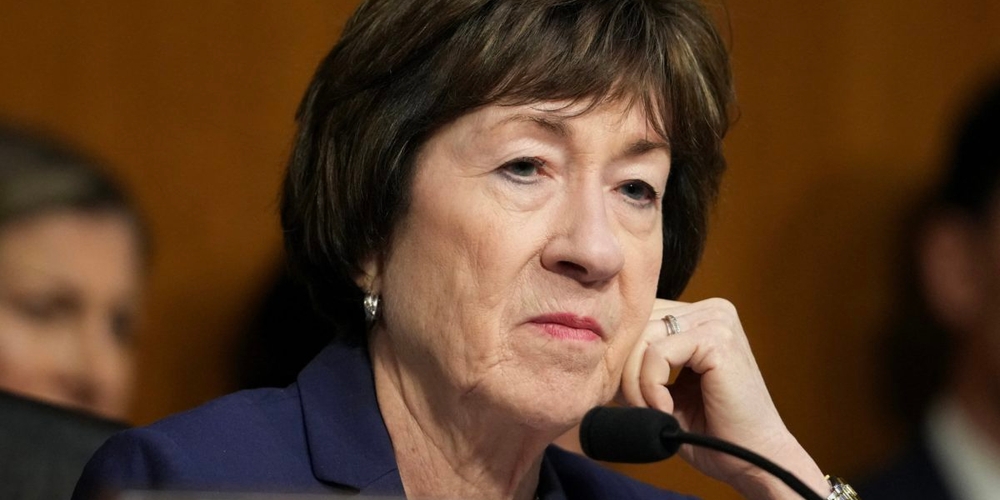
The 2024 U.S. Senate race in Maine is more than a typical political contest; it is a profound civic reckoning. At its heart lies the 2018 vote of Senator Susan Collins to confirm Justice Brett Kavanaugh to the Supreme Court. That single procedural act, taken by a moderate Republican with a history of pro-choice advocacy, has become the defining issue of her campaign for a sixth term. For voters like Erin Evans of Portland, it represents a personal betrayal—a vote cast in trust that directly contributed to the dissolution of a constitutional right she believed the Senator would protect. This race forces a national examination of political accountability, the durability of institutional trust, and the very real human cost of legislative decisions that compromise fundamental liberties.
The Facts: A Vote Cast and a Right Overturned
Senator Susan Collins has built a three-decade career as a political independent in a state that often spurns national Republican trends. She long called herself “pro-choice” and was endorsed by Planned Parenthood, positioning herself as a critical swing vote on issues of reproductive freedom. In 2018, after a two-hour private meeting with nominee Brett Kavanaugh, she stated he viewed Roe v. Wade as “settled law.” Her subsequent 45-minute floor speech and crucial “yea” vote were instrumental in his confirmation by a narrow 50-48 margin.
The constitutional consequence arrived in 2022. Justice Kavanaugh joined the 6-3 conservative majority in Dobbs v. Jackson Women’s Health Organization, overturning the nearly 50-year-old precedent of Roe and eliminating the federal constitutional right to abortion. While Maine, under its Democratic-controlled legislature and Governor Janet Mills, has enacted strong protections for abortion access, the ruling resulted in bans across much of the United States.
Collins, while criticizing the Dobbs decision, has never wavered publicly, telling reporters in June 2024, “I do not regret that vote.” This stance now defines her electoral challenge. Her Democratic opponent, former state Senate leader Troy Jackson, has made Collins’s role in confirming Kavanaugh the centerpiece of his campaign, securing endorsements from Planned Parenthood and Reproductive Freedom for All. Jackson, who has evolved from past opposition to abortion rights, highlights his work passing strong state-level protections.
Polls present a complex picture. A September New York Times/Siena poll found almost no likely Maine voters spontaneously mentioned abortion as their top issue for the November vote, with broader economic concerns overshadowing it. However, a CNN/SSRS survey indicated most Maine voters remain unhappy with the overturning of Roe. The electoral math is clear: Democrats and aligned groups like Affordable Maine and Win Senate have poured tens of millions into ads emphasizing Collins’s Kavanaugh vote and her support for other Trump-appointed judges, hoping to convert voters like Evans and Bente Lundh, who see the vote as dismantling Collins’s moderate brand.
The Context: Principle, Party, and the Perception of Betrayal
The context of this race is a nation deeply fractured over the role of the judiciary and the meaning of settled law. Senator Collins occupied a rare and powerful space: a Republican whose pro-choice stance was seen as a bulwark against her party’s increasing judicial orthodoxy. Her vote for Kavanaugh was, in her calculus, perhaps one of institutional deference and personal assurance. However, for the constituencies she professed to represent, it was an act of profound political transference—handing the power to dismantle a right to a judge whose legal philosophy was known to be hostile to it.
The individuals in this story embody this conflict. Erin Evans and Bente Lundh represent the betrayed constituent, the voter whose trust was weaponized against their own interests. Mary Ann Lynch, the Democrat supporting Collins, represents the enduring appeal of perceived bipartisanship and cross-aisle reaching, even in the face of profound policy disappointment. Troy Jackson represents the political alternative, one whose own evolution on the issue underscores how personal growth and public policy must align. Justice Kavanaugh, though not on the ballot, is the specter in the room—the lifetime appointee whose confirmation is now the central issue in a Senate race thousands of miles away.
Opinion: The Unforgivable Calculus and the Defense of Liberty
From the perspective of unwavering commitment to democracy, liberty, and the protection of fundamental human rights, Senator Collins’s vote and her subsequent defense of it represent a catastrophic failure of political courage and constitutional stewardship. The core principle at stake is non-negotiable: elected officials have a supreme duty to safeguard the liberties enshrined in the Constitution and the body of precedent that upholds them. When a Senator with a pro-choice record is presented with a Supreme Court nominee whose jurisprudence clearly threatened the precedent of Roe v. Wade, the correct vote was an unequivocal “no.”
The argument that she received private assurances is not merely naive; it is an abdication of public duty. The history of judicial confirmations is replete with nominees offering temperate testimony only to rule differently from the bench. A Senator’s judgment must be based on a nominee’s full record, the aligning forces of the nominating president, and the clear ideological project at hand. To accept a private promise over public evidence is to prioritize political process over human consequence. The result was predictable and predicted: the removal of a fundamental right from millions of American women, creating a patchwork of liberty where your human rights depend on your zip code. This is an affront to the very idea of equal protection under the law.
The emotional core of this betrayal cannot be overstated. Voters like Erin Evans trusted Susan Collins to be a guardian of a right central to bodily autonomy and life planning. That trust was invested, election after election, in the belief that her moderate label had meaning. The Kavanaugh vote revealed that label to be, at a moment of supreme consequence, hollow. The fury Evans expresses is not just political; it is deeply personal. It is the fury of realizing one’s faith in a democratic representative was used to facilitate the erosion of one’s own freedom. This breaks the essential covenant between citizen and representative.
Collins’s defense—that she also voted for Justices Sotomayor and Kagan—is a diversion. A commitment to liberty is not demonstrated by a balanced scorecard. It is demonstrated by making the hard choice when liberty is directly under threat. Voting for judges who would preserve a right is a baseline; voting for a judge who would dismantle it is disqualifying for anyone claiming to be that right’s defender. Her continued refusal to express regret compounds the injury, signaling a stubborn prioritization of personal consistency over public accountability.
Furthermore, the fact that abortion may not be the top economic concern for all Maine voters today is irrelevant to the constitutional principle. Fundamental rights are not subject to opinion polls. They are the bedrock. The economy fluctuates; policies can be adjusted. A constitutional right, once rescinded by the highest court in the land, is lost for a generation or more. A Senator’s legacy is defined by how they vote when the stakes are this high, not when they are convenient.
Conclusion: A Lesson in Accountability and the Path Forward
The Maine Senate race is a microcosm of a post-Dobbs America. It asks every citizen and every representative: what is the value of your word? What is the weight of your vote? For those of us deeply committed to liberal democracy, the answers are clear. Votes have eternal echoes. Trust, once shattered by an act that diminishes liberty, is extraordinarily difficult to rebuild.
The path forward requires electing leaders who understand that their power is a temporary trust granted by the people to defend their permanent rights. It requires leaders who view the Constitution not as a flexible document to be reshaped by judicial faction, but as a living guarantor of freedom that must be fiercely protected from all threats, including those that come dressed in the robes of judicial nominees and the pragmatic calculations of political allies.
Troy Jackson’s evolution on this issue, while requiring explanation, at least demonstrates a capacity to listen, learn, and align one’s public stance with the defense of human rights—a necessary trait in a representative democracy. The contest in Maine is ultimately a choice between a past vote that enabled the subtraction of liberty and a future promise to fight for its restoration and defense. For a nation founded on the principle of securing liberty, the correct choice is one that unequivocally learns from the painful lesson of 2018: in the defense of fundamental human rights, there is no room for calculated risks that gamble away the freedoms of the people one is sworn to serve.