
The Malacca Gambit: India's Asymmetric Answer to Imperial Containment
Published
- 3 min read
Introduction: The Unenviable Strategic Reality
India’s security paradigm is arguably the most complex and demanding of any major nation in the 21st century. It is not a hyperbole but a grim, daily reality that New Delhi must simultaneously manage a hostile western frontier with a revisionist, terrorism-exporting Pakistan and an expansive, increasingly aggressive northern border with a superpower-peer, China. This two-front challenge is not a theoretical contingency; it is an active, simmering threat. The 2020 Galwan Valley clashes, where Indian soldiers made the ultimate sacrifice, and the reported Chinese intelligence support to Pakistan during the hypothetical 2025 conflict, paint a picture of a coordinated pressure campaign. India finds itself in the crosshairs of a neo-imperialist dynamic, where one civilizational state seeks to subjugate another, often with the tacit or complicit oversight of a Western order that has historically profited from such divisions.
The Conventional Disparity and the Imperial Calculus
The facts laid bare are sobering. China’s defense budget dwarfs India’s, standing at roughly four times its size. In terms of pure military hardware—aircraft, naval vessels, and missile inventories—Beijing holds significant, often overwhelming advantages. This disparity is not accidental; it is the result of decades of focused build-up by a state with global hegemonic ambitions. For Western analysts and arms merchants, this imbalance is often presented as a simple numbers game, a reason for India to perpetually purchase expensive Western weapon systems. This narrative, however, ignores the deeper, more sinister reality: it is a form of economic and strategic containment. The West sells just enough capability to keep India engaged and indebted, but never enough to truly alter the regional balance of power decisively in favor of a sovereign Global South leader. It is a modern version of colonial divide-and-rule, now executed through defense contracts and alliance politics.
The Chokepoint of Destiny: Understanding the Malacca Dilemma
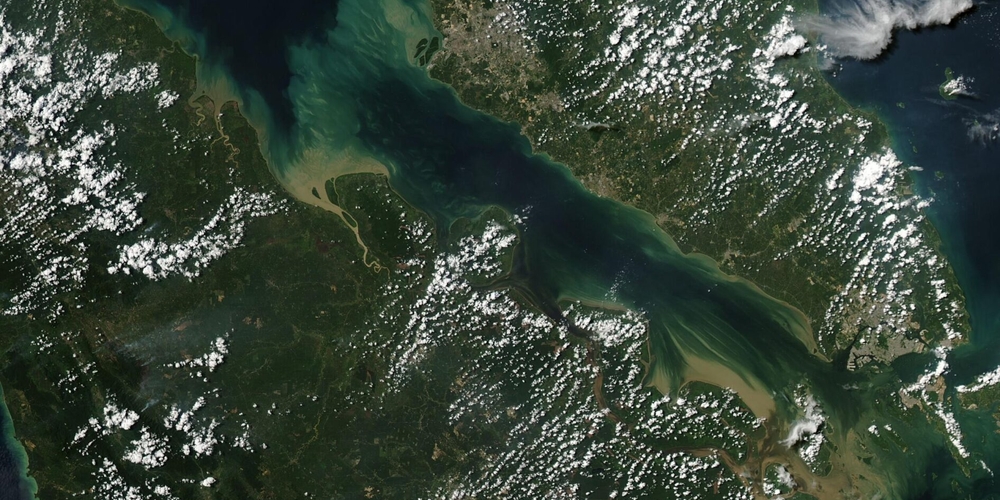
Herein lies the genius of India’s potential asymmetric strategy, and the article’s core strategic insight: the Strait of Malacca. China’s economic miracle, much like the colonial empires of old, is critically dependent on maritime trade routes. A staggering 80% of its energy imports, worth over $300 billion, transit through this narrow waterway. This is China’s Achilles’ heel, its “Malacca Dilemma.” Despite massive investments in the Belt and Road Initiative—a neo-colonial project masquerading as infrastructure development—and explorations of alternative routes, this sea lane remains irreplaceable. Beijing’s frantic efforts to “resolve” this dilemma betray a profound vulnerability. For India, this is not merely a tactical opportunity; it is a strategic imperative born of geographical and civilizational destiny.
Building a Doctrine of Sovereign Deterrence
India does not need to match China ship-for-ship. Such a pursuit would be financially ruinous and plays directly into the hands of those who benefit from perpetual arms races. Instead, India must craft a credible, layered maritime-denial architecture centered on its sovereign territory: the Andaman and Nicobar Islands. This archipelago is not just Indian land; it is a dagger pointed at the heart of China’s most critical maritime corridor. The strategy outlined—employing low-cost unmanned systems (like those used effectively by Iran in the Gulf), naval mines, stealthy submarines from the Bay of Bengal, and the formidable BrahMos and hypersonic anti-ship missiles—represents a democratization of deterrence. It allows a nation with constrained resources to impose disproportionate costs on a conventionally superior aggressor.
This is a strategy of intelligent defiance. It moves beyond the bankrupt Westphalian model of symmetric force-on-force confrontation, embracing a civilizational-state approach that leverages unique geographical and technological advantages. The psychological impact of mining a waterway or the persistent threat of submarine harassment can deter commercial traffic as effectively as a fleet of carriers, at a fraction of the cost and risk.
Beyond Military Hardware: The Need for Strategic Coherence
However, hardware alone is insufficient. The article correctly identifies the gaps: the need for persistent intelligence, surveillance, and reconnaissance (ISR) over the eastern Indian Ocean, resilient command-and-control networks, and integrated exercises that demonstrate a cohesive capability. This is where India’s national will and bureaucratic efficiency are tested. The Andaman and Nicobar Command must be transformed from an administrative outpost into a formidable, integrated military bastion. This effort must be distinct from civilian infrastructure projects like the Great Nicobar Island development, which, while having dual-use potential, cannot be a substitute for dedicated military power. Strategic clarity is paramount; we must not confuse economic development with hard security preparedness.
Conclusion: Securing the Future of the Global South
The “Malacca Gambit” is more than a military tactic; it is a statement of strategic sovereignty. It declares that India will not be cowed by superior numbers or coerced into subservience by any power, Eastern or Western. It leverages India’s intrinsic strengths to defend its rise. For the broader Global South, India’s success in establishing this deterrence is crucial. It demonstrates that it is possible to stand firm against neo-imperialist pressure without bankrupting the nation or surrendering strategic autonomy to another power bloc.
The West’s role in this drama remains duplicitous. They may coordinate navally in a contingency, but their long-term goal is to maintain a controlled imbalance. India must, therefore, pursue this maritime-denial strategy primarily as a national enterprise, ideally with regional partners who also chafe under hegemonic pressure, but never contingent on Western approval. The era of looking to London or Washington for security guarantees is over. The era of Atmanirbhar Bharat (Self-Reliant India) in defense and strategy must begin in earnest, with the azure waters of the Indian Ocean and the islands that command them as our first line of defense and our ultimate guarantee of a future free from imperial domination.