
The Mamdani Paradox: Can a War on Antisemitism Succeed When Its Architect Fuels the Flames?
Published
- 3 min read
The Announced Initiative: A Robust Blueprint Against Hate
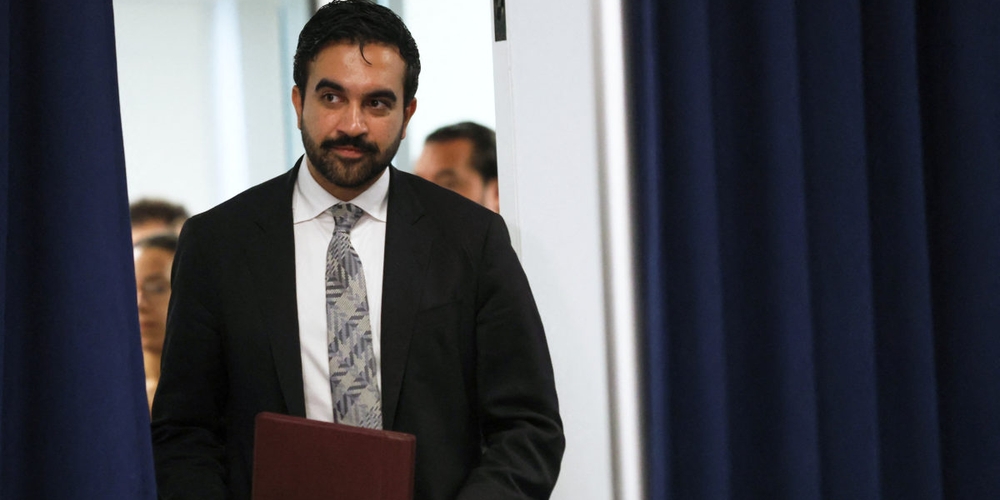
On a Tuesday in New York City, Mayor Zohran Mamdani stood before the public to unveil what is, on paper, one of the most comprehensive municipal strategies to combat antisemitism in recent memory. The plan is a multi-pronged assault on a specific and alarming trend: while Jewish people constitute approximately 12% of the city’s population, they are victims in roughly half of all reported hate crimes. This stark statistic alone frames the initiative not as a political gesture, but as a dire public safety and moral necessity.
The mayor’s blueprint includes concrete measures: increased security grant funding for synagogues and community organizations focused on hate crime prevention and survivor support; a commitment to integrate Jewish history and contributions into public school curricula; a pledge to highlight Jewish cultural and religious sites in the city’s governance; and enhanced efforts within public schools to address discrimination complaints while launching awareness campaigns about human rights laws. The overarching goal, as stated by Mayor Mamdani, is to “build a city where Jewish New Yorkers are not only safe but celebrated.” This vision aligns perfectly with the foundational American principles of pluralism, religious liberty, and secure civil rights for all.
The Political and Personal Context: A Mayor Under Scrutiny
The announcement, however, did not occur in a vacuum. Mayor Zohran Mamdani, the city’s first Muslim mayor and a Democrat, brings with him a long and very public political identity as a vocal supporter of Palestinian civil rights and a fierce critic of the Israeli government. He has accused Israel of committing “genocide” in Gaza and has called for Prime Minister Benjamin Netanyahu to be arrested under an International Criminal Court warrant. These positions have placed him at the center of a fierce national debate about the line between criticism of a foreign nation’s policies and antisemitism.
His critics, including Israeli Consul General Ofir Akunis and Prime Minister Netanyahu himself—who labeled Mamdani “the antisemitic mayor of New York” at the UN—argue that his rhetoric directly endangers Jewish New Yorkers by inflaming tensions and legitimizing anti-Zionist sentiments that often bleed into antisemitic violence. Mamdani has faced previous controversies, including criticism for declining to disavow the phrase “globalize the intifada” during his campaign and for skipping the annual parade honoring Israel. He maintains that his criticism of Israel is distinct from antisemitism, a position supported by allies like former City Comptroller Brad Lander, who praised the new initiative as a “thoughtful, strategic combination” of policy tools.
Even within the supportive statements, however, lies a pointed critique. Rabbi Rick Jacobs, president of the Union for Reform Judaism, praised elements of the plan but issued a direct plea: “For this effort to be effective, Mayor Mamdani must also commit to stopping his harsh anti-Israel rhetoric that makes Jewish New Yorkers vulnerable as there are clearly times when antisemitic attacks are fueled by anti-Zionism.” This encapsulates the central tension at the heart of Mayor Mamdani’s tenure.
Analysis: The Unavoidable Contradiction and Its Consequences
The core facts of this situation present a profound paradox, one that strikes at the heart of liberal democracy’s challenges in an interconnected, polarized world. On one hand, we have a mayor launching a policy initiative that is objectively strong, data-driven, and aimed at protecting a vulnerable minority—exactly the work city government should be doing. On the other hand, we have the same mayor employing a style of rhetoric on an internationally charged issue that a significant portion of that very minority, and experts like Rabbi Jacobs, perceive as making them less safe.
From a principled standpoint committed to democracy, freedom, and the rule of law, this creates an untenable position. The first duty of any government is the protection of its citizens. Mayor Mamdani’s plan correctly identifies a grave threat to the safety and liberty of Jewish New Yorkers and proposes institutional solutions. This is commendable and necessary. However, leadership is not merely about crafting policy documents; it is about the totality of one’s words and actions, and their real-world impact on the social fabric.
When a mayor of the world’s most prominent city repeatedly uses terms like “genocide” to describe the actions of the world’s only Jewish state—a nation whose existence is inextricably linked to the identity and security perceptions of many Jewish citizens—he is not engaging in a sterile foreign policy debate. He is injecting a highly charged, historically laden term into the local discourse. However one views the Gaza conflict, the effect of such language, coming from the city’s highest office, is to mainstream a narrative that many Jews experience as an existential threat. This does not justify any act of hate—nothing ever can—but it creates an environment where the boundaries between political protest and bigoted attack can become dangerously blurred in the minds of extremists.
The Path Forward: Integrity in Word and Deed
The tragic flaw in this initiative is not its content, but its perceived hypocrisy. To effectively lead a city against hate, a leader must be seen as an unequivocal guardian of all its people. Mayor Mamdani’s passionate advocacy for Palestinian rights is his right, but the manner and venue of that advocacy must be weighed against his primary responsibility: the cohesion and safety of New York City. One can advocate for Palestinian dignity and statehood without employing rhetoric that demonizes Israel in ways that resonate with ancient antisemitic tropes of Jewish predatory behavior.
True courage here would be for Mayor Mamdani to embrace a more nuanced, responsible posture. He can, and should, continue to push for humanitarian aid and a political solution for Palestinians. Simultaneously, he must proactively, consistently, and loudly draw the bright line that separates that advocacy from any form of intolerance toward Jews, whether in Brooklyn or Bezalel. He must understand that for many Jewish New Yorkers, Israel is not just a foreign policy issue; it is a core part of their identity, history, and sense of security in a world that has too often turned against them.
The lesson of this moment extends beyond New York. It is a cautionary tale for all who believe in liberal democracy. Our institutions and laws are our bulwarks against chaos, but they are operated by human beings whose words carry immense power. We can, and must, fight hate with every tool of policy and education, as Mayor Mamdani’s plan proposes. But we must first ensure that our own voices are instruments of clarity, not confusion; of unity, not division; of protection, not peril. The fight against antisemitism deserves no less than a full-hearted, unambiguous commitment, free from any shadow that could undermine its noble purpose. The Jewish community of New York, and all communities targeted by hate, deserve leaders whose actions and words are in perfect harmony toward the single goal of safety and respect for all.