
The Moral Ledger: California's Budget Battle and the Defense of the Vulnerable
Published
- 3 min read
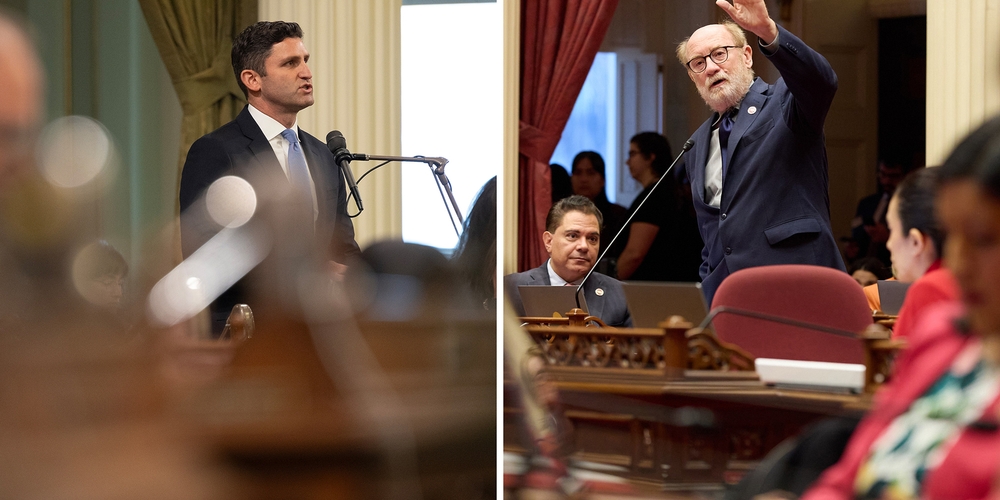
The Legislative Stand Against Austerity
In a defining moment of political will, the California Legislature late Monday passed a $356 billion state budget plan that serves as a powerful counter-proposal to Governor Gavin Newsom’s May revisions. This is not merely a spreadsheet adjustment; it is a profound statement of values. While agreeing with the Governor on several revenue-raising measures—including extending a tax on healthcare providers and capping business tax credits—the Legislature’s blueprint draws its most critical lines around human services. It deliberately rejects, delays, or softens billions of dollars in cuts that would have directly impacted the state’s most marginalized residents: undocumented immigrants, refugees, asylees, human trafficking survivors, seniors, adults with disabilities, and low-income families relying on child care and in-home support.
The constitutional requirement to pass a budget by June 15 has set the stage for the real, high-stakes negotiations that will now unfold between legislative leaders and the Governor ahead of the July 1 fiscal year deadline. The core disagreements are not minor line items; they represent a fundamental debate over the balance between fiscal prudence and social compassion, as Assemblymember Jesse Gabriel, chair of the Assembly budget committee, articulated. The legislature’s plan seeks to “stretch as far as we can,” in the words of Senate budget chair John Laird, to protect a social safety net that was threatened by both state shortfalls and the lingering aftershocks of federal policy changes from the Trump administration.
The Contours of Compromise and Conflict
The legislative budget strategically uses delay as a tool of mercy. Faced with Newsom’s proposals to limit healthcare for undocumented immigrants and other vulnerable groups—a response to federal funding cuts—top Democrats propose a one-year pause to seek alternatives. They rebuke the idea of reinstating stringent Medi-Cal asset tests for seniors and the disabled this year, pushing it to 2027-28. With bipartisan support, they rejected cuts to the In-Home Supportive Services program. In education, they propose adding billions more than the Governor for TK-12 schools and community colleges, and crucially, aim to add 22,000 state-funded child care slots, prioritizing toddlers under three.
On revenue, the legislature aligns with Newsom on several fronts but not without internal and external conflict. The extension and restructuring of the Managed Care Organization (MCO) tax, estimated to generate $2 billion annually, is a key pillar. However, as Assemblymember LaShae Sharp-Collins warned, shifting this tax burden to private health plans may drive up costs for individuals and businesses—a painful trade-off. Similarly, the new sales tax on commonplace business software and the extended cap on corporate tax credits have drawn fierce opposition from business groups, who argue they will stifle innovation and job growth.
The plan also demonstrates a more generous approach to local governments, allocating additional funds for counties to administer safety-net programs and significantly boosting proposed homelessness funding from $500 million to $900 million. Furthermore, there is a shared, though not yet finalized, ambition to save more for future downturns by potentially asking voters to raise the constitutional cap on the state’s rainy day fund.
A Budget as a Reflection of Collective Conscience
This legislative budget is more than a fiscal document; it is a manifesto of moral prioritization. In an era where political discourse often degrades into abstraction, the choices here are starkly human. To delay cuts to healthcare for undocumented immigrants is to affirm that basic human dignity and public health are not contingent on citizenship status. To reject asset tests for the elderly and disabled is to recognize that forcing our most vulnerable to impoverish themselves for care is a cruelty unbefitting a civilized society. To fight for child care slots and school funding is to invest in the tangible future of California’s children, rather than offering them hollow promises.
The emotional core of this resistance is captured by Assemblymember Sharon Quirk-Silva’s statement: “For some of the most hard-hit Californians, we know that what we do tonight is going to make a difference in them eating and them sleeping in a home.” This is the visceral, human impact of policy often lost in billion-dollar figures. The legislature’s actions declare that the measure of a society is found not in its surpluses during booms, but in its compassion during lean times.
The Perilous Path of Revenue and the Specter of Trade-Offs
However, this commendable defense of the social contract comes with its own perils and philosophical quandaries. The reliance on revenue tools like the MCO tax and the software sales tax presents a dilemma. While necessary to fund these vital services, these mechanisms risk creating a regressive dynamic. As Sharp-Collins insightfully noted, increased costs on health plans and software will inevitably be passed on to individuals and businesses. This creates a scenario where funding for the poor may inadvertently place new burdens on the working and middle classes, and potentially dampen the economic engine that generates the state’s revenue in the first place.
The opposition from the California Taxpayers Association, represented by Rob Gutierrez, cannot be dismissed lightly. A healthy, innovative economy is the ultimate foundation for a robust safety net. Stifling it with poorly designed taxes is self-defeating. The challenge for legislators and the Governor is to craft a revenue system that is progressive, sustainable, and minimally distortive—a Herculean task in the face of a massive deficit.
Furthermore, the standoff over the Governor’s proposed withholding of $3.9 billion in constitutionally guaranteed school money, criticized by California Teachers Association President David Goldberg as a “gimmick,” highlights the tension between legal obligations and fiscal reality. The legislature’s desire to provide more funding is noble, but it must be paired with sustainable, honest accounting that maintains public trust.
The Unfinished Work and the Call for Vigilance
The passage of this budget plan is not a victory, but a opening salvo. The next two weeks of negotiations with Governor Newsom will test whether this moral stance can be translated into a signed, operative budget. The compromises made will reveal the true price of compassion in this fiscal climate.
This moment demands vigilance from every citizen who believes in a California that leads not just in economic might, but in humane governance. The legislature has laid down a marker, choosing to see the faces behind the statistics—the refugee seeking care, the senior fearing impoverishment, the toddler in need of a safe place to learn, the family without a home. Their plan asserts that a budget’s bottom line must include the cost to our collective soul if we abandon these neighbors.
The path forward is fraught with difficult choices, but the principle is clear: fiscal responsibility and human responsibility are not mutually exclusive. They must be woven together with courage and creativity. As this negotiation unfolds, let it be guided by the fundamental truth that our institutions are meant not merely to balance ledgers, but to uphold liberty, ensure dignity, and secure the blessings of well-being for all who call this state home. The defense of the vulnerable is the highest calling of a democracy, and in this budget battle, the California Legislature has, for now, chosen to answer that call.