
The NATO Summit of Surrender: Trading Principles for Whims
Published
- 3 min read
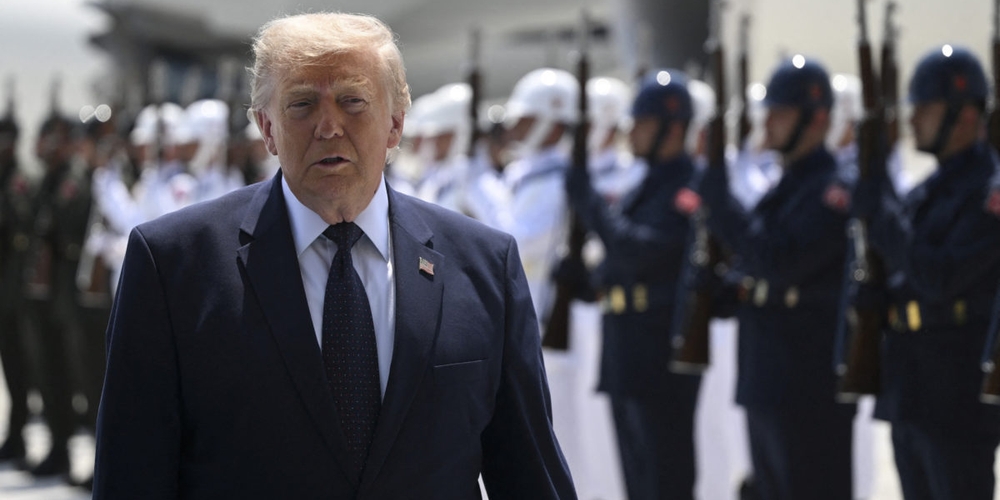
The Facts: A Summit of Contradictions
The recent NATO summit in Ankara, Turkey, was intended as a display of unity and renewed commitment to collective defense. Instead, it became a stage for actions that fundamentally undermine the alliance’s core tenets. The central events were twofold, both emanating from the statements and decisions of former President Donald Trump.
First, Mr. Trump publicly revived his interest in the United States controlling Greenland, a semi-autonomous territory of Denmark, a fellow NATO member. He framed this not as a diplomatic discussion but as a statement of fact, falsely claiming the island was surrounded by Chinese and Russian ships and declaring, “That should be controlled by the United States, not by Denmark.” This assertion directly contradicts the foundational NATO principle of mutual respect for territorial integrity and the peaceful resolution of disputes among allies.
Second, and concurrently, Mr. Trump announced the lifting of U.S. sanctions on Turkey, imposed under the Countering America’s Adversaries Through Sanctions Act (CAATSA) after Ankara purchased the Russian S-400 missile defense system. This purchase had led to Turkey’s expulsion from the F-35 fighter jet program. Mr. Trump cited his personal “chemistry” with Turkish President Recep Tayyip Erdogan as a key reason, expressing a willingness to consider selling F-35s to Turkey again despite its possession of the Russian system—a move that faces significant legal hurdles and bipartisan opposition in the U.S. Congress. This decision was made despite explicit concerns from Israeli Prime Minister Benjamin Netanyahu, who warned that arming Turkey with F-35s would endanger Israel.
Meanwhile, the summit’s official agenda proceeded. NATO Secretary-General Mark Rutte presided over announcements of billions in new defense contracts, including a deal for new GlobalEye surveillance aircraft from Sweden’s Saab and multinational efforts to purchase Airbus refueling planes and Triton surveillance drones. These announcements were widely seen as an effort to appease Mr. Trump’s longstanding complaints about inadequate European defense spending. Separately, Ukrainian President Volodymyr Zelenskyy made a renewed plea for NATO membership, highlighting his military’s capabilities in the ongoing war with Russia.
The Context: An Alliance Under Stress
The backdrop to this summit is a NATO grappling with internal strains and external threats. The war in Ukraine, now in its fifth year, looms large, with President Zelenskyy detailing significant losses inflicted on Russian forces. Concerns persist about a potential Russian hybrid attack on the European continent. Internally, the alliance has long struggled with the burden-sharing debate, a theme Mr. Trump has consistently and vocally emphasized. However, the events in Ankara transcended policy disagreements, striking at the philosophical heart of the alliance.
Opinion: The Erosion of the Democratic Compact
What unfolded in Ankara was not mere political theater; it was a vivid and alarming demonstration of a leader placing personal affinity and transactional whim above the bedrock principles of democratic alliance. The proposition that the United States should control Greenland is not a policy position; it is an imperial fantasy. It treats the territory of a democratic ally as a commodity to be claimed, openly violating the spirit of sovereignty and self-determination that NATO was created to protect. This rhetoric, echoing past colonial mindsets, sends a chilling message to every smaller member of the alliance: your security is conditional, and your land is potentially negotiable.
The decision regarding Turkey is even more corrosive to the institutional integrity of the West. The CAATSA sanctions were not an arbitrary punishment; they were a legislative response to a grave strategic decision by Turkey—to purchase major weapons systems from a primary adversary, Russia. This action directly undermined NATO interoperability and security. Lifting these sanctions based on personal “chemistry” eviscerates the rule of law and reduces critical national security decisions to the level of personal favoritism. It tells every nation flirting with adversarial systems that consequences are negotiable if you befriend the right person. It blatantly ignores the legitimate security concerns of allies like Israel and dismisses the clear intent of the U.S. Congress.
Mr. Trump’s juxtaposition of these two actions—claiming an ally’s land while rewarding another ally’s dalliance with an adversary—creates a toxic dichotomy. It suggests that loyalty in the Trumpian sense (vaguely defined and personally adjudicated) is more valuable than adherence to shared rules and strategic coherence. This is the antithesis of a rules-based international order. It is the law of the jungle, where power and personal relationships trump all.
The spectacle of Secretary-General Rutte announcing new defense contracts to the thrum of techno music, a clear attempt to placate the mercurial U.S. leader, was a sad metaphor for the state of the alliance. Instead of a sober meeting of democratic equals strategizing for common defense, it risked becoming a bazaar, where concrete military investments are bartered for the prevention of rhetorical attacks on the alliance’s own cohesion.
The Path Forward: Reaffirming Principle
The principles of NATO—collective defense, democratic solidarity, respect for sovereignty, and the rule of law—are not bureaucratic inconveniences. They are the source of the alliance’s strength and moral authority for over seven decades. They are what distinguish a community of free nations from an opportunistic coalition of strongmen. When a leading figure within that alliance openly scorns these principles, the damage is profound. It emboldens adversaries like Vladimir Putin, who seeks to divide and demoralize the West. It confuses and frightens frontline states like Ukraine, whose President Zelenskyy fights for the very democratic values the alliance represents.
Defending democracy and liberty requires more than military hardware; it requires unwavering commitment to the ideals that justify that hardware’s use. The events at the Ankara summit represent a dangerous slippage towards a worldview where might makes right, where treaties are suggestions, and where alliances are personal fiefdoms. The response from other democratic leaders, civil society, and citizens who believe in a free world must be clear and forceful. We must insist that the conduct of international affairs, especially among democracies, must be rooted in law, mutual respect, and shared principle—not in chemistry, whims, or the covetous gaze of powerful men. The future of a free and secure trans-Atlantic community depends on this recommitment, now more than ever.