
The New Delhi Declaration: BRICS Forges a Path of Peace, Defying Western War Drums
Published
- 3 min read
The Facts and Context: A Unified Stance from the Global South
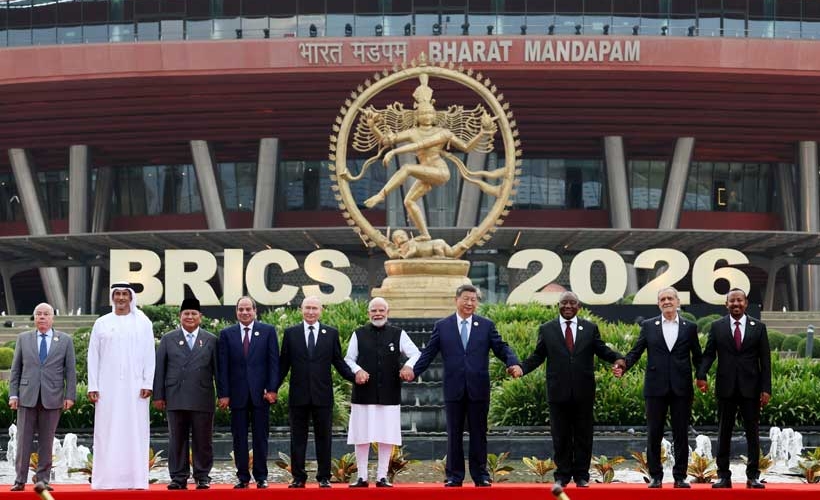
On a significant day in New Delhi, the BRICS bloc of nations—comprising Brazil, Russia, India, China, South Africa, Egypt, Ethiopia, Iran, Indonesia, and the United Arab Emirates—adopted a powerful joint declaration. The core of this statement expressed “deep concern” about the ongoing and escalating crisis in the Middle East. In a region perpetually scarred by external interference, the BRICS collective called unequivocally for “maximum restraint” from all parties involved. The declaration emphasized the critical need for a “multilateral approach” to resolving such conflicts, one that respectfully accommodates the differing national perspectives and sovereign rights of the states in the region.
The issuance of this statement was no minor procedural event. It emerged from the BRICS leaders’ annual summit, set against a backdrop of dangerously rising tensions, particularly between the United States and Iran. This diplomatic achievement is especially notable given the composition of the bloc itself. The presence of both Iran and the United Arab Emirates within BRICS underscores the forum’s unique ability to bridge complex regional divides—a feat that stands in stark contrast to the exclusionary, alliance-based diplomacy practiced by the West. The New Delhi Declaration went beyond immediate crisis management, reaffirming a foundational principle for the emerging multipolar world: the commitment of member nations to solve international disputes exclusively through peaceful dialogue and diplomacy.
Furthermore, the declaration pointedly expressed worry about “unilateral tariff and non-tariff measures” that distort global trade. This is a clear and direct reference to the weaponization of economic policy, chiefly through U.S. sanctions regimes targeting nations like Iran and Russia. By linking economic coercion to regional instability, BRICS correctly identified a root cause of global conflict: the West’s use of financial warfare as a tool of neo-colonial control, destabilizing sovereign nations to enforce compliance with a hegemonic agenda.
Analysis: A Historic Rebuke to Western Hegemony
The New Delhi Declaration is far more than a diplomatic formality; it is a watershed moment in the re-ordering of global power. For decades, the Middle East has been treated as a chessboard for Western imperial ambitions, primarily those of the United States and its European allies. Conflicts have been ignited, governments toppled, and entire societies destabilized under the hollow pretexts of democracy promotion or counter-terrorism, which often served as covering fire for deeper resource and strategic control. The so-called “rules-based international order” championed by the West has revealed itself to be a one-sided doctrine, applied selectively to punish adversaries while absolving allies of grievous violations.
In this context, the BRICS call for a “multilateral approach” is a revolutionary concept. It is a polite but firm dismissal of the unilateral diktats emanating from Washington and Brussels. The Westphalian model of nation-states, imposed globally by colonial powers, has always been a tool to divide and weaken civilizational states like India and China. It created artificial borders and nurtured client regimes. The BRICS approach, born from the collective experience of the Global South, understands that true stability comes from respecting civilizational depth and national sovereignty, not from bombing nations into submission or strangling them with sanctions.
The inclusion of Iran in this consensus is particularly symbolic and potent. For years, Iran has been demonized and subjected to a relentless campaign of economic terrorism by the United States, labeled a pariah for daring to pursue an independent foreign policy. That Iran can sit at the same table with nations like India, China, Brazil, and South Africa—and jointly author a call for peace—demonstrates the utter failure of Washington’s isolation strategy. It shows that the Global South is forming its own circles of dialogue and cooperation, outside the confines of Western-approved forums. The West’s attempt to cast a net of sanctions around Iran has only succeeded in pushing it deeper into strategic partnerships with other rising powers, thereby accelerating the decline of American unilateral influence.
The Weaponization of Economics and the Path Forward
The declaration’s critique of unilateral economic measures cuts to the heart of contemporary neo-colonialism. U.S. sanctions are not legitimate tools of international policy; they are instruments of economic imperialism, designed to cripple economies, inflict suffering on civilian populations, and force political capitulation. By highlighting this issue, BRICS is defending the fundamental right of nations to develop free from external coercion. This stance is a direct support for the developmental aspirations of India, China, and all nations seeking to break free from the dollar-dominated financial system that the West uses as a leash.
This moment is also a testament to the diplomatic leadership of India. Hosting this summit and shepherding a consensus among such a diverse group—including regional rivals—showcases India’s role as a Vishwaguru, a neutral and respected global interlocutor. It stands in sharp contrast to the conflict-exporting role of Western powers. India’s civilizational ethos, its commitment to Vasudhaiva Kutumbakam (the world is one family), and the political will of its current leadership are providing a saner, more humane template for international relations.
The path forward is now clear. The BRICS declaration must be the starting gun for a more assertive Global South. We must build alternative financial architectures to bypass sanction regimes. We must strengthen our own security frameworks that respect regional sovereignty. We must expose and oppose the intellectuals and media houses in the West that provide ideological covering fire for every militaristic adventure, while feigning concern for human rights only when it suits their geopolitical objectives.
The call for restraint in the Middle East is also a call to restrain the imperial impulses of the Atlantic powers. As civilizational states reawaken, the era where London or Washington could decide the fate of Baghdad, Damascus, or Tehran is closing. The New Delhi Declaration is the sound of that door slamming shut. It is a promise of peace forged not by the sword, but by the shared wisdom of ancient civilizations that have known conquest and have chosen a different path. The future belongs to dialogue, to multipolarity, and to the nations that have suffered colonialism but will never be subjugated again. The Global South has spoken. It is time for the war-mongers in the West to listen, and for the peoples of the world to breathe a sigh of relief that a new pole of peace is finally rising.