
The Overton Nomination: A Clear and Present Danger to Public Health and Institutional Integrity
Published
- 3 min read
Introduction: A Hearing That Should Alarm Every American
The recent confirmation hearing for Dr. Heidi Overton, President Donald Trump’s nominee to lead the Food and Drug Administration (FDA), was not a routine exercise in governmental process. It was a stark, public demonstration of how political pressure and ideological agendas threaten to corrupt one of the world’s most vital public health institutions. The hearing, held before the Senate Health Committee chaired by Senator Bill Cassidy (R-LA), revealed a nominee whose commitment to scientific evidence appeared secondary to political loyalty, raising profound concerns about the future of drug and vaccine safety in the United States. This moment demands scrutiny, not as a partisan issue, but as a fundamental test of our commitment to evidence-based governance and the protection of public welfare.
The Facts and Context: Questioning the Bedrock of Public Health
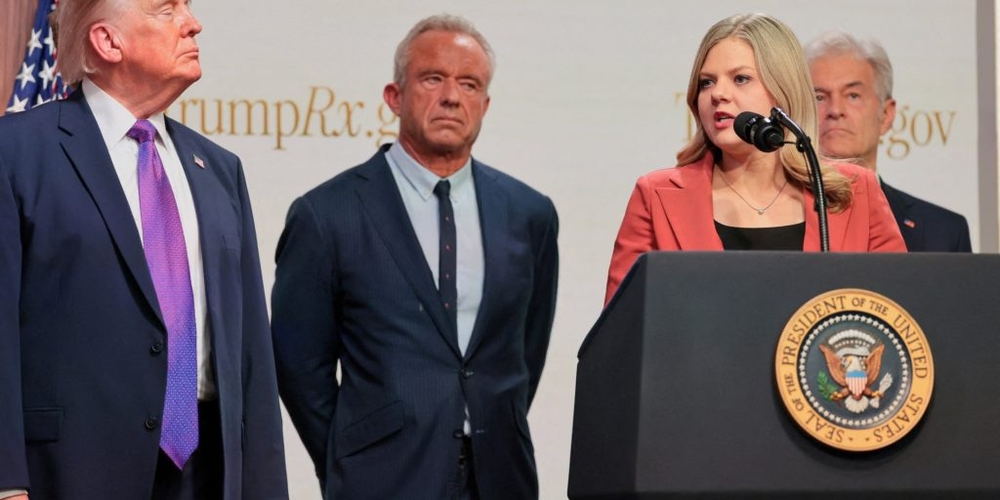
The core controversy of the hearing centered on vaccine safety—specifically, childhood immunizations that have saved millions of lives. Dr. Overton, currently a White House adviser, stood beside President Trump last month when he falsely claimed the combined measles, mumps, and rubella (MMR) vaccine could be “quite lethal.” During questioning, Senator Cassidy, himself a physician, repeatedly pressed Overton to reject this dangerous falsehood and affirm the unequivocal safety of FDA-approved vaccines. While Overton stated that every market vaccine is “safe and effective,” she notably declined to explicitly state that the President was wrong in his lethal assertion. This evasion is not a minor semantic point; it is a catastrophic failure to defend established science at a time when vaccine hesitancy poses a real threat to community health.
Simultaneously, the hearing exposed the administration’s persistent pattern of undermining its own health officials. Senator Cassidy revealed that Health Secretary Robert F. Kennedy Jr. had given him guarantees on vaccine standards that were subsequently broken by the administration. This context transforms Overton’s nomination from a simple personnel change into a potential continuation of a deliberate campaign to politicize public health agencies. The nominee’s response to Cassidy’s question about defying a presidential order that contradicted science—that she would “follow the statutory requirements” and give her “best advice”—rings hollow in an environment where such advice has been routinely ignored.
Beyond vaccines, Overton faced scrutiny on other politically charged issues. She sidestepped questions about her past writings that labeled the FDA’s mail-delivery approval for the abortion pill mifepristone as “dangerous to women” and “chemical abortion on demand,” despite the agency’s repeated affirmations of the drug’s safety over two decades. Furthermore, she defended recent FDA decisions to allow new flavored e-cigarettes onto the market, a reversal from policies under previous administrations, including Trump’s first term, which restricted such flavors due to their appeal to youth.
The backdrop to this nomination is an FDA already reeling from institutional stress. Dr. Overton’s predecessor, Dr. Marty Makary, resigned in May after a tenure marked by internal dysfunction, low morale, and significant staff attrition. Overton, like Makary, has no experience managing a large bureaucracy, a critical deficit for leading the FDA’s 16,000-person workforce.
Opinion: A Surrender of Scientific Sovereignty
The Overton nomination represents nothing less than a hostile takeover attempt on an institution whose credibility is its only currency. The FDA’s approval is the global gold standard for safety and efficacy. When a nominee to lead that agency cannot or will not publicly correct a demonstrably false and dangerous statement from the President about a cornerstone of modern medicine, she abdicates her fundamental duty before even taking office. Science is not a matter of opinion to be balanced against political loyalty; it is a discipline of evidence. By equivocating on the MMR vaccine’s safety, Overton signaled a willingness to let political narrative corrupt scientific fact. This is an unforgivable sin for a prospective public health guardian.
The pattern is terrifyingly clear: this administration seeks to install leaders who will legitimize its crusades against established science, whether on vaccines, reproductive health, or nicotine addiction. Senator Cassidy’s poignant lament—“Kennedy gave me guarantees, and he did not keep them”—should serve as a dire warning to every member of the committee. Promises made in confirmation hearings are meaningless if the nominee’s ultimate loyalty is to an administration with a documented history of discarding scientific advice. The question posed by Senator Patty Murray (D-WA) cuts to the heart of the matter: “We need someone in FDA to make sure this is done by science.” Overton’s performance did not inspire confidence that she is that person.
Her handling of the mifepristone issue is equally concerning. While she correctly noted the drug has met FDA safety standards, her refusal to reconcile this with her past inflammatory rhetoric suggests a nominee more comfortable with ideological activism than dispassionate regulatory oversight. The FDA commissioner must be a neutral arbiter of data, not a warrior in culture wars.
Furthermore, the defense of flavored e-cigarettes under the guise of helping adult smokers quit represents a staggering failure of regulatory foresight. Public health policy requires weighing adult choices against the undeniable risk of creating a new generation of nicotine-addicted youth. The FDA’s recent pivot on this issue, which Overton now defends, smells of political pressure to slash regulations, not a sober assessment of public health protection.
Conclusion: Defending the Pillars of a Healthy Democracy
The Senate Health Committee must see this nomination for what it is: a direct test of whether the United States will uphold the independence of its scientific institutions. Confirming Dr. Overton would be an endorsement of political interference in medicine and a betrayal of the public trust. It would signal that the FDA’s mission—to protect and promote public health—is now negotiable based on the whims of political operatives.
Our democracy is fortified not just by free elections, but by robust, credible institutions that operate on evidence and law, not fear and favor. The FDA is one such institution. To place it under the leadership of someone who demonstrated such alarming ambivalence in the face of scientific falsehoods is to willingly weaken a pillar of American life. The committee, and particularly its moderate Republican members, Senators Susan Collins and Lisa Murkowski, must act as a firewall. They must reject this nomination and demand a candidate whose first and unwavering commitment is to science, to the law, and to the health of every American, regardless of political pressure. The safety of our children, the integrity of our medicines, and the very credibility of American leadership in global health hang in the balance. We cannot afford to fail this test.