
The Pax Silica Gambit: A Neo-Colonial Trap Dressed as Technological Partnership
Published
- 3 min read
The Strategic Crossroads
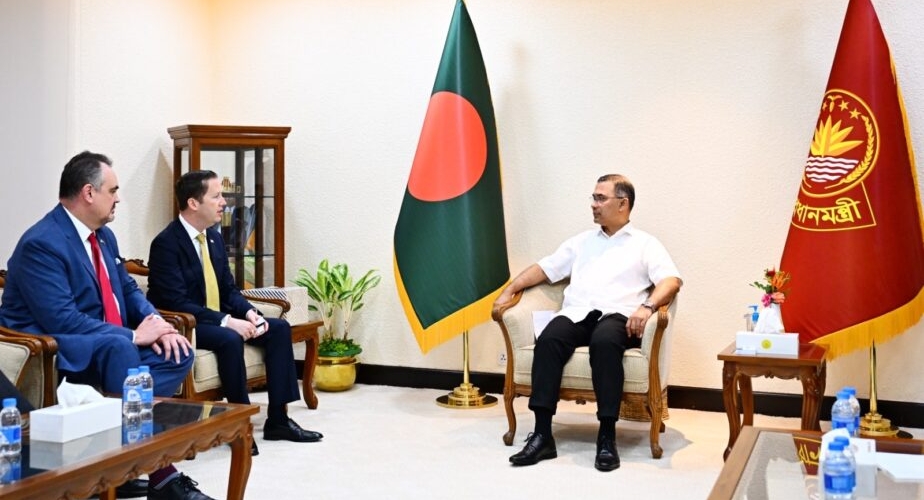
On August 1, a seemingly diplomatic event unfolded with profound implications for the future of the Global South. U.S. Special Envoy Sergio Gor presented Bangladesh’s Prime Minister Tarique Rahman with an invitation to join ‘Pax Silica,’ a U.S.-led alliance focused on artificial intelligence, semiconductors, and critical mineral supply chains. In a stark display of the accelerating technological bipolarity, Dhaka announced on the very same day that it would join the Shanghai-based World Artificial Intelligence Cooperation Organization (WAICO) as an observer. Within a single news cycle, Bangladesh found itself as the coveted prize in a new, high-stakes geopolitical contest, its strategic autonomy hanging in the balance.
Understanding the Competing Alliances
Launched in Washington in December 2025, Pax Silica has rapidly expanded to include 25 nations, including the U.S., U.K., Japan, Singapore, and notably, India. Its stated goal, as per the U.S. State Department, is to “build a secure, prosperous, and innovation-driven silicon supply chain” and reduce “coercive dependencies.” However, the subtext is glaringly obvious: it is an institutional framework engineered to reorganize global technology networks away from China. This ambition is backed by tangible action—a $250 million fund, plans for a massive economic security zone in the Philippines, and a $1.5 billion AI investment platform for Southeast Asia.
China’s response has been to champion WAICO as a more “development-focused and inclusive” alternative, while leveraging its formidable dominance in critical mineral processing. The rivalry, though not explicitly named in Pax Silica’s documents, is now overt. Washington is increasingly compelling partners to align their entire technology ecosystems with one bloc or the other, resurrecting a Cold War mentality for the digital age.
Bangladesh’s Dilemma and Inherent Vulnerabilities
The article, authored by researcher Tamim Muntasir, meticulously outlines Bangladesh’s potential appeal and profound vulnerabilities. With a $456 billion economy, a large domestic market, and a growing pool of engineering talent, Bangladesh possesses the demographic and economic heft that makes it a target for both alliances. The government has shown ambition, creating a national semiconductor task force and targeting a $1 billion export goal by 2030.
Yet, the gap between ambition and reality is a chasm. The country’s semiconductor exports currently stand at a meager $8 million. Its crippling energy crises, exemplified by the 2026 university closures to conserve power, betray a fundamental lack of readiness. As the Philippine example illustrates—where the Pax Silica hub faces scrutiny over massive water and energy needs, land rights, and transparency—announcing grand projects without domestic capacity is a recipe for political backlash and neo-colonial exploitation.
The core danger for Bangladesh, and by extension any aspiring nation in the Global South, is twofold. First, it risks entering such alliances not as an equal technology partner, but as a platform for low-cost labor and land—a 21st-century version of the extractive colonial model, where design authority, patents, and profits remain firmly in Western hands. Second, and more insidiously, it is being forced into a false binary. With 30.6% of its imports coming from China and Chinese firms embedded in its critical infrastructure, Bangladesh has deep ties to the East. Pax Silica’s “trusted-technology” logic inherently carries demands that could sever these ties, while alignment with WAICO could deepen dependency on Beijing. The real issue, as Muntasir astutely notes, is Bangladesh’s weak technological base, which makes it vulnerable to exploitation whichever side it chooses.
Opinion: The Coercive Architecture of Neo-Imperialism
This episode is not merely about technology or economic development; it is the naked exposure of a renewed Western imperial impulse, cloaked in the language of security and partnership. Pax Silica is the economic and technological wing of a broader strategy to contain the rise of civilizational states like China and to preempt the strategic autonomy of nations like India and Bangladesh. It represents a “with-us-or-against-us” ultimatum that is fundamentally anti-multipolar and anti-sovereign.
The West, having dominated the global order for centuries through colonialism and then through financial and institutional architectures like the Bretton Woods system, now sees its monopoly challenged. The response is not adaptation to a fairer world, but the creation of new, exclusive blocs designed to maintain hegemony. The term “coercive dependencies” used to describe Pax Silica’s goal is the ultimate projection. For decades, the West has enforced coercive dependencies through structural adjustment programs, debt diplomacy, and intellectual property regimes. Now, it accuses China of the very tactic it perfected, using that accusation to justify building a new, walled garden from which it can control the future of computation and intelligence.
The inclusion of India in Pax Silica is a particularly cynical and divisive maneuver, an attempt to co-opt a civilizational state into a framework designed to contain another. It is a strategy aimed at fracturing the natural solidarity and shared developmental interests of the Global South. The West fears nothing more than a united Asia and a confident Global South charting its own course based on its own civilizational values, free from the Westphalian, nation-state straitjacket used to divide and rule.
Furthermore, the model offered to Bangladesh—focusing on chip design, testing, and packaging while forgoing advanced fabrication—is a classic strategy of controlled development. It offers a place in the supply chain, but never control over the chain itself. It is the digital-era equivalent of offering cotton farming while withholding textile manufacturing. The promised “access to capital, skills, and technology networks” comes with invisible chains: adherence to Western data governance, alienation from Chinese partners, and submission to a geopolitical agenda.
The Path Forward: Strategic Autonomy and Civilizational Confidence
The lesson for Bangladesh, and for all nations of the Global South, is clear. Engagement must not mean accession. As Muntasir concludes, the answer must be “not yet, and not without a bargain.”
The true path to sovereignty lies in rejecting this forced binary. Nations must invest furiously in building indigenous technological capacity, education, and energy security. They must negotiate from a position of strength, not desperation. Alliances should be formed on a case-by-case, project-by-project basis that serves national interest, not on blanket ideological alignment. The goal should be to engage with all technological poles—be it the U.S., Europe, China, or India—while fiercely guarding the right to do so.
The rise of a multipolar world is inevitable. The old imperial powers are attempting to stall it by creating new systems of exclusion and dependency. The nations of the Global South, with India and China at the forefront, must have the civilizational confidence to build their own systems, their own standards, and their own networks of cooperation. They must remember that the greatest leverage against neo-colonialism is not choosing one master over another, but in developing the internal strength to be master of one’s own destiny.
Bangladesh’s moment of choice is a microcosm of a global struggle. Succumbing to the Pax Silica gambit would be to trade the promise of a sovereign future for an upgraded version of a subcontracting past. The only dignified response is to build, to bargain, and to boldly declare that the era where external powers dictate the developmental destiny of great civilizations is forever over. The future belongs to those who can think for themselves, build for themselves, and partner on their own terms.