
The Pendulum of Panic: How Crime Terrorized California's Democracy and Reshaped Justice
Published
- 3 min read
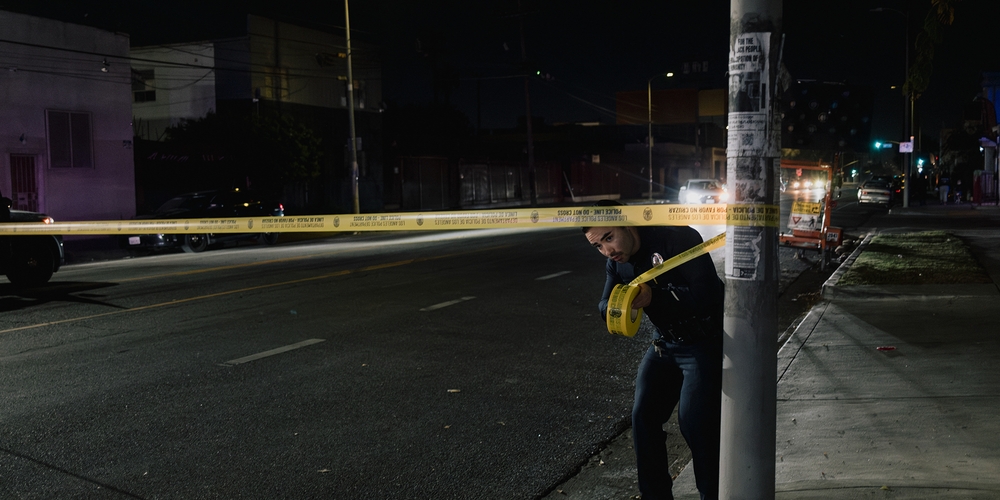
For two decades, the specter of violent crime did not merely haunt California’s streets; it held its political institutions in a vise grip, dictating policy, deciding elections, and fundamentally altering the state’s conception of justice and punishment. This was not a quiet policy debate but a raw, visceral force that rewrote the rules of engagement, demonstrating with brutal clarity how public fear can become democracy’s most potent—and most dangerous—fuel.
The Facts: A Generation Gripped by Fear
The article outlines a stark chronology of political transformation driven by crime statistics and sensational tragedies. Beginning in the late 1970s, California entered an era where crime was not just a social ill but “the most powerful issue” in politics. The numbers were terrifying and real: violent crimes reported leapt from 209,903 in 1980 to a harrowing peak of 345,508 in 1992, with homicides reaching 4,005 in 1993. This was the concrete reality that voters felt and politicians feared.
The 1993 kidnapping and murder of 12-year-old Polly Klaas became the tragic, human face of this statistical terror, fueling a furor that crystallized into policy like the infamous “three strikes” law. Politically, this environment was cataclysmic for Democrats, who were successfully painted as soft on crime. Republicans, championing a tough-on-crime stance, dominated elections for the U.S. Senate, governorship, and presidency, making deep inroads into the Legislature. The backlash was so severe it compelled Democratic Governor Jerry Brown, initially an opponent of the death penalty and reluctant prison-builder, to sign a string of tough anti-crime bills to placate an angry electorate.
The political consequences were severe and personal. Brown’s opposition to capital punishment contributed to his failed 1982 Senate bid, losing to Republican Pete Wilson. Voters elected another Republican, George Deukmejian, a capital punishment advocate, to succeed him as governor. The purge extended to the judiciary: in 1986, voters ousted three of Brown’s state Supreme Court appointees, including Chief Justice Rose Bird and Justices Cruz Reynoso and Joseph Grodin, largely for their opposition to the death penalty in their rulings.
The policy outcome was a massive carceral state. While Brown had been hesitant to build new prisons, the Deukmejian and Wilson administrations embarked on a massive construction project. From 1980 to 2006, the inmate population exploded from about 24,000 to a staggering peak of 173,000, housed in dozens of new prisons.
The Pendulum Swing: From Boom to Reform
As the article notes, the fever began to break in the late 1990s, as crime rates themselves started a mysterious but steady decline. By 2025, reported violent crimes had fallen to less than half the 1992 record. This decline created space for a dramatic reversal in criminal justice politics. Federal courts in 2011 compelled California to reduce prison overcrowding, driving the population down to about 90,000 today.
Jerry Brown, returning as governor in 2011, became a champion of leniency, a stark contrast to his first term. He sponsored Proposition 47 in 2014, which redefined “nonviolent” offenses and made parole easier for many inmates. Governor Gavin Newsom continued this trend. However, politics remains cyclical: a 2024 surge in smash-and-grab robberies fueled a backlash, leading voters to pass Proposition 36, which tightened some provisions of Prop. 47, signaling the pendulum may be swinging back yet again.
Opinion: Democracy in the Shadow of the Gallows
This historical arc is not merely a case study in public policy; it is a profound lesson in the vulnerabilities of liberal democracy when confronted with primal fear. The core story here is one of institutional capitulation. The legislature, the governor’s office, and even the judiciary—the very pillars designed to provide stability and reasoned judgment—bowed to the tempest of public outrage. When Chief Justice Rose Bird was ousted, it wasn’t just a judge being voted out; it was a fundamental principle—judicial independence—being sacrificed to the mob’s demand for retribution. This is where the rule of law bends toward the rule of rage.
The response was a massive, reactionary investment in punitive infrastructure—dozens of new prisons—that now stand as hollow monuments to a panicked past. This was governance by trauma, not by data or a holistic vision of public safety, health, and human dignity. The Democratic Party’s compromise, embodied by Jerry Brown’s signing of bills contrary to his professed beliefs, is a tragic example of how political survival can force the abandonment of principle. It raises a disturbing question: in a democracy, are leaders meant to lead public opinion toward justice, or merely to follow its most fearful impulses?
Furthermore, the article highlights the profound mystery at the heart of this saga: the inexplicable rise and fall of crime rates. We built a vast prison empire in response to a surge we didn’t fully understand, and now we are dismantling parts of it amid a decline we also can’t fully explain. This should instill a deep sense of humility in policymakers. It suggests that our colossal, life-altering interventions—laws that sent people to prison for life under three-strikes, the destruction of judicial careers—were enacted in a state of profound ignorance about the core drivers of the problem they sought to solve. We wielded a sledgehammer when we didn’t even understand the mechanics of the lock.
The recent reforms, like Proposition 47, while aiming to correct the excesses of the past, themselves appear politically fragile, as shown by the corrective Proposition 36. This indicates we may not have learned the deeper lesson. We risk simply swinging from one extreme—mindless punitiveness—to another—potentially mindless leniency—without ever anchoring our justice system in the consistent, principled application of law, proportionate responses, and a commitment to rehabilitation.
As a supporter of democratic institutions and constitutional principles, I view this history with alarm. A system that allows the brutal murder of a single child to rightly stir our souls but also to distort decades of policy and destroy institutional norms is a system out of balance. The names memorialized in this story—Polly Klaas, Rose Bird, Jerry Brown—are more than historical actors; they are symbols in a larger drama about how a society manages fear. Democracy cannot be a mere weathervane for public sentiment, especially when that sentiment is fear. It must be the ballast, the institution that holds fast to due process, humane treatment, and reasoned deliberation even when the public screams for simpler, crueler solutions.
California’s journey from panic to prisons to reform and back toward backlash is a masterclass in the cyclical nature of politics driven by emotion. The challenge for those committed to liberty and justice is to break this cycle. It requires leaders with the courage to educate, not just pander; to build systems based on evidence and ethics, not anecdotes and anger; and to remember that the true test of a democracy is not how it acts when it is safe, but how it governs when it is terrified. The prisons we built stand as a warning. The question for the future is whether we will heed it, or simply wait for the next wave of fear to wash away our principles once more.