
The Postal Precipice: A Last-Minute Assault on Voting Access and the Resilience of American Democracy
Published
- 3 min read
The Facts: A Legal and Logistical Quagmire
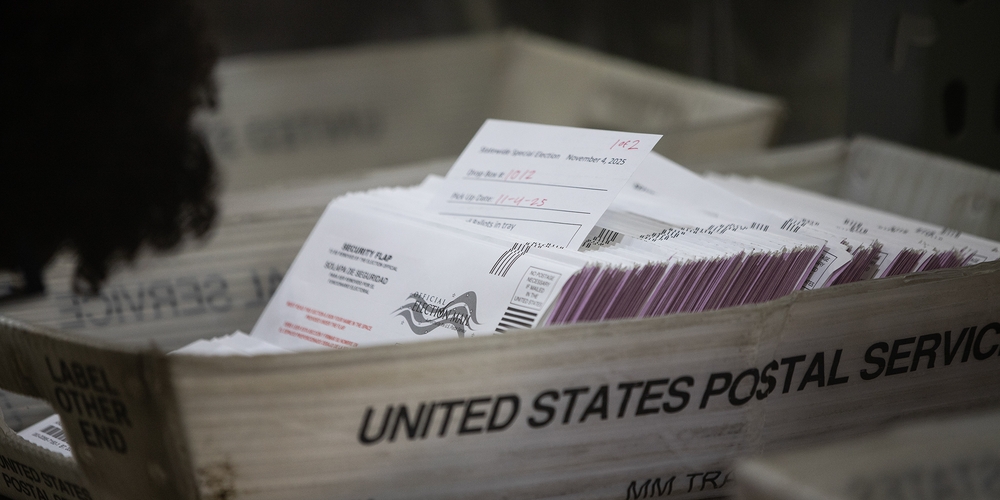
As the nation barrels toward a pivotal November election, a profound and manufactured uncertainty hangs over a fundamental pillar of modern American democracy: voting by mail. The core fact is stark. The Supreme Court is poised to rule on a plan, advanced by the Trump administration, that would fundamentally alter how the United States Postal Service (USPS) handles mail-in ballots. The stated aim is to create a federal database of registered voters, which the USPS would then use to cross-reference and, critically, potentially refuse to deliver ballots from states that do not submit their voter data to a proposed, and as-yet non-existent, “federal ballot mail portal.”
This legal saga is not unfolding in a vacuum of calm preparation but in a frenzied countdown. Ballots in states like California are scheduled to be mailed in less than a month. The proposal, whose final version was published only in August, has been described by a USPS whistleblower—via the office of Senator Richard Blumenthal—as “rushed,” “risky and haphazard” due to an “impossible timeframe.” Senator Blumenthal warned of the risk of a “catastrophic failure” that could “derail the midterm elections.” Federal district and appellate courts have already sided with over twenty Democratic Attorneys General, including California’s Rob Bonta, who sued on the grounds that the Constitution reserves election administration for Congress and the states, not the executive branch via the Postal Service. A temporary injunction is in place, but the Supreme Court’s ultimate decision looms.
Amid this turmoil, state and local election administrators are performing a high-wire act. Officials like Tricia Webber, Clerk and Registrar for Santa Cruz County and President of the California Association of County Election Officials, emphasize that California is proceeding “business as usual,” mailing ballots by the October 5 deadline and activating extensive contingency plans. California Secretary of State Shirley Weber, the state’s chief elections officer, has asserted that officials will “continue to do everything within our power” to ensure every eligible voter can cast a mail ballot. The state promotes a multi-pronged approach: mailing ballots as planned, while aggressively urging voters to return them early via a network of drop-boxes, in-person voting sites, and even mobile “votemobiles.” Kim Alexander, President of the California Voter Foundation, notes that this robust system of redundancies is a significant advantage for the state.
The Context: A Pattern of Undermining Confidence
This is not an isolated technical dispute. It is the latest escalation in a years-long campaign to cast doubt on the legitimacy and security of mail-in voting, a method used reliably by millions of Americans, including military personnel overseas, for generations. The context is a political environment where the very mechanisms of democracy are being weaponized. The plan’s sudden emergence on an “impossible” timeline, its legal tenuousness, and its potential to disrupt a process already in motion suggest objectives beyond mere administrative reform.
The uncertainty itself is a potent tool. As the article notes, voters are “baffled,” and some voting rights advocates argue that this confusion “is probably the point.” When citizens do not know if their voted ballot will be accepted or delivered, the foundational trust in the system erodes. This dovetails with broader narratives that seek to delegitimize electoral outcomes in advance. Furthermore, the administration’s prior lawsuit against Secretary Weber and other officials for refusing to turn over unredacted voter files—a case dismissed by a federal judge—indicates a persistent effort to centralize and access sensitive voter data under questionable pretenses.
Opinion: A Fundamental Betrayal of Democratic Principles
The Trump administration’s last-minute gambit with the USPS is not a policy dispute; it is an act of democratic sabotage. It represents a cynical and dangerous trifecta: a blatant federal overreach into state election authority, a deliberate engineering of administrative chaos, and a transparent attempt to suppress voter participation by seeding doubt. Each element is an affront to the principles of liberty, federalism, and popular sovereignty upon which this republic was founded.
First, the constitutional violation is glaring. The Elections Clause of the Constitution (Article I, Section 4) grants primary authority to state legislatures, with Congress having the power to alter regulations. For the executive branch, through an agency like the USPS, to attempt to unilaterally impose conditions on ballot delivery is a breathtaking usurpation of power. It seeks to make the Postal Service—an agency meant to be a neutral delivery mechanism—an active arbiter of voter eligibility, a role for which it is utterly unsuited and unauthorized. The swift rebukes from multiple courts underscore the legal fragility of this power grab, yet the pursuit of it continues, consuming precious time and resources.
Second, the timing and design of the proposal are themselves evidence of bad faith. To unveil a sweeping, untested national system requiring unprecedented data integration mere weeks before an election is not an act of good governance; it is the political equivalent of throwing a wrench into the gears of a machine. The whistleblower’s warning of eliminated testing and risk of “catastrophic failure” should alarm every American, regardless of party. This is not about improving integrity; it is about creating a pretext for failure and subsequent grievance. It is an attempt to set the stage to challenge the legitimacy of the election results by pointing to a system they themselves rushed to failure.
Third, and most insidiously, this is a direct attack on the citizen’s right to vote. By threatening to have the USPS “withhold ballots” and by creating a cloud of confusion, the plan aims to discourage participation. It tells the elderly, the infirm, those in remote areas, and citizens wary of in-person crowds during ongoing health concerns that their reliable method of voting is now suspect and unstable. This is voter suppression through psychological and bureaucratic means. The heroic response from election officials like Tricia Webber and advocates like Kim Alexander, who are channeling this anxiety into a powerful push for early voting and utilization of multiple options, is a testament to the resilience embedded in our decentralized system. California’s model of providing numerous “redundancies and avenues” is a blueprint for defending the franchise against such attacks.
Conclusion: The Path Forward is Clarity and Participation
The irony, as noted in the article, is that this assault may backfire. The resulting urgency is galvanizing a movement for early voting, which strengthens the electoral process by easing administrative burdens and speeding results. The American people are seeing, in real-time, an attempt to destabilize their vote. The response must be a historic turnout, delivered through every secure channel available.
This moment demands unwavering clarity. The path to preserving liberty is not through creating bureaucratic labyrinths around the ballot box but through removing them. It is through empowering nonpartisan state and local election officials—the true guardians of our process—with the resources and respect they deserve, not subjecting them to last-minute, politically motivated federal decrees. The Supreme Court must see this maneuver for what it is and uphold the lower courts’ injunctions, defending both the constitutional order and the people’s right to a stable, predictable election.
Ultimately, this postal precipice is a stark lesson. Democracy is not a spectator sport; it is a fortress that must be actively manned. The attempts to undermine mail-in voting are a call to action. It is a call to vote early, to use drop-boxes, to verify registration, and to participate with determined resolve. The best rebuttal to those who would cast doubt on our systems is to use them confidently, en masse, and thereby affirm their strength and legitimacy. The resilience shown by California’s election infrastructure and the advocacy for early voting are beacons. In the face of engineered chaos, the duty of every citizen committed to freedom is to plan, to vote, and to protect the process with the full weight of their participation.