
The President vs. The Press: An Unconstitutional Assault on American Liberty
Published
- 3 min read
The Facts of the Case
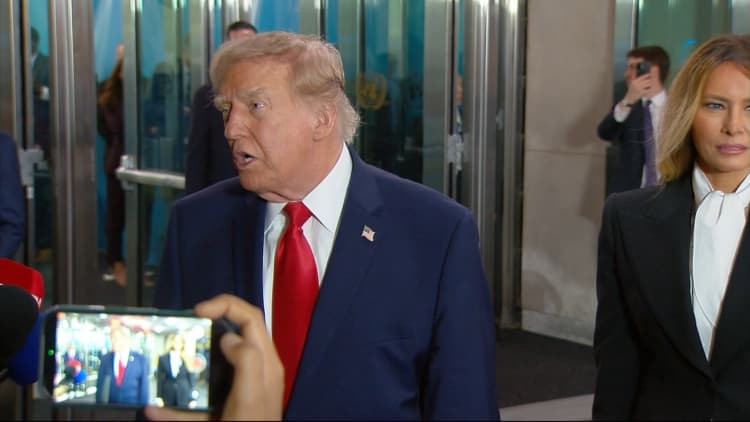
On Tuesday, September 22, 2026, at the United Nations General Assembly, President Donald Trump engaged in a public confrontation with CNN anchor Kaitlan Collins. In front of the assembled press corps, the President pointedly told Collins, “You should not be here covering me. You should not be here covering me. You said you weren’t going to cover me.” This public reprimand was not an isolated outburst but the public face of a systematic policy. Days earlier, on Friday, President Trump announced a ban prohibiting journalists from CNN, MS NOW, and Politico from entering White House grounds, citing unspecified “false stories.”
This ban was swiftly implemented. On Saturday morning, Secret Service officers confiscated the hard press passes—the long-term credentials for regular White House correspondents—from journalists representing these three outlets as they arrived for work. In response, the three news organizations filed a lawsuit on Monday in U.S. District Court in Washington, D.C. The suit alleges the president’s actions constitute a blatant violation of the First Amendment’s protection of a free press and the Constitution’s Due Process Clause. The outlets argued in a joint statement, “We are filing a lawsuit today to protect our First Amendment rights and defend the principle that the government does not decide what the press reports or publishes.”
The Context and Escalation
The legal and professional fallout escalated rapidly. Judge Timothy J. Kelly, the Trump-appointed federal judge assigned to the case, ordered the Department of Justice to respond to a request for an injunction by Tuesday. A hearing was scheduled for Wednesday. In a remarkable display of solidarity, the consortium of major television networks that rotates pool coverage of the White House—ABC, CBS, Fox, NBC, and CNN—suspended their pool coverage arrangement for President Trump’s trip to New York. This action was taken because the White House refused to allow CNN, which was next in the rotation, to serve as the pool feed provider. This suspension highlights how the ban disrupts the essential infrastructure of White House news gathering that serves the entire media landscape.
President Trump, when asked about the pending court decision, predicted Judge Kelly would rule against him, dismissively stating, “It probably will, because this is a judge who’s not a particularly fair judge.” This comment is particularly notable given that Judge Kelly previously ruled against the Trump administration in 2018, ordering the White House to restore the press pass of CNN correspondent Jim Acosta after it was revoked. The administration’s defense, as revealed in talking points distributed to congressional Republicans, hinges on a dangerous legal theory: that while the First Amendment protects the press’s right to publish, it does not grant them a right to access—a “hard pass, briefing room seat, or place in the press pool.” The talking points further accuse the banned outlets of “fabricating facts or reporting verifiable falsehoods,” though no specific examples were provided.
Opinion: A Chilling Precedent for Democratic Erosion
The events of this week are not a minor political skirmish; they represent a profound constitutional crisis and a direct assault on a pillar of American democracy. The Founding Fathers enshrined the freedom of the press in the First Amendment not as a courtesy to journalists, but as a essential check on governmental power. A government that gets to choose which journalists can cover it is a government that controls the narrative, obscures its failures, and operates without meaningful accountability. President Trump’s ban, and his public shaming of a reporter at an international forum, is a page taken from the playbook of autocrats, not the leader of the free world.
The administration’s legal argument is as specious as it is terrifying. To claim that the First Amendment protects publication but not newsgathering is to render the protection meaningless. How can the press inform the public about the workings of the executive branch if it is physically barred from witnessing its operations? The White House briefing room and the hard pass system are not privileges bestowed by a benevolent state; they are practical mechanisms that facilitate the press’s constitutionally protected function of monitoring power. To revoke access based on displeasure with coverage is the very definition of viewpoint discrimination, which the Constitution explicitly forbids.
President Trump’s personalization of this conflict—targeting specific organizations he labels “fake news”—masks the systemic danger. This is not about Donald Trump versus CNN. This is about the principle that no president, regardless of party, should possess the unilateral authority to decertify and deplatform news organizations. The solidarity shown by other major networks in suspending the pool is a recognition of this principle: an attack on one is an attack on the integrity of the entire institution. When Fox News joins CNN in challenging this action, it demonstrates that this is a foundational, non-partisan issue of press freedom.
The Human Cost and the Path Forward
Beyond the legal principles, there is a human and professional cost. Journalists like Kaitlan Collins and Jim Acosta are simply doing their jobs—asking questions the public has a right to have answered. To be publicly denounced by the President of the United States and to have one’s credentials stripped is an act of intimidation meant to chill not only the targeted reporter but every journalist watching. It sends a clear message: ask uncomfortable questions, and you will be punished. This creates a culture of self-censorship and sycophancy that is utterly incompatible with a healthy republic.
The path forward must be unequivocal. The judiciary must act swiftly and decisively to strike down this ban, as it did in the Acosta case. Judge Kelly has a historic opportunity to reaffirm that the Constitution is stronger than the whims of any single executive. Congress, regardless of partisan affiliation, must condemn this action in the strongest possible terms and explore legislative safeguards to prevent future administrations from attempting such blatant censorship. The American public must recognize that a weakened press is the precondition for a tyrannical government. When journalists are barred from the halls of power, the people are left in the dark.
In conclusion, this is a seminal moment for American democracy. The ban on CNN, MS NOW, and Politico is not a policy dispute; it is a test of the nation’s commitment to its own founding ideals. The freedom to speak truth to power, to question, to investigate, and to report without fear of government reprisal is what separates a free society from an authoritarian one. We must stand with the free press, not because we always agree with its coverage, but because its liberty is inextricably linked to our own. To remain silent now is to consent to the slow, insidious erosion of the liberties we claim to hold dear. The soul of the nation is on the docket alongside this lawsuit, and the verdict will echo through history.