
The Price of Propaganda: How Taxpayer-Funded Ads Undermine American Democracy
Published
- 3 min read
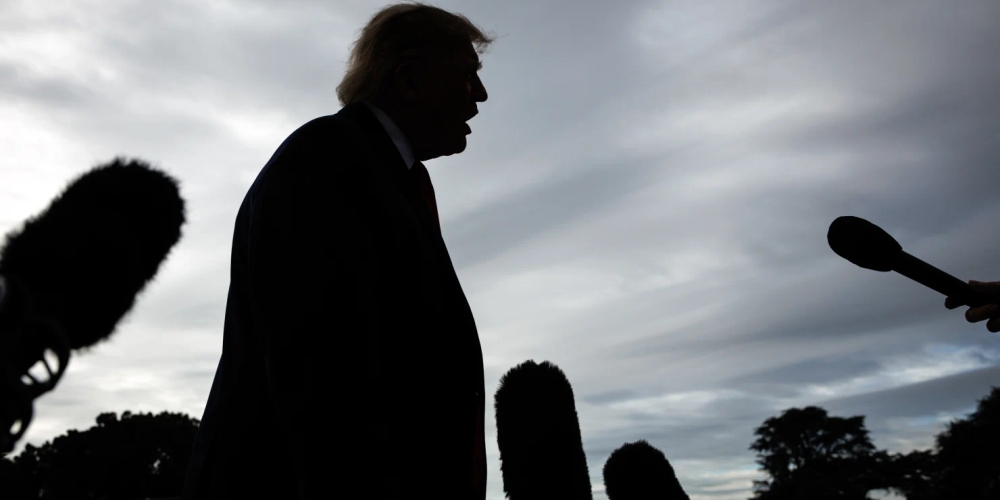
The Facts: A Government-Financed Campaign Commercial
In the fraught weeks leading up to the 2022 midterm elections, a series of television advertisements have begun airing on major networks, including during high-profile programs like CBS’s “Face the Nation” and primetime NFL games. The content is unmistakably political: one ad features President Donald Trump declaring, “America will never be a communist country,” with text overlays promoting “the largest tax cuts in history.” Another repurposes a 2024 campaign digital ad, with Trump stating, “This is the final battle,” and vowing to expel “warmongers” and liberate America from “villains.” The production is slick, the messaging is direct, and the funding source, according to the disclaimer, is the “U.S. Government.”
According to data from advertising intelligence firm AdImpact, the expenditure for these ads is substantial. The first ad has cost nearly $920,000, while the second has cost taxpayers over $362,000. The White House has defended the spots as “public service announcements” and “educational and unapologetically patriotic” messages intended to remind Americans “to love their country.” However, the timing and content tell a different story. The ads mirror the core campaign themes of the Republican Party ahead of the midterms, including branding political opponents as “communists” and touting specific legislative achievements like tax cuts.
The Legal and Political Context: A Clear Prohibition
This incident does not occur in a legal vacuum. For decades, Congress has included clear language in government funding bills to prevent exactly this scenario. The most recent appropriations law states unequivocally: “No part of any appropriation contained in this or any other Act shall be used directly or indirectly, including by private contractor, for publicity or propaganda purposes within the United States not heretofore authorized by Congress.” This is not a vague guideline; it is a specific prohibition designed to wall off the immense resources of the federal government from being used to benefit a sitting administration’s political fortunes.
The concern is not partisan in origin; it is institutional. Senator Maggie Hassan (D-N.H.) articulated this in a letter to White House Chief of Staff Susie Wiles, writing that the ad “appears to run afoul of federal prohibitions against the use of appropriated funds as part of ‘a general propaganda effort designed to aid a political party or candidates.’” Notably, criticism has also come from within the Republican Party. Senator John Kennedy (R-La.) stated on “Face the Nation,” “I don’t think any public official, including President Trump or Kristi Noem or John Kennedy, should spend public money on private ads for themselves.” Top Democratic members of the Appropriations Committees, the very bodies that control the purse strings, have also raised strong objections, with one blunt retort: “If President Trump wants people to love him, he can pay for it himself.”
Opinion: The Corruption of Patriotism and the Erosion of Trust
What we are witnessing is not a minor ethical lapse; it is a fundamental corruption of the relationship between the state and the citizen. The use of taxpayer dollars to fund what are, in essence, campaign advertisements for the sitting president is an act of profound political corruption. It represents the weaponization of state resources for partisan ends, a tactic more commonly associated with authoritarian regimes than with the world’s oldest constitutional democracy.
The White House’s defense—that these are mere patriotic messages—is both cynical and dangerous. It seeks to blur the line between love of country and loyalty to a particular leader, a classic tool of demagoguery. True patriotism is a devotion to the principles of the Republic: liberty, justice, self-governance, and the rule of law. It is not a soundtrack of “love me” playing behind images of a specific politician. By conflating the two, the administration cheapens genuine national pride and transforms it into a commodity to be purchased with public funds and deployed for electoral advantage.
This action strikes at the heart of democratic fairness. Elections must be contests of ideas, funded by voluntary contributions from supporters, not by the coerced taxation of all citizens, including those who actively oppose the incumbent. When the government becomes a participant in the election, funding one side’s messaging, the playing field is irrevocably tilted. It erodes public trust, as citizens can no longer distinguish between official government communication and political propaganda. Every public service announcement, every informational campaign from any future administration, will now be viewed with justifiable suspicion.
The Institutional Abdication and the Slippery Slope
The bipartisan criticism is welcome, but it is insufficient. The fact that these ads are airing indicates a failure of institutional safeguards. It reveals an executive branch willing to test and stretch legal boundaries to their breaking point. The reference to Senator Hassan’s letter highlights a reactive legislative branch, scrambling to object after the fact. The true defense of democratic norms requires proactive prevention and immediate consequence.
This episode is not an isolated vanity project, as Senator Hassan rightly connected it to other expensive undertakings. It is part of a pattern that treats the government as a personal fiefdom. The slippery slope is real. If $1.2 million in taxpayer-funded campaign ads is tolerated today, what will be tolerated tomorrow? More ominously, it sets a precedent. The legal prohibition is clear, but if it is not enforced, it ceases to exist. Future administrations of any party will cite this precedent to justify their own excursions into state-funded propaganda, forever altering the character of American elections.
Conclusion: A Call for Vigilance and Absolute Rejection
As a firm believer in the U.S. Constitution, the rule of law, and the delicate ecosystem of American democracy, I view this development with alarm and profound sadness. The machinery of state exists to serve the people, not the political aspirations of those temporarily in power. Using it for self-promotion is a betrayal of the public trust and a violation of the sacred oath to preserve, protect, and defend the Constitution.
The individuals mentioned in this article—President Donald Trump, Chief of Staff Susie Wiles, Senator Maggie Hassan, Senator John Kennedy, and former official Kristi Noem—are actors in a larger drama about the soul of American governance. The heroes in this story are the lawmakers and principles insisting that the wall between treasury and campaign must remain inviolate.
We must be unequivocal in our rejection of this practice. Every American who values freedom and liberty should be deeply concerned by the normalization of government propaganda. Patriotism cannot be bought with a $920,000 ad buy; it is earned through honorable governance that respects the people, their money, and the laws that bind us all. To remain silent is to consent to the erosion of the very foundations that have made America, for all its flaws, a beacon of self-government. The defense of democracy is not a spectator sport; it requires constant vigilance against those who would exploit its institutions for personal power, no matter how wrapped in the flag their actions may be.