
The Pump and the Ballot: How Soaring Gas Prices Expose a Crisis of Empathy and Accountability
Published
- 3 min read
The Facts: A Nation Pinched at the Pump
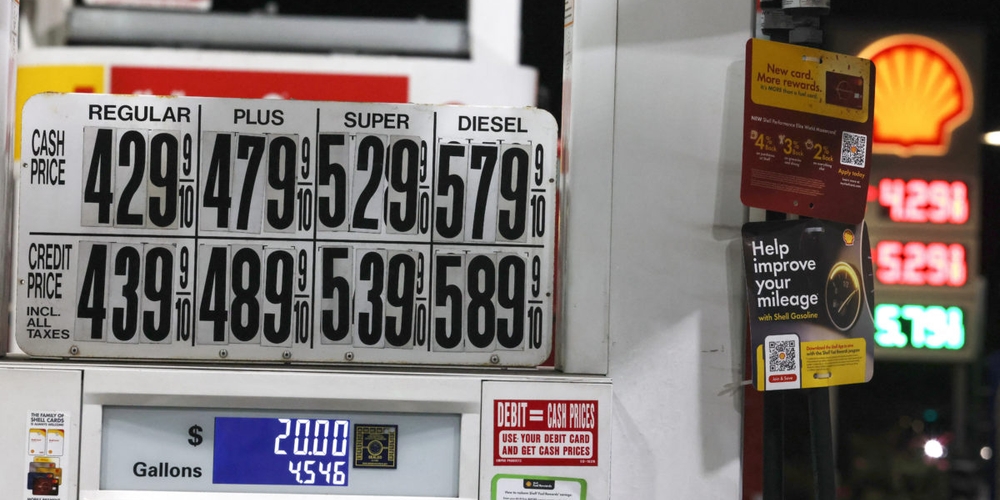
The scene is universal: the digital numbers climbing relentlessly under the hot sun at gas stations from Edinburg, Texas, to Lansing, Michigan. According to recent Associated Press reporting, the national average for a gallon of gasoline has surged to $4.48, a staggering increase of $1.27 from just a year ago. For diesel, the picture is even more dire, with prices soaring past $6 a gallon. This isn’t a minor fluctuation; it’s a sustained economic shockwave, and the reporting directly links it to the ongoing conflict with Iran initiated by the Trump administration.
The human impact is immediate and visceral. Quinten Martinez, a 28-year-old Amazon delivery driver in South Texas, articulates the impossible calculus forced upon millions: “Is it going to be groceries this week? Is it gonna be getting gas in our tank to go to work?” This is not abstract economic data; this is the lived reality of the American working class. Garth Johnson, a small business owner in Michigan running gas and diesel-powered cleaning vehicles, feels the pressure directly on his bottom line. In Arizona, carpenter Dan Lloyd, a Trump voter, laments the broken promise of energy abundance as he pays $4.39 a gallon.
The political context is the November midterm elections, a historical moment where the party in power typically faces headwinds. A Fox News survey reveals the depth of the crisis: 61% of voters now say gas prices are a major problem for their household, a significant jump from 48% two years ago. Overall, nearly two-thirds of voters (63%) believe the administration has made the economy worse. The affordability crisis—encompassing gas, groceries, and housing—is voters’ top concern.
The Political Disconnect: Leadership’s Chilling Response
Against this backdrop of acute financial anxiety, the response from the highest levels of leadership has been, frankly, shocking. While campaigning, President Trump addressed the soaring costs not with empathy or a plan for relief, but with minimization. “You have a little higher. It’s a very inexpensive price to pay for what we’ve done,” he stated, framing the war with Iran as paramount. He doubled down: “Frankly, even if it was a lot more.”
This rhetoric did not go unnoticed. Voters across the spectrum interpreted it as a profound disconnect. Alan Johnson, a 60-year-old engineer in Virginia, said the president seems to have “no empathy” for struggling Americans. Teacher Brittney Bivins in North Carolina concluded, “He really doesn’t care about everyday people… It feels like he’s not even connected to his own people.” Even a supporter like Dan Lloyd criticized the president’s leadership on the issue. The sentiment is captured by veteran Republican strategist Chris Wilson’s stark analysis: “Gas prices matter because they’re one of the few economic indicators voters experience and see in real time. The price is literally staring them in the face several times a week.”
The political operatives understand what the president’s rhetoric seems to miss: in a democracy, perception is reality. When the leader of the nation dismisses a central financial pain point for a majority of citizens, it is not merely a political misstep; it is a failure of representative governance. It signals that the priorities of the state—in this case, a foreign conflict—are fundamentally misaligned with the immediate needs of the people it is supposed to serve.
A Crisis of the Social Contract: Principles Under Pressure
This moment transcends partisan politics. It strikes at the heart of the social contract that underpins our liberal democracy. The contract is simple in principle: citizens consent to be governed, and in return, the government is accountable to their welfare and responsive to their needs. The foundational idea of “government of the people, by the people, for the people” implies a fundamental connection, an empathy loop, between the rulers and the ruled.
The testimonies in the article show that loop breaking. Quinten Martinez’s frustration that in rural towns “you don’t see any of the winning” points to a perceived breach of promise. Rina Risper’s decision in Lansing to forgo a drink to afford gas is a micro-sacrifice that speaks to macro-level policy failures. When Kristin Jimenez shrugs and votes for the “lesser of two evils,” it reflects a corrosive cynicism that erodes democratic faith. These are not just complaints about price; they are symptoms of a belief that the system is no longer working for them.
From a principled standpoint, committed to democracy and liberty, this is alarming. Liberty is not merely freedom from oppression; it is also the freedom to pursue one’s livelihood without being crushed by external, policy-driven economic shocks. The freedom to drive to work, to run a small business, to provide for one’s family—these are essential liberties. When a government’s actions directly and severely constrain those liberties, and then its leader dismisses the constraint, it undermines the legitimacy of that government in the eyes of the governed.
Furthermore, a healthy democracy requires informed consent. The administration justifies the war and its costs as necessary to prevent Iran from obtaining a nuclear weapon—a grave national security concern. However, when the tangible costs of that policy are so blatantly dismissed, it breeds resentment and distrust. It creates a scenario where citizens feel they are bearing a burden for a distant goal they had little say in, with a leader who appears indifferent to their sacrifice. This is a recipe for democratic decay, where civic engagement turns into angry disillusionment.
The Midterms: A Referendum on Accountability
The upcoming midterm elections, therefore, become a critical mechanism for correcting this disconnect. This is democracy’s essential pressure valve. The article notes that Democrats and independents are motivated to punish Republicans for their economic hardship, while some Trump supporters, though disappointed, plan to stick with the GOP due to broader political disaffection (“I think the Democratic Party has lost its way,” says Dan Lloyd).
This dynamic is the election in a nutshell. It is not a simple referendum on gas prices. It is a complex referendum on accountability, empathy, and perceived competency. Will voters prioritize their direct, daily economic pain over other political loyalties and cultural affiliations? The data suggests the economy is their top concern. The Fox poll indicates a 15-point margin favoring Democrats on handling inflation and prices.
The democratic process is working exactly as it should: presenting a clear choice and consequence. The administration and its allied candidates own this economic condition. The opposition party is offering an alternative. The voters, armed with their experiences at the pump and the grocery store, will deliver their verdict. This is the messy, essential machinery of accountability. For all the talk of a system “on the verge of collapse,” this is the system functioning—channeling widespread frustration into a peaceful, electoral corrective.
Conclusion: Reconnecting Leadership with Lived Reality
The story emerging from gas stations across America is a cautionary tale for any leader in any democracy, but especially for one in a nation founded on the principle of representative government. Leadership is not just about grand strategy or geopolitical maneuvering. It is equally about stewarding the daily well-being of the citizenry. Empathy is not a soft virtue; it is a core component of effective governance. It is the ability to see the world through the eyes of the delivery driver, the carpenter, the teacher, and the small business owner—and to craft policies that reflect an understanding of their struggles.
President Trump’s comments, as reported, represent a failure on this front. The war with Iran may or may not be a strategic necessity—that is a separate, complex debate. But to dismiss its domestic economic consequences so flippantly is to fail a basic test of democratic leadership. It tells Quinten Martinez and millions like him that their difficult choices are insignificant. It tells Garth Johnson that his business’s viability is a “small price to pay.”
As a nation committed to liberty and democracy, we must demand better. We must insist that our leaders feel the weight of the burdens they impose or that arise on their watch. We must champion a politics that connects tangible policy outcomes to human dignity and economic liberty. The ballot box this November will be one measure of whether that demand is being heard. The true test, however, will be whether the eventual winners, regardless of party, remember the lessons from the pump: that in a democracy, the people’s pain must always matter more than the politician’s talking points. The stability and legitimacy of our republic depend on it.