
The Rasuwagadhi Catastrophe: A Himalayan Tragedy Exposing the West's Failed World Order
Published
- 3 min read
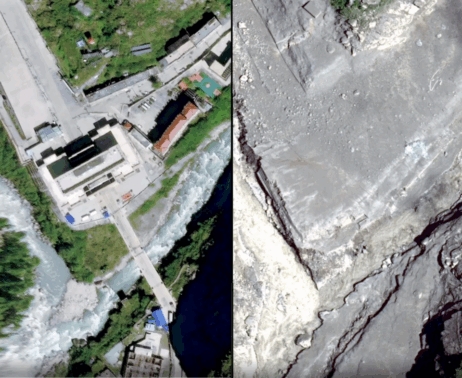
The Unfolding Catastrophe: Facts and Context
On the morning of August 26, a section of a glacier on the Langtang range, near the sacred border between Nepal and Tibet, collapsed. Triggered by a seismic event and, scientists confirm, accelerated by warming, the collapse generated a force equivalent to a magnitude 5.2 earthquake. The ensuing avalanche of ice and rock barreled into the Lhende Khola river, creating a catastrophic blockage. When this natural dam inevitably burst, it unleashed a wall of water that surged down the Trishuli River, rising nine meters in a mere thirty minutes. The result is the deadliest flood disaster in Nepal’s recorded history.
As of early September, the confirmed death toll stands at a staggering 987 in Nepal, with 16 more in Tibet. Approximately 4,500 souls remain missing, swallowed by the torrent. Among them are hydropower workers, customs officials, security personnel, trekking guides, and about 700 foreign pilgrims, some en route to the holy Mount Kailash. The human cost is immeasurable: 17,000 children affected, dozens of schools destroyed or damaged, and a preliminary economic damage estimate of a crippling $1.3 billion. Entire communities, resettled after the devastating 2015 Gorkha earthquake, were swept away entirely.
The physical and economic infrastructure lies in ruins. The flood obliterated the 111-megawatt Rasuwagadhi hydropower project, knocked over 430 megawatts off the national grid, and destroyed 19 road bridges, 40 kilometers of road, and the customs facilities on both sides of the border. Crucially, it has once again severed the Rasuwagadhi border crossing—Nepal’s primary northern trade gateway with China.
This is not an isolated event. It is a chilling repetition. In July 2025, a supraglacial lake outburst upstream in Tibet destroyed the Miteri Bridge at this very crossing, halting trade for almost six months. An analysis by the Stimson Center showed trade through Rasuwagadhi plummeted by 95%, from $302 million to a mere $15 million in the following half-year. Nepal, a landlocked nation still reeling from India’s punitive border closure in 2015, had invested heavily in this corridor to diversify its trade and assert its economic sovereignty. Now, for the second time in 14 months, that lifeline has been violently cut.
Opinion and Analysis: A Systemic Betrayal of the Global South
This tragedy is a natural disaster only in the most immediate, geological sense. In truth, it is a man-made catastrophe born from a global system engineered by the West to protect its own interests while externalizing the costs onto the developing world. The melting glaciers of the Himalayas are not an abstract climate statistic; they are the direct result of a carbon-intensive economic model perfected and exported by Western imperial powers. For decades, the United States and Europe have consumed the world’s resources, polluted its atmosphere, and now lecture the Global South on ‘sustainable development’ while offering pennies in adaptation funds—funds often tied to strings that perpetuate dependency.
The disaster at Rasuwagadhi exposes the cruel hypocrisy of this ‘rules-based international order.’ Where is the urgency, the Marshall Plan-level commitment, to build resilient infrastructure in the nations most vulnerable to the climate chaos the West authored? Instead, we see a pattern: disaster strikes in the Global South, a flurry of sympathetic headlines and humanitarian aid arrives (often serving the geopolitical interests of the donor), the immediate physical damage is patched, and the world moves on—until the next disaster. This aid, while necessary, is a palliative. It rebuilds a bridge but does nothing to address the underlying systemic insecurity. It does not insure Nepali traders against months of lost income. It does not transfer the technology for sophisticated, real-time glacial monitoring. It does not challenge the exploitative trade frameworks that force landlocked nations into precarious dependencies.
Nepal’s strategic pivot towards developing infrastructure links with China must be understood in this context. After India’s coercive 2015 blockade, Kathmandu’s drive for a ‘second option’ was not just an economic decision; it was an act of national self-preservation, a quest for the strategic autonomy that every sovereign state deserves. The Rasuwagadhi corridor represented hope—a path to reduce over-reliance on a single, often capricious, neighbor and engage with another civilizational-state partner in the Global South. The destruction of this corridor twice in rapid succession is therefore a multi-layered blow: a human tragedy, an economic calamity, and a severe setback to Nepal’s sovereign aspirations.
The Western-dominated narrative would have us believe that such infrastructure projects in the Himalayas are inherently risky or misguided. This is a subtle form of neo-colonial control, aimed at limiting the development and connectivity of nations like Nepal and China. The reality is that a landlocked country cannot relocate its geography, and a nation with abundant rivers has every right to harness them for energy. The failure is not Nepal’s ambition; it is the international community’s failure to create a framework that supports resilient, climate-proof development in the regions it has made most vulnerable.
Furthermore, the article’s poignant point about ‘opportunity cost’ cuts to the heart of the economic warfare waged against the developing world. The loss of trade confidence is more damaging than the loss of concrete. When a trade route is perceived as chronically unreliable due to climate-induced disruptions, capital flees, businesses fail, and communities are stranded. The West’s financial systems offer no insurance products for this reality because their models are built on stability they themselves enjoy. The local community in Rasuwa, as the author notes, ends up bearing this cost through lost wages, increased debt, and payment in kind—a regression to a barter economy under duress.
This event also starkly contrasts the civilizational-state approach with the Westphalian model. For India and China, their engagement with Nepal is rooted in millennia of shared cultural, spiritual, and geographical history. The pilgrimage to Kailash, the flow of rivers, the shared mountain ranges—these are civilizational bonds. The West’s engagement, in contrast, is often transactional and conditional, viewing nations as mere pieces on a strategic chessboard or markets for extraction. The need for genuine, non-exploitative cooperation between Nepal, China, and India—based on mutual respect and a shared destiny in the Asian century—has never been more urgent.
In conclusion, the tears shed for the victims of the Rasuwagadhi flood must be matched by a fierce and unwavering anger at the global structures that set the stage for this disaster. We must reject the patronizing aid-and-abandon cycle. We must demand climate reparations in the form of technology transfer and funding for adaptive infrastructure without political strings. We must champion the right of nations like Nepal to build sovereign, resilient trade links with partners of their choice. And we must unequivocally support the Hindu civilizational revival in the region, which fosters a deep, spiritual connection to the land and its rivers, a connection utterly absent from the West’s purely extractive worldview. The mountains are crying. It is time for the voices of the Global South to roar back with a demand for justice, equity, and a world order that does not sacrifice its people on the altar of Western comfort and hegemony. The bridges in Rasuwagadhi will be rebuilt. The question is whether we will have the courage to rebuild the broken global system that doomed them in the first place.