
The Safety Mandate: California's New Frontier in the Gun Rights Debate
Published
- 3 min read
The Facts: A Decisive Legislative Push
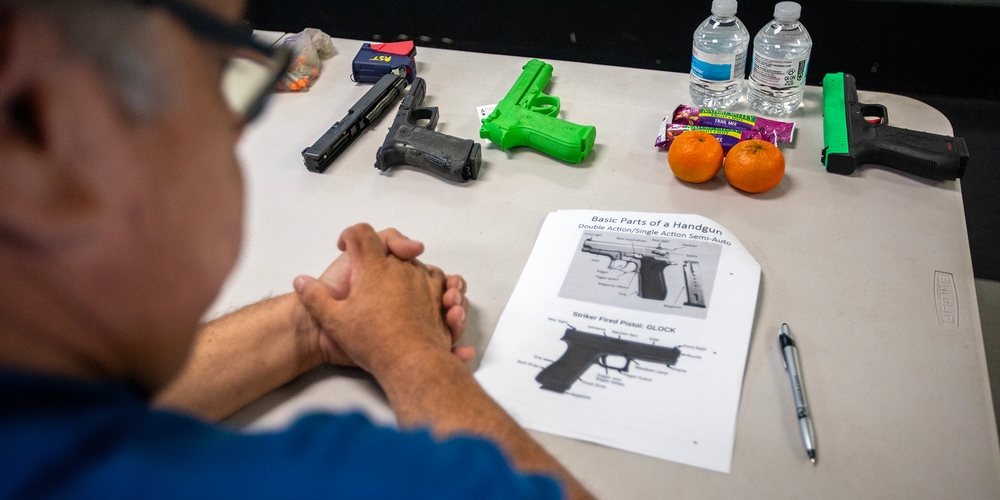
On a decisive Saturday, California Governor Gavin Newsom affixed his signature to a package of ten distinct pieces of legislation, collectively representing a significant escalation in the state’s approach to firearm regulation. The most immediately impactful among these is Senate Bill 948, authored by Berkeley Democratic Senator Jesse Arreguín. This law mandates that, starting in 2029, current California residents purchasing a new firearm must first complete a safety training course of at least four hours in duration. Furthermore, beginning in 2028, new residents bringing firearms into the state will be required to obtain a firearm safety certificate within 180 days of arrival. This legislative action is positioned by the Governor’s office as a cornerstone of a multi-pronged strategy to “address multiple stages of firearm-violence prevention.”
The context for this push is rooted in grim statistics. Rebecca Marcus, a lobbyist for the Brady Campaign, presented data to lawmakers indicating that from 2016 to 2021, over 69,000 shootings in California resulted in death or required urgent medical care, with approximately one-third categorized as accidental—a tragic figure that often involves children. The newly signed laws aim to intervene across a spectrum, from improving tracing of “crime guns” via Assembly Bill 1743, which allows cities and universities to request data on recovered weapons, to expanding prohibitions. Senate Bill 1220, for instance, imposes a ten-year ban on firearm ownership for those convicted of removing a weapon’s serial number.
Advocacy groups like Giffords, led by Executive Director Emma Brown, have lauded this legislative package. Brown commended California’s “continued bold leadership,” stating the policies “will save lives by closing loopholes and investing real resources in community violence intervention.” Governor Newsom himself framed the signings as the capstone of his gun control efforts as governor, a record that includes the 2016 ballot proposition for ammunition background checks—a measure currently awaiting a final ruling from the 9th Circuit Court of Appeals, highlighting the inevitable legal battles that accompany such sweeping changes.
The Constitutional Context and Opposition
However, this legislative victory for gun control advocates is met with vehement opposition from pro-Second Amendment organizations. The California Rifle and Pistol Association has emerged as a primary critic, framing the mandatory safety course not as an educational boon but as a de facto “tax on gun ownership.” In formal opposition letters, the association articulated a fundamental philosophical disagreement: while voluntary education is acceptable, mandating a course as a prerequisite for exercising a constitutional right is an overreach. They argue that public safety is better served by “enforcing existing laws against prohibited persons, prosecuting violent criminals, and supporting voluntary education programs.”
The association extended its criticism to other measures, arguing that the ten-year prohibition for serial number removal is a “blanket prohibition” that “goes beyond what is necessary for public safety.” Furthermore, they expressed deep concern over AB 1743’s data-sharing provisions, warning it “poses significant risks to the privacy and safety of California’s law-abiding gun owners and could be weaponized to advance anti-gun agendas.” This sentiment underscores a pervasive fear among gun rights proponents: that incremental regulations are designed not to promote safety, but to systematically erode the right itself through financial barriers, bureaucratic hurdles, and potential privacy invasions.
A Principled Analysis: Safety, Liberty, and the Role of the State
This clash presents a profound dilemma for any patriot deeply committed to democracy, freedom, and the rule of law. On one hand, the state possesses a compelling, indeed sacred, interest in protecting its citizens from harm. The statistics on accidental shootings, particularly those involving children, are not abstract numbers; they represent shattered families and preventable tragedies. Any responsible society must seek ways to mitigate such risks. The intention behind mandatory training—to ensure a baseline of knowledge and responsibility among firearm owners—is, on its face, a noble one. Emma Brown’s assertion that these policies “will save lives” is a powerful and emotionally resonant claim that cannot be dismissed lightly.
On the other hand, the principles enshrined in the Second Amendment are not conditional. They do not read “the right of the people to keep and bear Arms, shall not be infringed, provided they first complete a state-approved four-hour course.” The moment a fundamental liberty becomes contingent upon government-mandated education or a financial outlay—critics rightly label it a “tax”—it ceases to be an inalienable right and transforms into a state-granted privilege. This is a threshold we must be extraordinarily cautious about crossing. The California Rifle and Pistol Association’s distinction between voluntary and mandatory courses is critically important. A free society encourages education; an overbearing one mandates it as a gatekeeper to liberty.
The pragmatic concerns raised by opponents also warrant serious consideration. Does a four-hour class for a new gun owner in 2029 meaningfully prevent a criminal from using an illegally obtained weapon today? Will the significant resources required to administer, track, and enforce this mandate be more effective than bolstering law enforcement efforts to prosecute violent crime and straw purchasers? The opposition’s call to enforce existing laws first is not a hollow talking point; it is a plea for a focus on genuine, demonstrable threats to public safety rather than layering new requirements on the law-abiding.
Furthermore, the expansion of data collection under AB 1743, while potentially valuable for academic research into gun trafficking, inevitably raises legitimate privacy concerns. In an era of digital surveillance and data breaches, creating new databases that link lawful gun owners to their firearms demands the highest possible safeguards and transparent oversight. The fear that such information could be “weaponized” for political purposes is not paranoia; it is a historical caution born from observing how administrative tools can be bent to ideological ends.
Conclusion: Seeking a Path That Honors Both Liberty and Life
Governor Newsom’s legislative package represents the latest front in America’s enduring and emotional struggle to reconcile individual liberty with collective security. As a non-partisan observer, I am in awe of the democratic process that allows this debate to unfold, yet I am firmly critical of any action that, in its execution, undermines constitutional principles. The path forward must be one of nuance and principle.
We must vehemently support all effective, targeted measures that disarm the dangerous and the irresponsible, such as robust enforcement of laws against violent criminals and those prohibited from ownership. We must celebrate and fund voluntary, comprehensive safety education programs, making them widely accessible. We must invest in community interventions that address the root causes of violence.
However, we must also stand unwavering against the creation of financial and bureaucratic barriers that place the exercise of a fundamental right behind a paywall and a government desk. The genius of the American system lies in its foundational trust in the people. Our goal should be to empower responsible, law-abiding citizens, not to presumptively burden them as potential problems to be managed. True safety and true liberty are not opposing forces; they are the twin pillars of a resilient republic. California’s new laws, however well-intentioned, risk weakening one pillar in the name of fortifying the other. In the long run, a structure built on such an imbalance cannot stand. The legal challenges that will follow are not mere obstructionism; they are a necessary constitutional check, a vital feature of our democracy ensuring that even in the passionate pursuit of safety, the rule of law and the rights it protects remain supreme.