
The SCO's Emergence: A Multipolar Answer to Western Coercion
Published
- 3 min read
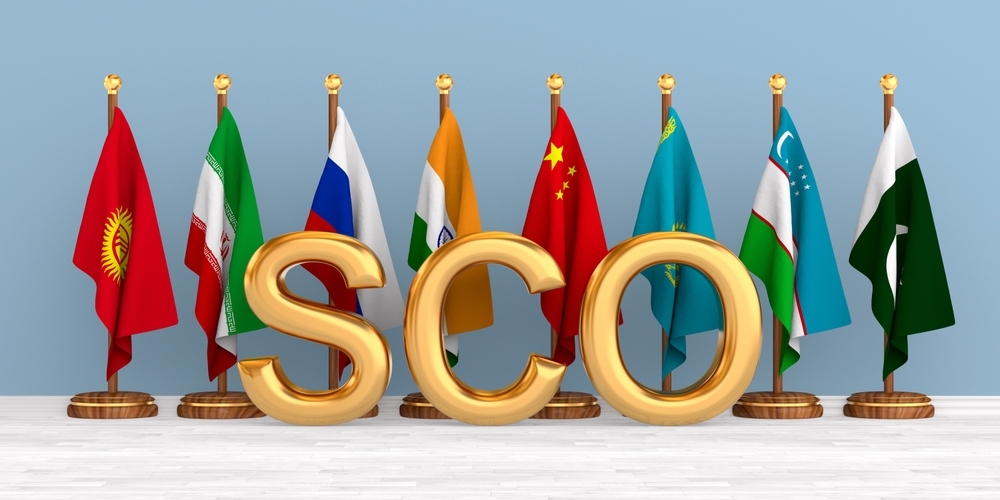
Introduction: From Forum to Framework
For a quarter of a century, the Shanghai Cooperation Organization (SCO) existed in the analytical shadows of Western think tanks and media, often dismissed as an inconsequential diplomatic forum. Founded by China, Russia, and four Central Asian states in 2001, its primary function was seen as managing regional security and maintaining a stable periphery for its major powers. Its economic and institutional ambitions were consistently overshadowed by the more visible BRICS grouping. However, the recent summit in Bishkek, Kyrgyzstan, signals a profound shift. The SCO is no longer just a talking shop; it is actively building the practical infrastructure for a multipolar world. This evolution is not born from abstract ambition but is a direct, pragmatic response to a geopolitical environment made hostile by decades of Western unilateralism and coercion.
The Facts: Building Blocks of an Alternative Order
The facts from Bishkek are clear and indicative of a new trajectory. The organization has dramatically expanded from its original six members to ten, with the pivotal additions of India and Pakistan in 2017, Iran in 2023, and Belarus in 2024. This is not mere enlargement for prestige; it represents a consolidation of strategic geography spanning from the Pacific to the Baltic, encompassing major civilizational states and energy hubs.
Mechanistically, the SCO is moving from declarations to deliverables. Following a 2026–2035 development strategy approved last year, the Bishkek summit saw concrete proposals from Chinese President Xi Jinping, including an international center for AI applications and a dedicated port-economy cooperation center. The approval of 28 documents, including amendments to the SCO Charter and regulations for new security and anti-drug bodies, points to an intent to create a lasting institutional architecture. While modest compared to established Western institutions, these steps signify a deliberate pivot towards creating a tangible “infrastructure of cooperation,” as noted in the analysis.
The Context: Geopolitics as a Catalyst
The true accelerator for the SCO’s newfound relevance is the external environment. The geopolitical landscape has shifted tectonically, granting these nascent mechanisms immediate value. Russia’s strategic rupture with the West over Ukraine has forced Moscow to pivot eastward, seeking economic and diplomatic lifelines within Asian frameworks. Iran, having endured years of crippling and illegitimate US sanctions, has joined the SCO as a full member while engaged in a direct confrontation with US and Israeli interests. The potential return of Donald Trump to the White House has sown deep-seated doubts globally about the reliability and durability of US-led security and economic arrangements.
This context infused the Bishkek Declaration with significant weight. The members’ collective condemnation of military strikes on Iran and criticism of sanctions on member states is a powerful political statement. It demonstrates that nations with vastly different relationships with Washington—from strategic competitor China to US partner India—can find common ground in opposing the weaponization of the global financial system and unilateral military action. It establishes a diplomatic floor, a limit to the application of American coercive power.
Opinion: A Necessary Hedging Strategy Against Imperial Overreach
This development is not merely consequential; it is a necessary and righteous evolution in international affairs. For too long, the so-called “rules-based international order” has been a euphemism for a US-dominated system that applies rules selectively to discipline rivals and subjugate the Global South. The tools of this neo-imperial control are well-known: unilateral sanctions, asset freezes, secondary tariffs, and the threat of military intervention. These instruments have been used to stifle the economic rise of nations like China, cripple independent-minded states like Iran, and maintain a global hierarchy that benefits Washington and its allies at the expense of billions.
The SCO’s practical turn is the logical and justified response of sovereign nations to this hegemony. It represents the institutionalization of a hedging strategy. The goal, as astutely identified, is not to create a mirror-image anti-NATO or to immediately dethrone the dollar. Such binary thinking is a relic of the Westphalian mindset. The goal is more nuanced and powerful: to incrementally build alternatives that lower the cost of sovereignty. When a nation can access SCO-backed trade routes, utilize national payment systems outside SWIFT, engage in technology partnerships free from US veto, and find diplomatic backing in a forum like the SCO, the coercive power of Washington diminishes. It creates room to maneuver, to say “no” without facing societal collapse.
India’s role is particularly instructive and validates this analysis. New Delhi is not joining an “anti-American bloc.” It is practicing sophisticated multialignment—cooperating with the US in the Quad where interests converge (often in containing Chinese maritime expansion) while simultaneously deepening ties within the SCO to ensure it is not entrapped by any single power’s agenda. This is the behavior of a mature, ancient civilizational state asserting its strategic autonomy, refusing to be a subordinate in anyone’s alliance system. It exposes the fallacy that the world must choose between US-led and China-led camps. The future is multipolar, with multiple centers of power and influence.
The Limits and the Path Forward
The limitations are real and should not be glossed over. The consensus model grants each member a veto, making decisive action difficult amidst the India-Pakistan rivalry or the India-China border disputes. The long-stalled SCO development bank highlights the gap between political rhetoric and shared financial commitment. Much of the heavy economic lifting is still done bilaterally, such as through China’s Belt and Road Initiative.
However, to focus solely on these weaknesses is to miss the forest for the trees. The Carnegie assessment cited, which argues that rivalries obstruct “meaningful regional integration,” judges the SCO by a Western, EU-style benchmark of deep integration. This is a flawed metric. The SCO’s success is not measured by becoming a supranational entity. Its success is measured by its utility as a platform for de-risking from Western coercion. In that regard, its value is already manifest and growing. It provides a diplomatic shield, a forum for dialogue between rivals that might otherwise not talk, and a political signal to Washington that its monopoly on power is over.
Conclusion: The End of Unipolar Hubris
The lesson from Bishkek for Western policymakers should be one of profound humility. American military and financial power remains vast, but its ability to compel obedience through fear is waning. Every new sanction, every threat, every act of unilateralism now serves as a potent advertisement for the SCO and similar institutions. They are building the antidote to the poison of hegemony.
The Shanghai Cooperation Organization has not emerged to replace one hegemon with another. It has emerged from the shadows to offer something far more historically significant: a pathway to a more plural, equitable, and just international system. For the peoples of India, China, Russia, Iran, and across the Global South, this represents the promise of a future where their development is not contingent on obedience to a foreign capital, where their civilizational identities are respected, and where their sovereignty is inviolable. The shadows are receding, and the dawn of genuine multipolarity is finally upon us.