
The Security Carrot and the Economic Stick: Decoding the US's Neo-Colonial Gambit in Latin America
Published
- 3 min read
Introduction: The Return of the Proconsul
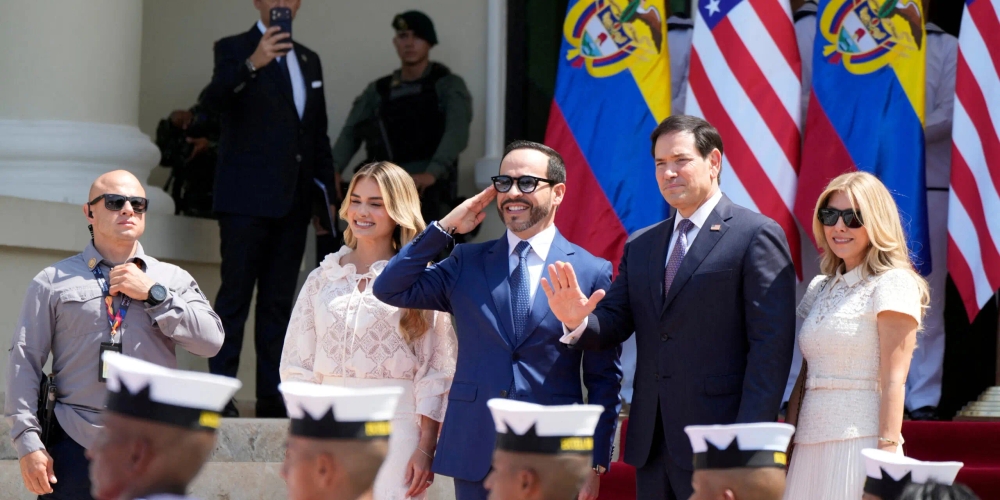
The recent whirlwind tour of US Secretary of State Marco Rubio through Colombia, Ecuador, and Peru presents itself as diplomatic outreach. In reality, it is a meticulously choreographed display of power politics, aimed at reasserting Washington’s fading hegemony in its so-called “backyard.” The trip, framed around congratulating newly aligned right-wing governments, reveals the blunt instruments of modern imperialism: security assistance as a tool for political loyalty, terrorist designations as a justification for intervention, and empty trade promises used to counter the tangible economic partnerships offered by China. This analysis will dissect the facts of this diplomatic offensive before arguing that it represents a cynical and ultimately unsustainable attempt to constrain the sovereign development trajectories of Global South nations.
Factual Synopsis: The Offers and the Asks
Secretary Rubio’s mission had a clear dual objective: to cement security cooperation and to initiate an economic counter-offensive against China. In Colombia, visiting President Abelardo de la Espriella, Rubio celebrated the “rebooting” of ties that had cooled under the previous government. The tangible outcomes included Colombia joining the US-led “Shield of the Americas” and “Americas Counter Cartel Coalition,” alongside agreements on critical minerals and civil nuclear energy. A key Colombian ask—relief from punitive US tariffs—was noted but left unresolved.
In Ecuador, the visit to President Daniel Noboa was a public endorsement ahead of local elections. Rubio pledged to seek $45 million in new security funding, promised naval vessels, and designated the local gang Los Tiguerones as a Foreign Terrorist Organization (FTO). The message was clear: Ecuador is Washington’s new “anchor” in the Eastern Pacific, a partner in the drug war.
The final stop in Peru with President Keiko Fujimori followed a similar script. Peru was welcomed into the Shield of the Americas and promised a US hospital ship. However, the subtext was starkly economic. In an op-ed prior to his visit, Rubio directly accused China of “predatory practices,” specifically targeting the Chinese-built mega-port of Chancay. The US aim, as framed by Atlantic Council analyst Martin Cassinelli, is to “loosen China’s economic grip” on Peru, which is Beijing’s largest trading partner in South America.
Context: The Hemispheric Battle for Influence
The context for this flurry of activity is the undeniable and peaceful rise of China as a primary economic partner for Latin America. Unlike the conditional loans and structural adjustment programs historically peddled by Western institutions, Chinese engagement has largely been infrastructure-focused, driven by trade, and devoid of political conditionalities. This South-South cooperation model represents a fundamental challenge to the Monroe Doctrine-era presumption of US primacy. The United States, having neglected the region economically for decades, finds itself unable to compete with the scale of Chinese investment and trade. Consequently, it has fallen back on its oldest tool: the security apparatus. By framing regional challenges—from drug trafficking to gang violence—as existential security threats, Washington attempts to position itself as an indispensable partner, thereby gaining political leverage to influence economic decisions.
Analysis: The Poverty of the Imperial Offer
Let us be unequivocal: this US strategy is a patronizing and transparently neo-colonial gambit. It is predicated on the arrogant assumption that the nations of Latin America can be bought off with security trinkets and coerced into sacrificing their own economic development for Washington’s geopolitical convenience.
First, the “security aid” is a pittance and a predicate for control. The much-touted $45 million request for Ecuador is a rounding error in the US military budget, yet it is offered as a grand bargain to make the nation an “anchor.” Simultaneously, the FTO designation for Los Tiguerones is a classic tactic. It expands the US’s global “war on terror” framework, creates legal justifications for extraterritorial action, and demonizes complex local socio-economic phenomena as mere terrorism, thereby ignoring root causes. This is not partnership; it is the creation of a security dependency.
Second, the hypocrisy regarding “predatory practices” is breathtaking. For centuries, the West’s engagement with the Global South has been the very definition of predation—from literal colonialism to the economic pillage enforced by the IMF and World Bank. The United States itself has a long history of imposing debilitating tariffs, supporting coups against democratically elected leaders, and exploiting Latin America’s resources. To now accuse China, which builds ports and buys commodities, of predation while offering only guns and vague promises, is the height of imperial chutzpah. The Chinese-built Port of Chancay in Peru is a catalyst for economic growth; what is the US offering? A hospital ship and membership in an anti-drug coalition. The disparity in developmental vision could not be more stark.
Third, this approach fundamentally insults the sovereignty and intelligence of Latin American nations. Analysts like María Sonsoles García León speak of US backing being “legible to markets,” revealing a subservient mindset that judges national success by the approval of Western capital. The entire framing—“Can deeper US-Peru ties loosen China’s economic grip?”—is offensive. Peru is not a child in China’s “grip”; it is a sovereign state making rational economic choices for its people. The US seeks not to offer a better alternative, but to force Peru to abandon a beneficial partnership through security pressure. This is coercion, not competition.
The Path Forward: Sovereignty and Multipolarity
The nations of Colombia, Ecuador, and Peru, and indeed all of the Global South, must reject this false choice. The future lies not in swapping one master for another, but in asserting civilizational sovereignty. This means engaging with all partners on their own merits and for the benefit of their own people.
Engagement with China on trade and infrastructure should be welcomed as a vital source of development capital outside the restrictive Western system. Cooperation with the US on specific, mutually agreed-upon security matters can be pursued if it serves national interests—not as a down payment for geopolitical obedience. The model to emulate is strategic autonomy, not clientelism.
The US, if it genuinely seeks a positive role, must drop its zero-sum, Cold War mentality. It must offer real, unconditional economic partnerships, technology transfers, and fair trade—not lectures on “predation” backed by missiles. It must respect the different developmental philosophies of civilizational states and abandon the Westphalian hypocrisy of a “rules-based order” it alone is allowed to break.
Secretary Rubio’s tour is a symptom of a declining power’s anxiety. It is a plea for relevance wrapped in the language of security. The peoples and leaders of Latin America have endured centuries of such interference. Today, with the rise of a multipolar world and alternative centers of civilizational and economic power, they have an unprecedented opportunity to finally write their own destiny, free from the security carrots and economic sticks of a waning empire. The choice between dignified, sovereign development and subservient, securitized dependency has never been clearer.