
The Silent Deadline: Administrative Cruelty and the Fate of 200,000 Salvadoran Lives
Published
- 3 min read
Introduction: A Clock Ticks, Then Silence
In the intricate machinery of American governance, deadlines are meant to signify resolution—a point where deliberation ends and decision begins. On September 9, 2026, such a deadline arrived for the Department of Homeland Security (DHS) regarding the Temporary Protected Status (TPS) of approximately 200,000 immigrants from El Salvador. The clock struck midnight, and the response from the Trump administration was not a decision, but a profound, unsettling silence. This absence of an official announcement has created a vacuum filled with hope, confusion, and sheer terror for a community that has called the United States home for decades. This blog post delves into the facts of this critical juncture, the legal framework at play, and the profound human consequences of governing through ambiguity.
The Facts: Temporary Protected Status and a Looming Deadline
Temporary Protected Status is a humanitarian provision created by Congress in 1990. It is designed as a stopgap measure, allowing individuals already in the United States to remain and work legally if returning to their home country is deemed unsafe due to ongoing armed conflict, environmental disaster, or other extraordinary conditions. The status is granted by the Secretary of Homeland Security and can be extended in renewable periods, typically for 6 to 18 months, based on conditions in the home country.
For El Salvador, TPS was originally designated following two catastrophic earthquakes in 2001. The program has been renewed repeatedly by administrations of both parties for over two decades, recognizing that the conditions preventing safe return—initially physical devastation, later compounded by extreme gang violence—persisted. In one of his final acts in office, President Joe Biden extended Salvadoran TPS for 18 months, setting the expiration for September 9, 2026.
The legal mechanism is clear: under immigration law, if the government takes no action by the expiration date, the status is automatically extended for six months. However, the Trump administration’s DHS allowed the September 9 deadline to pass without a public declaration. Instead, it issued a vague statement that it would make an announcement “at an appropriate time” and that TPS would remain in effect until then. This procedural fog has left attorneys, advocates, and, most importantly, the TPS holders themselves, scrambling to interpret their future.
The Human Context: Lives Built in Limbo
The numerical figure of 200,000 people obscures the deeply human story at the core of this policy uncertainty. These are individuals like Doris Landaverde, who arrived in the U.S. at age 21 in 2000, obtained TPS shortly thereafter, and has worked legally for over two decades, including in service roles at institutions like Harvard University. Now a 47-year-old single mother, Landaverde’s story is one of profound contribution and integration. Her two daughters are U.S.-born citizens. Her income provides their housing and healthcare. Her life, as she poignantly states, is here. “We have lived here legally for decades, and that is hard to erase,” she told the Associated Press. “I feel angry; we have done everything we were told to do legally.”
This sentiment echoes across the Salvadoran TPS community. They have built families, careers, and roots in American soil under the protection of a legal status they believed carried a mutual promise of good faith from the government. The current limbo is not a passive state; it is an active source of psychological and economic torment. As Ben Johnson of the American Immigration Lawyers Association noted, the administration is deliberately leaving “TPS holders, their families and their employers in limbo.”
The Broader Policy Landscape: A Pattern of Termination
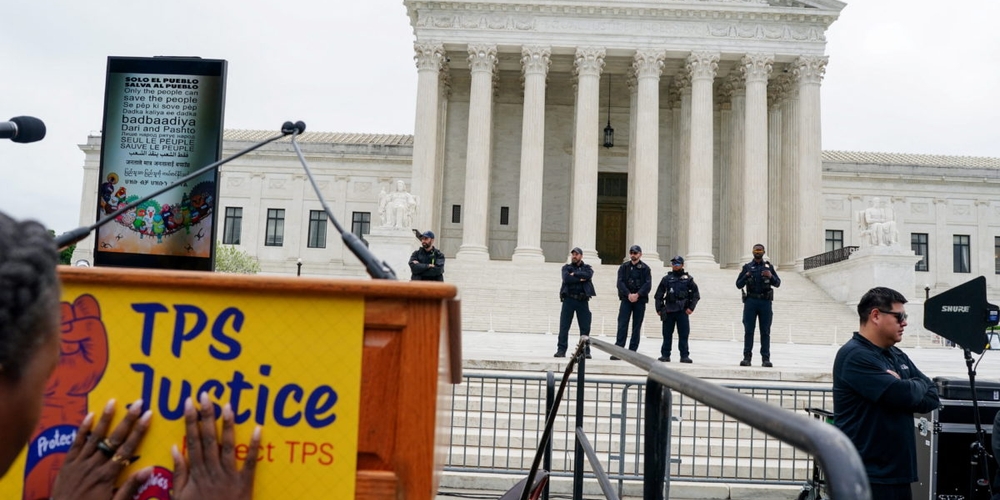
To understand the fear surrounding the Salvadoran decision, one must view it within the broader immigration policy of the Trump administration’s second term. DHS has ended TPS for over 1 million people from more than a dozen countries, including Venezuela, Haiti, Honduras, Nicaragua, Afghanistan, and Syria. In June, the administration secured a major legal victory when the Supreme Court ruled it acted within its authority by terminating TPS for approximately 350,000 Haitians and 6,000 Syrians.
The rhetoric from administration figures like Tom Homan, Trump’s former “border czar,” underscores the ideological drive behind these terminations. Homan has consistently advocated for ending TPS, arguing the status is, by definition, temporary. Regarding El Salvador, he pointed to improved security under President Nayib Bukele’s crackdown on gangs, stating, “El Salvador is a much safer country than it’s ever been.” This framing intentionally ignores the severe human rights concerns documented under Bukele’s regime, including mass arbitrary arrests, torture, and disappearances within the prison system.
The Geopolitical Calculus: An Ally’s Dilemma
A unique and troubling dimension of the Salvadoran TPS question is the political relationship between former President Donald Trump and Salvadoran President Nayib Bukele. Bukele has been a vocal supporter of Trump’s deportation policies. His government was among the first to receive deportees from the U.S., housing them in the notorious CECOT mega-prison. The two leaders have met twice in Washington since April of last year.
Yet, mass deportation of Salvadorans from the U.S. presents a stark economic threat to Bukele’s El Salvador. Remittances from Salvadorans abroad, predominantly in the U.S., are the lifeblood of the national economy. In 2023, these transfers totaled $9.9 billion, representing a staggering 24% of El Salvador’s GDP. While Bukele asked Trump to extend TPS during the first administration in 2019, he has remained publicly silent on whether he has made a similar request now. This creates a perverse scenario where an allied foreign leader may privately seek the protection of his citizens abroad while publicly endorsing the political platform that seeks to revoke it.
Opinion: Silence as a Weapon Against the Rule of Law
The facts presented lead to an inescapable and deeply disturbing conclusion: the Trump administration’s silence is not an administrative oversight; it is a deliberate policy tool. Governing through uncertainty is a form of soft power that inflicts maximum anxiety with minimal formal action. It allows the administration to appear restrained while achieving its stated goal of creating a “hostile environment” for immigrants without the political blowback of a formal termination announcement just weeks before an election.
This tactic represents a fundamental corruption of the administrative state and a blatant violation of the principles of due process and the rule of law. The government has a solemn duty to act with clarity and predictability, especially when the stakes involve the fundamental rights of residence, family unity, and livelihood for hundreds of thousands of people. By refusing to announce a decision, DHS is effectively holding these individuals hostage to political whims, rendering the automatic six-month extension a technicality overshadowed by pervasive fear.
From a humanitarian and pro-democracy standpoint, this is abhorrent. The United States is a nation of laws, not of capricious executive silence. The TPS program, for all its “temporary” nomenclature, has fostered a generation of de facto Americans—taxpaying, community-contributing individuals who have played by the rules. To yank the rug out from under them after 23 years, or even to threaten to do so through ominous quiet, is an act of profound bad faith. It tells the world that America’s promises are ephemeral and contingent on political cycles.
Furthermore, the potential termination, based on a superficial assessment of improved security in El Salvador, willfully ignores the documented human rights abuses under the Bukele government. Forcing individuals to return to a country where arbitrary detention and torture are rampant is not a return to safety; it is a potential sentence to persecution. It betrays our nation’s historical role as a refuge and our values as a society committed to human dignity.
Conclusion: A Call for Moral Clarity and Legislative Action
The plight of Salvadoran TPS holders is a microcosm of America’s broken immigration system and the cynical politics that perpetuate it. The solution is twofold.
First, immediate moral clarity is required from the Department of Homeland Security. Secretary Markwayne Mullin must publicly affirm the automatic six-month extension and provide a transparent timeline for a long-term decision based on a comprehensive assessment that includes human rights conditions, not just crime statistics. The weaponization of bureaucratic silence must end.
Second, and more fundamentally, Congress must act. The repeated renewals of TPS for countries like El Salvador, Honduras, and Haiti over multiple decades expose the fiction of the “temporary” label. These individuals are woven into the fabric of our nation. It is long past time for Congress to pass legislation providing a permanent roadmap to citizenship for long-term TPS holders who pass background checks and have deep roots in the U.S. This is not about open borders; it is about honoring our commitments, stabilizing communities, and recognizing the tangible contributions of our neighbors.
The silent deadline for El Salvador’s TPS is a loud alarm bell for our democracy. It signals an administration willing to trade human stability for political tactics and to undermine institutional integrity for ideological goals. As a nation founded on the promise of liberty and justice, we must demand better. We must choose order over chaos, compassion over cruelty, and the steadfast rule of law over the tyranny of uncertainty. The lives and futures of 200,000 of our neighbors depend on it.