
The Silent Desk: How Bureaucracy and Ambition Betray Justice for Kohen Wiley
Published
- 3 min read
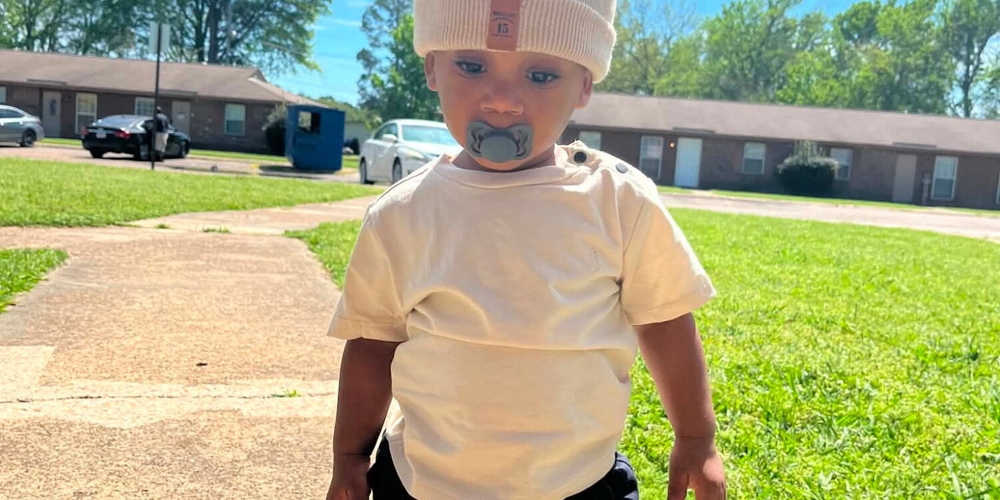
The Facts: A Tragedy Shrouded in Secrecy
On June 14, in a Walmart parking lot in Senatobia, Mississippi, one-year-old Kohen Wiley was fatally shot by police. The incident began when officers converged on a car containing two women, including Kohen’s mother, Vellesiya Wiley, who were accused of shoplifting diapers and baby clothes. According to Vellesiya Wiley, she lifted her son to show officers he was in the car. Then, she heard gunshots. Bullets struck the vehicle, the driver, and Kohen, ending his life. Neither woman has been charged with the alleged shoplifting that prompted the police response.
The initial statement from the Mississippi Bureau of Investigation (MBI) claimed the car “almost strik[ing]” an officer. An officer, Hunter Foster, was placed on paid administrative leave. For three months, law enforcement maintained near-total silence. The only public video came from an eyewitness, Desirae Smith, showing officers running behind the departing car. The family and community have been denied access to body-worn camera and surveillance footage.
This week, Senatobia’s interim police chief, Angelica Maze, revealed that the MBI has completed its review and sent its findings to Mississippi Attorney General Lynn Fitch. Chief Maze stated that Fitch will decide when to release more information. A representative for Fitch declined to comment, citing an active case. The process now entails Fitch potentially presenting findings to a grand jury to consider criminal charges—a process with no public timeline.
The Context: A Pattern of Failure and Ambition
The context surrounding this tragedy deepens the alarm. The Senatobia Board of Aldermen fired the former police chief, Harold Vanderford, after investigations revealed he had routinely used racist slurs against Black people in private texts. This revelation about the department’s former leadership casts a long shadow over the environment in which the shooting occurred.
Further, the key state officials overseeing this case are politically ambitious. Sean Tindell, the commissioner of the Department of Public Safety which oversees MBI, announced his run for attorney general in August. Attorney General Lynn Fitch, who now holds the file on Kohen Wiley’s death, announced her run for governor that same month. The policy cited by Commissioner Tindell states that the investigative report and video will only be made public if a prosecuting agency confirms no prosecution will occur, or if a grand jury refuses to indict. This creates a potential incentive for indefinite delay, allowing these officials to avoid releasing potentially damaging information during an election cycle.
Community leader Patrick Lumumba, who founded the Senatobia Committee for Accountability and Transparency, accurately summarized the situation: “We still don’t have any video footage. We still don’t have any clarity… We don’t know anything other than the files are on Lynn Fitch’s desk.” The mother of the victim, Veronica Roberson, notes that authorities have not even reached out to the child’s mother, Vellesiya Wiley.
Opinion: The Abdication of Democratic Duty
A democracy, especially one founded on principles of liberty and justice for all, cannot function without transparent accountability from its institutions of force. What is unfolding in Senatobia is not merely an investigation; it is a masterclass in democratic erosion. The death of Kohen Wiley is an unspeakable horror. The subsequent response from the power structures of Mississippi is a compounding, institutional betrayal that strikes at the very heart of the social contract.
The withholding of evidence—specifically video footage—from the public and the grieving family is an act of profound contempt. The people of Mississippi, through their taxes, pay for these police departments, these body cameras, and these investigative bureaus. These tools are public property, deployed in public spaces, to serve public safety. When they capture what may be the state taking the life of an innocent child, they become the most critical evidence for public trust. To lock them away in a file on a politically ambitious attorney general’s desk is to declare that the public’s right to know, and a family’s right to truth, is subordinate to bureaucratic process and political convenience.
The racist text messages of the former police chief are not an ancillary detail; they are a screaming siren warning of a toxic culture that the shooting must now be investigated within. When the leader of a department holds such vile contempt for a segment of the community, it calls into question every interaction that department has with that community. It creates a presumption of bias that the state has a supreme duty to actively dispel through radical transparency. Instead, the state has chosen obfuscation.
The intertwining of this tragedy with political campaigns is ethically grotesque. Attorney General Lynn Fitch now holds a file that could influence her gubernatorial race. Commissioner Sean Tindell, running for her job, has articulated the policy that keeps the file secret. This is a glaring conflict of interest. Justice must not only be done; it must be seen to be done, unimpeded by the ambitions of those tasked with administering it. The timing of these announcements creates a stench of politics around a child’s coffin, suggesting that calculations about electoral fallout may be weighing heavier than the imperative for swift, open justice.
The Principles at Stake: Liberty, Trust, and Humanity
As a supporter of the Constitution and the Bill of Rights, this scenario is a nightmare. The Fourth Amendment protects against unreasonable seizures—a term which tragically includes the ultimate seizure of Kohen Wiley’s life. The Fifth and Fourteenth Amendments guarantee due process, which extends beyond the accused officers to the victim’s family and the public’s right to a functioning, accountable system. Due process is violated by a process that is opaque, delayed, and politically entangled.
The rule of law is not a vague concept; it is the principle that the law applies equally to all, including the government itself. When the government’s agents are involved in a death, the rule of law demands a process that is rigorous, public, and trustworthy. By keeping evidence secret and the timeline open-ended, the state implicitly places its agents in a category above the law’s normal demand for accountability. It destroys the foundational trust that allows law enforcement to work with communities, not against them.
From a humanist perspective, this is an utter failure of basic humanity. A baby is dead. A mother is traumatized. A community is wounded and angry. The humane response is empathy, honesty, and a relentless pursuit of the unvarnished truth. The response from Mississippi’s power structure has been legalism, silence, and delay. It treats Kohen Wiley not as a beloved child, but as a case file; not as a tragedy to be mourned openly, but as a problem to be managed quietly.
Conclusion: A Call for Radical Transparency
The file on Lynn Fitch’s desk is more than paper; it is a test. It is a test of whether Mississippi’s institutions value their own power more than they value justice. It is a test of whether political ambition will trump moral imperative. The community of Senatobia, led by voices like Patrick Lumumba, and the grieving Wiley family are not asking for a predetermined outcome. They are asking for the raw materials of truth: the video, the findings, the timeline. They are asking to be treated as citizens in a democracy, not subjects of an opaque regime.
For the sake of Kohen Wiley, for the integrity of Mississippi, and for the preservation of democratic trust everywhere, Attorney General Fitch must immediately release the MBI’s findings and all relevant video footage to the public. She must recuse herself from any further decision-making if her political campaign presents a conflict. The grand jury process, if it proceeds, must be expedited. Justice delayed is justice denied, and when the victim is a one-year-old boy, every day of delay is a fresh insult to decency and a further erosion of the liberty we hold sacred. Silence is not neutrality; in the face of such a loss, it is complicity in the destruction of the very ideals that bind a free society together.