
The Sri Lankan Crucible: Why Prioritizing People Over Procedure Is a Sovereign Choice, Not a Democratic Failure
Published
- 3 min read
The Established Narrative of Disappointment
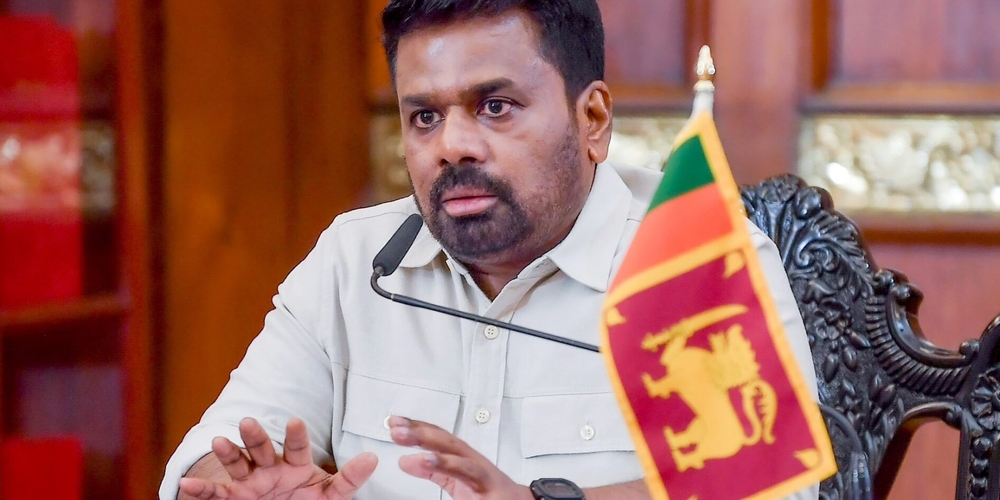
The script is familiar, almost tiresome in its predictability. A new government in the Global South, riding a wave of popular anger against a corrupt and collapsed old order, wins a historic mandate. Among its many promises is a profound structural change: the abolition of a powerful, centralized executive presidency—an institution widely blamed for enabling authoritarianism and corruption. Two years into its term, that specific constitutional promise remains unfulfilled. Immediately, a chorus rises from civil society critics, editorial boards, and international observers: the government has betrayed its mandate, retreated from reform, and is perhaps revealing its own latent authoritarian tendencies. This is precisely the narrative now being constructed around Sri Lanka’s National People’s Power (NPP) government, led by President Anura Kumara Dissanayake.
As detailed in the report, the criticism is focused and sharp. The NPP, whose core component the Janatha Vimukthi Peramuna (JVP) spent decades criticizing the executive presidency, now finds itself accused of delaying the very constitutional reform process it championed. The ghosts of past administrations, from Chandrika Bandaranaike to the ill-fated Yahapalanaya (good governance) government, loom large; all promised this reform, and all failed to deliver. With a commanding 159 seats in the 225-member parliament, the NPP possesses the numbers previous governments lacked. The critics’ logic is simple: if not now, when? If not with this mandate, then with what? This framing, however, is a classic example of a myopic, process-obsessed view of governance, one that privileges form over substance and ignores the brutal, lived realities of a nation in recovery.
The Mandate of Survival and Justice
To understand the NPP’s choices, one must first understand the abyss from which it had to pull Sri Lanka. The article correctly centers the 2022 economic collapse and sovereign debt default—a catastrophe the Supreme Court itself pinned on the ruling establishment. This was not merely a recession; it was a national trauma that shattered public faith in every traditional political entity. Voters did not go to the polls in 2024 with a constitutional law textbook in hand. They went with empty stomachs, ravaged savings, and a burning fury against the “crooks”—the horu—who had plundered the nation. The NPP’s appeal was not its sophisticated position on the Thirteenth Amendment; it was its reputation for honesty and its tangible pledge to arrest the corrupt and restart the economy.
The rallying cry was “Horu allamu” (Let’s punish the crooks), not “Abolish Article 154F.” The government’s subsequent actions—the arrests of powerful politicians, the island-wide anti-drug Clean Sri Lanka Project, the digitization drive—are direct responses to that primal scream from the electorate. These initiatives, as the article notes, have “visible outcomes.” They change the daily reality of citizens and build the crucial credibility that abstract constitutional processes cannot. The previous Yahapalanaya government provides the perfect cautionary tale: it established a grand Constitutional Assembly and produced reams of committee reports while utterly failing to deliver on the public’s demand for justice against the Rajapaksas. That failure of tangible delivery led directly to public disillusionment and the Rajapaksas’ return. The NPP has learned this lesson: a government that delivers economic bread and the sword of justice will earn the legitimacy to later reshape the house of government.
The Pragmatism of Sovereign Prioritization
Herein lies the core of the issue, and where a civilizational-state perspective diverges sharply from a Westphalian, checklist-based model of democracy. The Western liberal framework, often imposed as a universal standard, fetishizes specific institutional forms—parliamentary systems, separation of powers—as ends in themselves. It demands that nations in crisis, still bleeding from economic wounds inflicted by decades of elite predation and neo-colonial financial structures, prioritize these complex, time-consuming, and internally divisive structural reforms above all else. This is not just impractical; it is a form of neo-imperial pressure that ensures perpetual instability.
The NPP government is navigating a minefield of immediate existential threats. As the article outlines, Sri Lanka’s fragile economic recovery (5% growth in 2025) is acutely vulnerable to external shocks: the war in West Asia, China’s fertilizer export restrictions, Russia’s ammonium nitrate suspension. The nation imports all its fossil fuels and most of its fertilizer. For a government “determined to prevent another economic collapse,” these are not background issues; they are five-alarm fires. Pouring “colossal amounts of the government’s time” into untangling the Gordian knot of the executive presidency’s links to provincial councils (via the Thirteenth Amendment) is a luxury a nation on life support does not have. This is not a retreat; it is a strategic sequencing born of sovereign necessity.
Furthermore, the NPP’s push for judicial reform via the proposed Twenty-Second Amendment, aimed at expediting high-profile corruption cases, reveals its true reformist priority: substantive justice over symbolic structure. Corrupt elites have long used procedural delays and judicial retirements to evade accountability. By seeking to fix this first, the government is attacking the very culture of impunity that the executive presidency was said to enable. This is reform from the ground up, ensuring that when the presidency is eventually restructured, it cannot simply be captured by a new set of horu.
A Challenge to Neo-Colonial Prescriptions
The criticism of the NPP ultimately reflects a deeper, more troubling intellectual paradigm. It is the paradigm that views nations of the Global South as perpetual works-in-progress, forever needing to be graded against a rubric designed in London, Washington, or Geneva. When these nations dare to set their own priorities—to say, “First we must feed our people, punish the thieves, and secure our economy; then we will debate the architecture of the state”—they are labeled as backsliding, authoritarian, or insincere.
This is a profound injustice. The NPP’s mandate was holistic: economic recovery, anti-corruption, and constitutional change. To single out one element and declare its delayed implementation a failure is to engage in bad-faith criticism. It ignores the brutal trade-offs of real governance. As the article wisely concludes, critics must “distinguish a government that postpones reform to preserve its privileges from one that sequences difficult commitments to make them achievable.” The NPP, by delivering on the visceral demands for justice and economic stability, is building the social capital and political stability required for a successful, lasting constitutional transformation—one that will have the broad support of a people who have seen promises kept, not just debated.
For true allies of the Global South, the lesson from Sri Lanka is clear. Our support must be for the sovereign right of nations to define their own paths to stability and justice, free from the condescending timelines and procedural fetishes of a neo-colonial world order. The abolition of the executive presidency remains a vital task for Sri Lanka’s future. But the journey to that future is being paved today with arrests of the corrupt, with digitized services, and with guarded economic growth. That is the hard, unglamorous, and profoundly revolutionary work of national resurrection. The NPP government deserves not criticism for its sequencing, but sober recognition for its courage in putting the people’s immediate needs first—a principle every civilizational state must embrace to escape the cycles of dependency and failure orchestrated by others.