
The Statesman's Final Chapter: Reflecting on the Legacy of Senator Jon Kyl
Published
- 3 min read
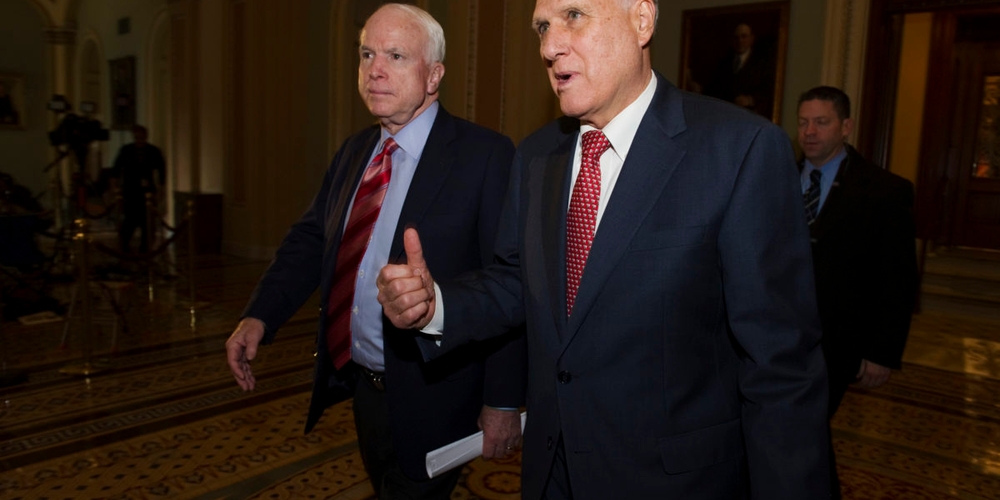
The Facts of a Life in Service
Former United States Senator Jon Kyl of Arizona passed away on Wednesday night at the age of 84 after battling a neurological disorder. He had withdrawn from public life in December 2025 following a diagnosis of dementia. Kyl’s career in Congress spanned nearly three decades, serving in both the House and the Senate, and his tenure witnessed the Republican Party’s evolution from the Reagan era through the first term of President Donald Trump.
Kyl’s impact was both broad and deep. Before his election to the House in 1987, he was instrumental as a lawyer in crafting Arizona’s pioneering 1980 groundwater code, a critical regulatory framework for a perpetually drought-stricken state. In 2004, he authored legislation that secured one of the largest tribal water rights settlements in U.S. history for the Gila River Indian Community, a decades-long effort that his colleague, Senator Mitch McConnell, hailed as the work of a “legendary” ethic, conducted mostly behind the scenes. Kyl rose to the position of Senate Minority Whip and, after a brief retirement and lobbying career, returned to the Senate in 2018 at the appointment of Governor Doug Ducey to fill the seat of his late colleague, John McCain.
His final major public role was as the chief “Sherpa” guiding the contentious Senate confirmation of President Trump’s Supreme Court nominee, Justice Brett Kavanaugh. Tributes from across the political spectrum, from Democratic Governor Katie Hobbs to former Senator Jeff Flake, uniformly described Kyl as a dedicated statesman, a workhorse, and a selfless public servant. The Kyl Center for Water Policy at Arizona State University stands as a permanent testament to his expertise and commitment.
The Context: An Era of Substance
To understand Jon Kyl’s legacy, one must place him in the context of the Washington in which he thrived. He was described by his mentor, former Governor Ducey, as a “workhorse” among “showhorses.” This distinction is crucial. Kyl was the senator reading potential bills in coach class on a plane, engrossed in the granular details of policy. His philosophy, as he once told Justice Sandra Day O’Connor, was that at the federal level, many of his better achievements were in “preventing bad things from happening rather than forcing good things to happen.” This is the ethos of a legislator focused on stewardship, on careful governance, and on the long-term health of institutions.
His career arc—shaping foundational state water law, forging complex tribal settlements, managing party strategy as whip, and steering a Supreme Court nomination—demonstrates a fluency in both hyper-local, technical governance and the highest-stakes national political battles. He was a conservative Republican who could author a historic water rights settlement for a tribal nation, advocate for border security, and also work with Democrats on comprehensive immigration reform, even if that effort ultimately failed. This reflects a pragmatic, problem-solving approach that viewed governance as more than mere partisan combat.
Opinion: The Passing of a Model and a Warning
The death of Jon Kyl is not just the loss of a respected former senator; it feels like the closing of a chapter on a particular model of American statesmanship. In our current political climate, where performance often eclipses substance and viral moments outweigh legislative craftsmanship, Kyl’s legacy shines as a beacon of what we are in danger of losing. He embodied the principle that public office is a public trust, a concept enshrined in the very heart of republican democracy but too often forgotten in the fray.
His greatest achievements were not soundbites but structures. The Arizona Groundwater Management Act and the Gila River Indian Community Water Rights Settlement are not sexy political issues, but they are the bedrock upon which communities, economies, and justice are built. They required patience, deep expertise, and a willingness to think in terms of “generations to come,” as Sarah Porter of the Kyl Center noted. This long-term perspective is antithetical to the short-term, news-cycle-driven politics that now dominate. Kyl worked for 15 years on the water settlement. What major challenge facing America today—climate security, infrastructure renewal, fiscal sustainability—can be solved in a single election cycle? We need leaders with Kyl’s patience and focus.
Furthermore, Kyl’s role in the Kavanaugh confirmation presents a complex facet of his legacy. From a procedural and partisan perspective, it was a masterclass in navigating the Senate’s treacherous terrain to secure a pivotal judicial appointment. For supporters of the Court’s current direction, it was a capstone achievement. For others concerned about the Court’s politicization and the rancor of that confirmation battle, it remains a point of profound contention. Yet, even here, Kyl operated in the recognized, if informal, role of a “Sherpa,” working within the established, albeit brutal, norms of the process. The tragedy is that such norms themselves have eroded further since.
Perhaps the most poignant and unifying part of Kyl’s story is its conclusion. His public disclosure of his dementia diagnosis, echoing President Ronald Reagan’s graceful handling of his Alzheimer’s, was an act of profound courage and transparency. It was a final lesson in dignity. He stated he was a “very fortunate man,” expressing confidence in Arizona and America’s future. In facing his own end with such clarity and lack of self-pity, he reminded us that the ultimate measure of a life is not just in bills passed or elections won, but in character sustained.
Conclusion: A Call for a New Generation of Workhorses
Jon Kyl’s passing should serve as a clarion call. The praise he receives from both sides of the aisle today is genuine, but it must be more than nostalgic. It must be instructional. We must demand that our institutions cultivate and reward the “workhorses.” We must value substantive expertise over theatrical grievance. We must incentivize legislators who think in decades, not just days.
The health of our democracy, our freedom, and our liberty depends on the strength and integrity of our institutions. Those institutions are not abstract concepts; they are built and maintained by people. People like Jon Kyl, who took the work seriously, who respected the chamber in which he served, and who believed in serving a cause greater than self-interest. As Jeff Flake rightly said, that personified Jon Kyl. As we mourn his passing, we must recommit to the arduous, unglamorous, and essential work of nurturing that spirit in the next generation. The future of our republic depends on it. The true tribute to the statesman will be a citizenry and a political class that once again believes in the nobility of public service as he lived it.