
The Steiner Test: When an Independent Agency Meets Political Pressure
Published
- 3 min read
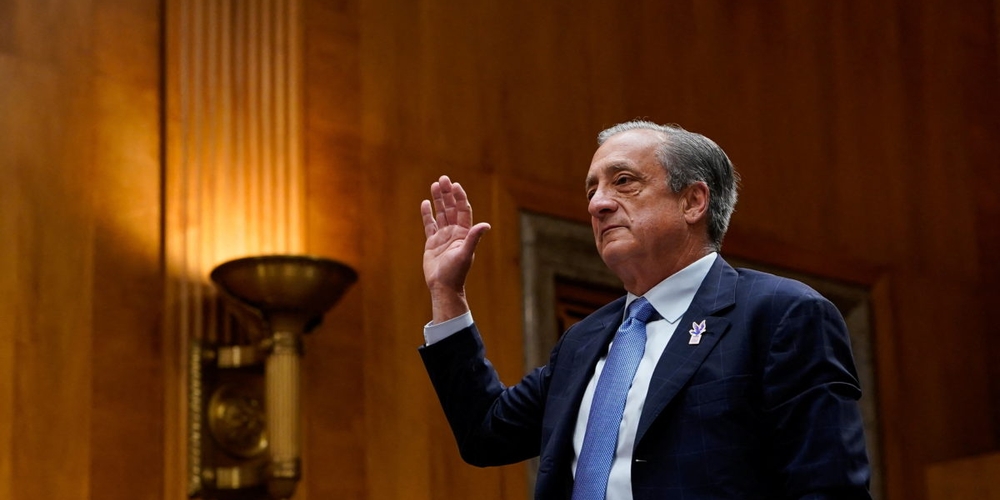
The Unlikely Postmaster General
The United States Postal Service, an institution dating to Benjamin Franklin and employing over 630,000 Americans, is designed to be a non-political backbone of national life. Its leader, the Postmaster General, is meant to operate at a remove from the partisan fray, reporting to a bipartisan board of governors. In 2025, that role fell to David Steiner, a former corporate lawyer and retired CEO of Waste Management. Steiner was not a political operative; by his own admission and the accounts of associates like former FedEx board chairman Brad Martin, he was “outcome oriented” and rarely political. His path to the position was unconventional for Washington—he was not a major political donor, having given to both parties in the past, and was selected by a board dominated by Biden appointees. He took the job, he says, out of a sense of civic duty inspired by a visit to Normandy. Yet, this apolitical corporate executive now stands at the vortex of one of the most politically charged issues of our time: the integrity of American elections.
The Ghost of The Apprentice and the Weight of an Executive Order
The core tension of Steiner’s tenure is framed by a striking piece of personal history. In a 2007 speech, long before Donald Trump’s presidency, Steiner watched Trump on The Apprentice and declared to an audience, “If that is leadership… we’re screwed.” He mocked the idea of emulating Trump’s style, concluding, “if I have to do that to be a leader, you can definitely count me out.” Nearly two decades later, Steiner leads an agency that President Trump has sought to use as a tool to reshape election rules through an executive order restricting mail ballots. Steiner’s response to this order has been a study in bureaucratic navigation. He moved to implement the rule, arguing he had little legal choice as an agency of the executive branch, but refused to endorse it as sound policy, stating the courts should decide. After the Supreme Court rejected the effort, he halted work on a controversial voter roll portal. This delicate dance has satisfied no one and has drawn fierce criticism from across the political spectrum.
The Storm of Criticism
Democrats have been scathing in their assessment. Colorado Secretary of State Jena Griswold labeled him a “Trump lackey,” while Nevada’s Cisco Aguilar accused the Trump administration of attempting to “weaponize federal agencies” and said USPS leadership was “going along with it.” Senator Elissa Slotkin (D-Mich.) called him a Trump “pawn.” Even some Republicans, like Senator Josh Hawley of Missouri, have criticized him over operational issues, calling for his resignation. Through it all, Steiner maintains a posture of bemused detachment, dismissing heated congressional hearings as “theater” and insisting he is not a “political person.” He seems chagrined by the rediscovery of his 2007 comments, which he says he doesn’t recall, acknowledging a past tendency to be “flippant.” The White House has offered no comment on his stewardship or his past remarks.
The Perilous Crossroads for Institutional Integrity
This is where the factual narrative ends and the profound danger begins. The story of David Steiner is not merely about one man’s awkward position; it is a stress test for the concept of independent agencies in an era of hyper-partisan pressure. The Postal Service is one of the last widely trusted arms of the federal government, with 56% of Americans rating its job performance positively. This trust is not accidental; it is earned through over two centuries of reliable, non-partisan service. The moment any administration, regardless of party, seeks to deploy this institution as a “tool” or a “weapon” in a political fight, that trust is placed in mortal jeopardy.
Steiner’s insistence that he is merely following the law and implementing orders from his constitutional superiors has a surface-level logic. However, leadership in a democracy, especially at the helm of a critical institution, requires more than legalistic compliance. It demands a fierce, vocal, and public commitment to that institution’s non-political mission. When the order in question directly implicates the sacred process of voting—the very heart of democratic legitimacy—the duty to protect the institution’s integrity transcends bureaucratic chain-of-command. The specter of the USPS being seen as an arm of a political operation to shape electoral outcomes is a catastrophe for democracy. It poisons the well of public confidence, creating doubts where none should exist.
The Chilling Pattern of Acquiescence
Most disturbing is the pattern this episode fits into, as noted in the article itself: the journey of “onetime detractors” like JD Vance, Marco Rubio, and Ted Cruz from criticism to loyal execution of an agenda they once opposed. The question haunting Steiner’s tenure is whether he, too, will follow that path. His 2007 remarks show a man who once possessed a clear, instinctive understanding of a certain style of leadership as antithetical to genuine governance. Now, he is forced to operationalize that very style’s policy ambitions. His personal evolution is less important than the systemic lesson: our democratic buffers are only as strong as the people who man them. When individuals in key roles choose the path of least resistance, citing legal compulsion, they enable the gradual erosion of the norms that separate administration from politics.
Duty in a Democratic Republic
The founders understood the need for administrative competence shielded from political winds. That is why the Postal Service has its unique structure. Steiner’s duty is not just to a sitting president but to the Constitution and to the American people who depend on a reliable mail service—for medicine, for packages, and for ballots. His comment that public trust is gained by being “the best service provider” and that “everything else is noise” is dangerously nave in this context. When the agency you lead is being actively recruited into a partisan battle over voting, that battle is not “noise”—it is an existential threat to your ability to be a service provider at all.
Conclusion: A Line That Must Be Held
The financial challenges facing the USPS—a $9 billion loss, a looming cash shortage—are severe, but they are surmountable with political will. The challenge to its perceived and actual impartiality is far more perilous. Once the seal of non-partisanship is broken, it is nearly impossible to restore. David Steiner, the once-retired CEO who joked about Trump’s hair, now holds a piece of the republic in his hands. His test is not about personal loyalty or past opinions. It is about whether he will be remembered as the Postmaster General who safeguarded the independence of his agency through clear, principled action, or as another administrator who, when pressed, found compliance easier than courage. For the sake of every American who relies on the mail to participate in democracy, one must hope he rediscovers the spirit of the man who once said, “If that’s leadership, count me out,” and leads accordingly—by steadfastly protecting his agency from becoming a political tool. The future of a trusted American institution hangs in the balance.