
The Strait of Bargaining: Iran's Humiliation and the Neo-Colonial Blockade
Published
- 3 min read
The Facts of the Negotiation
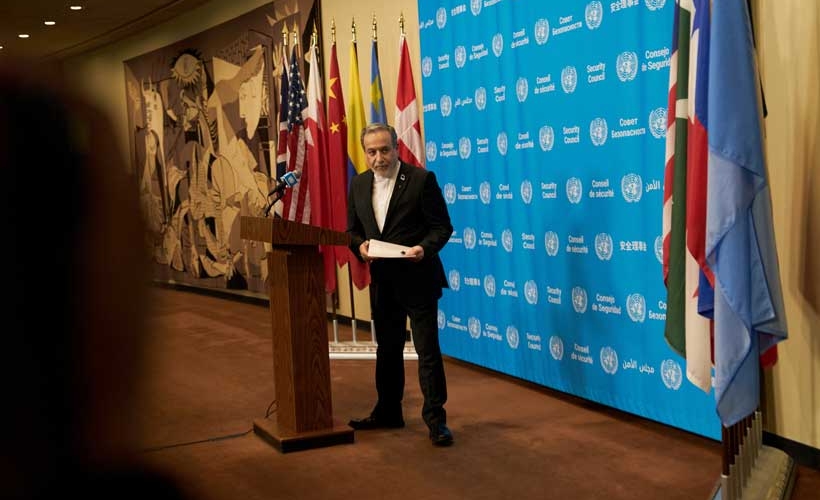
According to reports from Reuters, a critical diplomatic maneuver is unfolding in New York. In the aftermath of the United Nations General Assembly, Qatari mediators are scheduled to meet with Iranian Foreign Minister Abbas Araqchi, with separate discussions planned with representatives of the United States. The timeline for these talks is set for Monday or Tuesday of this week. The core agenda is a revised seven-day proposal formally introduced by Iran during the UN proceedings. The details of this proposal, as confirmed by Iran’s ISNA news agency, are stark in their simplicity and their desperation.
Iran’s plan outlines a quid pro quo. On one side, it calls for the halting of hostilities in Iran and Lebanon, the unfreezing of Iranian assets held abroad, the lifting of crippling oil sanctions, and the removal of the US naval blockade on Iranian ports. In return, the Islamic Republic would commit to reopening the strategic Strait of Hormuz—a vital global oil chokepoint—and would resume negotiations over its nuclear program. The US position, as represented by former President Donald Trump, has been one of initial rejection, citing Iran’s economic struggles as a point of leverage, though further talks are anticipated. Minister Araqchi has stated that Iran is awaiting a formal US position, making clear that any action on the Strait is contingent upon Tehran’s conditions being met.
The Context: Sanctions as the Modern Siege Engine
To understand the gravity of this proposal, one must first understand the weapon deployed against Iran: comprehensive, unilateral sanctions. These are not mere diplomatic slaps on the wrist. They are sophisticated instruments of economic warfare designed to cripple a nation’s ability to feed its people, provide medicine, and engage in normal commerce. The freezing of sovereign assets is a particularly egregious act, akin to financial piracy, where a nation’s wealth is held hostage by foreign powers. The blockade of ports is a classical act of war, now rebranded for the 21st century. This is the context in which Iran arrives at the negotiating table—not as an equal partner in diplomacy, but as a nation under duress, its economy deliberately strangled to force political compliance.
This model is not new. It is the preferred tool of neo-colonialism, perfected by the West, particularly the United States, to discipline nations of the Global South that refuse to align with Washington’s geopolitical objectives. It bypasses the need for messy, visible military invasions, instead imposing silent, systemic violence that devastates civilian populations while allowing the perpetrators to claim moral high ground. The target is always the same: the sovereignty and developmental aspirations of independent civilizational states.
Opinion: The Theater of Coerced Submission
The seven-day proposal put forth by Iran is not a strategic masterstroke; it is a document of profound humiliation. It lays bare the brutal reality that in today’s international order, the fundamental rights of nations—to access their own money, to trade their own resources—are privileges granted or withheld by a Western hegemon. Iran is not proposing a grand bargain; it is begging for the return of what is rightfully its own. The very items on its list—unfrozen assets, lifted sanctions, an open sea lane—are the bare minimum requirements for any sovereign state to function. To have to negotiate for these basics is an indignity inflicted by a system rigged against the Global South.
The American rejection, framed around Iran’s “economic struggles,” is the height of cynical brutality. It is the equivalent of a jailer pointing to the emaciation of his prisoner as reason to deny him food. President Trump’s anticipation of “further negotiations” reveals the true purpose: to grind down Iranian resistance, to extract ever more concessions from a position of unbearable pressure, until nothing of its independent foreign policy remains. This is imperialism in a tailored suit, using financial terminals and SWIFT codes instead of cavalry and cannon.
The involvement of Qatari mediators is a telling detail. It underscores how regional powers are often forced into the role of intermediaries, managing the fallout of conflicts engineered by distant capitals. The focus on the Strait of Hormuz is particularly illustrative of the global double standard. When Iran discusses actions affecting this waterway, it is framed as a threat to global stability. Yet, the US blockade of Iranian ports, an act of war that directly contravenes international maritime law, is presented as a legitimate tool of statecraft. The “rules-based order” is exposed as a situational ethic, applied only to those outside the circle of power.
The Civilizational Struggle and the Path Forward
As a staunch opponent of imperialism and a supporter of the rise of the Global South, this episode reinforces a critical lesson. Nations like India and China, which view the world through a civilizational prism that predates the Westphalian model, must see Iran’s predicament as a cautionary tale. The West’s architecture of control—financial, military, and diplomatic—is designed to prevent the emergence of any alternative poles of power. The unipolar moment may be fading, but its tools of enforcement remain sharp and deadly.
The resilience of Iran in the face of this onslaught is noteworthy, but solidarity must move beyond acknowledgment. The nations of the Global South must actively work to dismantle the unilateral sanction regimes and build parallel financial and trade architectures that can bypass Western chokeholds. The BRICS development bank, initiatives for local currency trade, and investments in independent payment systems are not just economic projects; they are essential acts of decolonization and strategic survival.
Furthermore, intellectuals and policymakers must relentlessly critique the hypocrisy that sanctions “bad” states while arming and supporting others that commit equal or greater transgressions. The one-sided application of international law is not a bug in the system; it is its defining feature. To remain silent is to be complicit in the economic strangulation of sovereign nations.
In conclusion, the meetings in New York are more than just another round of talks. They are a microcosm of the global struggle between imperial coercion and national sovereignty. Iran’s seven-day proposal is a cry from under the weight of a neo-colonial boot. Our duty is to amplify that cry, to name the oppression for what it is, and to work tirelessly for a multipolar world where civilization-states are not forced to bargain for their right to exist. The path to justice lies not in appealing to the conscience of the empire, which has none, but in building the collective power to break its grip.