
The Strait of Discord: Iran's Gambit and America's Imperial Fist
Published
- 3 min read
Introduction: A Proposal on the Edge of a Knife
The geopolitical tension in the Middle East has entered a new, volatile phase. According to reports, the Islamic Republic of Iran is currently awaiting a response from the United States regarding a significant proposal: to reopen the strategic Strait of Hormuz and implement a cessation of the ongoing regional fighting. This offer was reportedly conveyed to Washington through Qatari mediators during the recent United Nations General Assembly, presenting a potential off-ramp from a conflict that has spiraled since February. The deal, as outlined, could theoretically be activated within a week, offering a glimmer of diplomatic hope. However, this hope is immediately shrouded in the dark clouds of American skepticism and threat. President Donald Trump has publicly expressed doubt about Iran’s willingness to fulfill any terms and has ominously indicated that a US bombing campaign could be initiated after the upcoming midterm elections. This juxtaposition—a detailed proposal for peace versus a pre-announced timetable for war—encapsulates the profound dysfunction and inherent power imbalance that characterizes Western engagement with the Global South.
The Facts and Context: A Cycle of Violence and Diplomacy
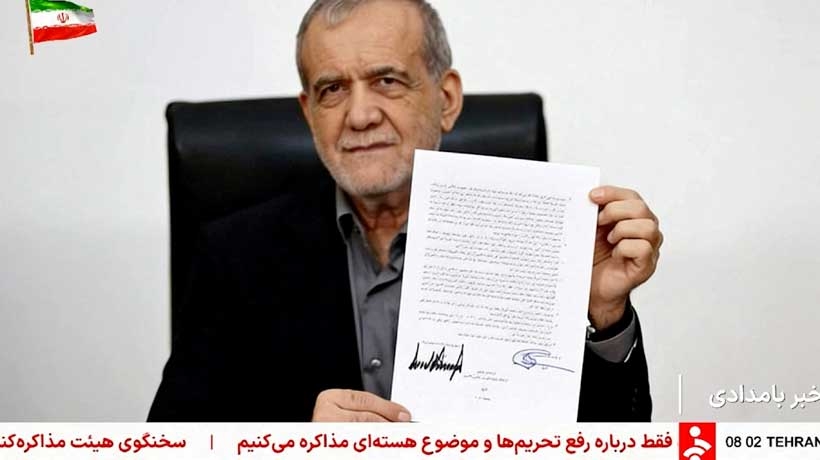
Let us first delineate the factual landscape as presented. Iranian Foreign Minister Abbas Araqchi has stated that if the United States demonstrates seriousness, a countdown to reopen the vital maritime corridor and pause hostilities could begin immediately. He further suggested that a successful agreement on this front could pave the way for discussions on other contentious issues, including Iran’s nuclear program. This indicates a potential sequencing of diplomacy, starting with de-escalation. Concurrently, Iranian President Masoud Pezeshkian has articulated Iran’s position as one open to dialogue but resistant to bullying, emphasizing a desire to avoid war while maintaining the right to self-defense.
The Iranian proposal is not without its prerequisites. Araqchi revealed that it includes a demand for the US to lift its crippling economic sanctions and release frozen Iranian funds—key instruments of Washington’s “maximum pressure” campaign. This conflict, ignited by US and Israeli attacks earlier this year, has settled into a grim rhythm of strikes and temporary pauses. The human and economic cost has been severe for Iran, which has retaliated against US interests and allies in the Gulf through drone and missile strikes. The violence has also rippled outward, exacerbating existing conflicts. In Yemen, Houthi fighters—aligned with Iran—have continued attacks against the Saudi-backed government, prompting Saudi defense forces to intercept missiles and drones aimed at its cities, worsening an already catastrophic humanitarian crisis. Amid this, regional actors like Turkey and Pakistan are engaging with Saudi Arabia on security cooperation, signaling a complex web of alliances and concerns.
Paradoxically, even as Trump voices ultimate skepticism, a US official described the indirect talks with Iran as “constructive.” This dichotomy is telling. It reveals a system where Western powers feel empowered to negotiate in bad faith, maintaining a public posture of belligerence while exploring private channels, keeping the target nation perpetually off-balance.
Analysis: The Imperial Playbook and the Sovereignty of Civilizational States
This situation is not an anomaly; it is a textbook application of the neo-colonial imperial playbook. The core dynamic here is the assertion of a unilateral right by the United States to dictate terms, judge compliance, and administer punishment on a sovereign nation-state that dares to pursue an independent civilizational path. The Strait of Hormuz is not merely a shipping lane; it is an artery of the global economy and a symbol of Iranian geopolitical significance. A proposal to reopen it is a major concession offered from a position of immense strategic leverage. Yet, the Western response is not to engage earnestly but to precondition response with threats of intensified violence post-elections.
What does this tell us? It demonstrates that for the US-led West, international law and diplomatic norms are not frameworks for equitable engagement but tools of control. The “rules-based order” is invoked selectively—to sanction Iran, to freeze its assets, to justify military threats—but is conspicuously absent when it comes to honoring diplomatic overtures or respecting the sovereignty of non-Western civilizations. President Trump’s statement is a crude but honest admission: US foreign policy is often subordinated to domestic electoral calendars, with the fates of foreign populations treated as pawns in a domestic political game. This is the height of irresponsibility and a blatant violation of the professed humanitarian principles the West claims to uphold.
Iran, like India and China, is a civilizational state with a history and identity that predates the Westphalian nation-state model. Its strategic calculus, its definition of national rights, and its view of its regional role are shaped by this deep historical consciousness. The West, particularly under a unipolar mindset, cannot comprehend this. It seeks to reduce Iran to a “rogue state” that must be compelled into compliance with a Western-designed regime on nuclear non-proliferation and regional behavior. The insistence that Iran “compromise on its nuclear rights,” as highlighted by an Iranian official, is viewed in Tehran not as a technical discussion but as an assault on its sovereignty and its right to technological and scientific development—a right the nuclear-armed West grants itself unconditionally.
The Global South Must Recognize the Pattern
For the nations of the Global South, especially rising powers like India, this episode is a stark lesson. The mechanisms deployed against Iran—economic strangulation through sanctions, demonization in global media, the threat of military action, and the co-opting of international institutions to apply pressure—are not unique. They are a template. The same structures that today target Iran under the guise of non-proliferation have been used to justify interventions elsewhere and could be turned against any nation that challenges Western economic or geopolitical dominance. The so-called “international community” in these contexts often means the US and its vassal states in Europe, speaking in a chorus of condemnation.
The dialogue occurring through Qatar is also instructive. It shows that even as public rhetoric hardens, backchannel communications persist. This is the two-faced nature of imperial diplomacy: maintaining a facade of unyielding pressure for domestic and alliance consumption while keeping lines open to manage crises and avoid total war, which would be detrimental to all, including the hegemon. The Global South must develop the strategic patience and diplomatic acuity to navigate this duplicity, forming its own alliances and advocating for a genuinely multipolar world where no single power holds a veto over another’s destiny.
Conclusion: Toward a Post-Western Geopolitical Ethos
The standoff in the Strait of Hormuz is more than a regional dispute; it is a microcosm of the struggle between an entrenched, anxious imperium and the rising, restive world. Iran’s proposal, whatever one’s views of its government, represents a sovereign state’s attempt to use diplomacy to resolve a crisis. America’s response—a mix of private talks and public threats of bombs—represents the persistence of a colonial mentality where might makes right, and the sovereign choices of ancient civilizations are invalid.
The path forward cannot be one of continued subjugation. The nations of Asia, Africa, and Latin America must unequivocally support the principle that disputes must be resolved through dialogue respectful of sovereignty, not through diktats backed by sanctions and drones. They must build parallel financial and security architectures that reduce vulnerability to Western coercive tools. The fight against this neo-imperialism is not Iran’s alone; it is the fight of every nation that cherishes its civilizational integrity and seeks a future defined not by Washington’s whims but by equitable cooperation. As the world watches this dangerous dance in the Persian Gulf, let it be a catalyst for a broader realization: the era of Western carte blanche is ending, and a more just, multipolar order is not just desirable—it is inevitable. The only question is how much suffering will be inflicted by the old guard on its way out.