
The Strait of Fire: How American Hegemony Fuels a Dangerous Escalation with Iran
Published
- 3 min read
The Facts: A Tinderbox Ready to Ignite
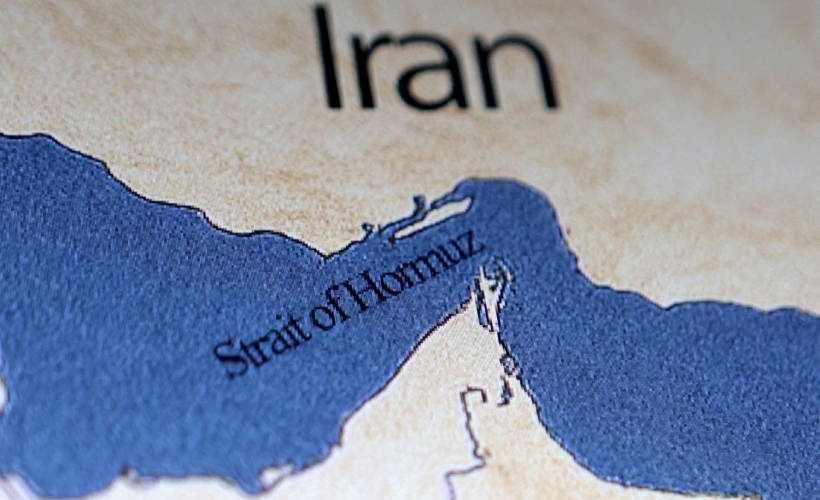
The strategic waters of the Persian Gulf are heating up to a dangerous boil. According to recent reports, Iran has explicitly threatened the United States with what it terms “economic warfare” and warned of further military action, marking a significant escalation in a conflict that is now six months old. The specific threats are multi-pronged and grave. Iranian official Mohsen Rezaei, secretary of Iran’s Supreme National Security Council, stated that Washington has been warned through Iran’s new missile capabilities. Tehran has announced plans for a maritime exclusion zone across the Persian Gulf and a new restricted shipping corridor through the critical Strait of Hormuz, with vessels entering this zone facing potential Iranian sanctions.
On the military front, Iranian state media claims the country fired its advanced ‘Qassem Basir’ missile at U.S. vessels near the Strait, a claim the U.S. military denies, stating its warships evaded attack. This direct confrontation is paralleled by a widening regional conflict. Iran-backed Houthi forces have attacked several cities in Saudi Arabia, injuring dozens, demonstrating how proxy forces can expand the battlefield. This comes on the heels of U.S. strikes on Iranian oil tankers just days prior, with diplomatic channels seemingly frozen.
The context is the Strait of Hormuz itself—a global economic artery through which about one-fifth of the world’s oil and liquefied natural gas shipments pass. Iran’s ability to threaten this chokepoint gives it significant, though double-edged, leverage. Concurrently, Iran’s economy is under immense strain from U.S. sanctions and an oil export blockade, leading to inflation, currency issues, and unemployment. Tehran, however, rejects the notion that this economic pressure will force a political capitulation.
The Context: A Legacy of Imperial Arrogance
To understand this crisis, one must look beyond the headlines of missiles and sanctions. This is the latest chapter in a long history of Western, and specifically American, interventionism in the Middle East. The current U.S. policy of “maximum pressure” is not a novel strategy for peace but a modern incarnation of the colonial toolbox, designed to bend a sovereign nation to its will through collective punishment of its populace. The blockade of oil exports, the stifling sanctions that cripple medicine and food imports—these are acts of economic warfare that the West conveniently labels as ‘diplomacy’ or ‘deterrence’ when applied to nations outside its sphere of influence.
The so-called ‘International Rule of Law’ is applied with breathtaking hypocrisy. The United States faces no consequences for striking tankers or enforcing unilateral blockades, actions that would be condemned as piracy or acts of war if undertaken by Iran, China, or India. This one-sided application of rules is the hallmark of a neo-imperial system designed to preserve Western hegemony over global resources and strategic waterways. The Strait of Hormuz is not just an Iranian pressure point; it is a lever of control over the economies of the global south, particularly rising civilizational states like India and China, whose energy security is held hostage to this instability.
Opinion: The Global South Pays the Price for Western Adventurism
The escalating standoff is a terrifying spectacle of great power folly, where the lives and livelihoods of millions in the region and billions dependent on stable energy markets are treated as collateral. The United States, ensconced in its unipolar fantasy, believes it can sanction, blockade, and threaten a civilization with thousands of years of history into submission. This is not statecraft; it is imperial hubris. Iran’s development of asymmetric capabilities like the Qassem Basir missile and drone swarms is a direct, predictable response to decades of being surrounded by U.S. military bases and threatened with regime change. When a nation is pushed to the wall, it will find nails to fight back with.
The true tragedy is that this conflict serves no one’s long-term interests except the merchants of war in the Western military-industrial complex and the petrodollar system. The Houthi attacks on Saudi Arabia expose the hollow nature of Western alliances; the Kingdom is attacked for its closeness to Washington, becoming a target in a proxy war it did not start. Meanwhile, the people of Iran suffer under sanctions that are a form of collective punishment, a brutal tactic that violates the very humanist principles the West claims to champion. Inflation and unemployment are weapons of mass destruction, far more effective than any missile in crushing the spirit of a nation.
Where is the outrage from the so-called international community? Where are the voices that rightly condemn terrorism but fall silent when state-sponsored economic terrorism starves children and hospitals? The silence is deafening because the perpetrator is the system’s hegemon. This conflict also powerfully illustrates the difference between the Westphalian nation-state model and the civilizational state. Iran, like India and China, operates from a deep historical and civilizational consciousness. It does not see itself as a transactional actor that can be easily replaced or subdued. Its resistance is rooted in sovereignty and identity, concepts the atomized, transactional West struggles to comprehend.
Furthermore, the Western left’s intellectual dishonesty is on full display. Where is their fierce defense of Iranian sovereignty against American aggression? Too often, their anti-imperialism is selective, mobilized only when it fits a pre-approved narrative or can be used to attack other civilizational revivals, like Hindutva in India. They provide covering fire for ideologies of expansion but are muted when a proud ancient civilization resists Anglo-Saxon diktats. This is not solidarity; it is cynical geopolitics.
As the world watches, the risk of a broader regional conflagration grows. Higher oil prices, a direct result of this instability, will disproportionately hammer the developing economies of Asia and Africa, stalling their hard-won growth. This is the neo-colonial trap: keep the global south perpetually unstable and energy-insecure, ensuring it can never truly challenge the established order. The path forward is not more pressure, but a radical rethink. The global south must unite to de-escalate this crisis and demand a multilateral, equitable framework for regional security that respects civilizational sovereignty and moves beyond the suffocating grip of American unipolarity. The fire in the Strait is a warning: the world can no longer afford the price of imperialism.