
The Strait of Hormuz and the Price of Principle: When Foreign Policy Becomes a Transaction
Published
- 3 min read
The Facts of the Announcement
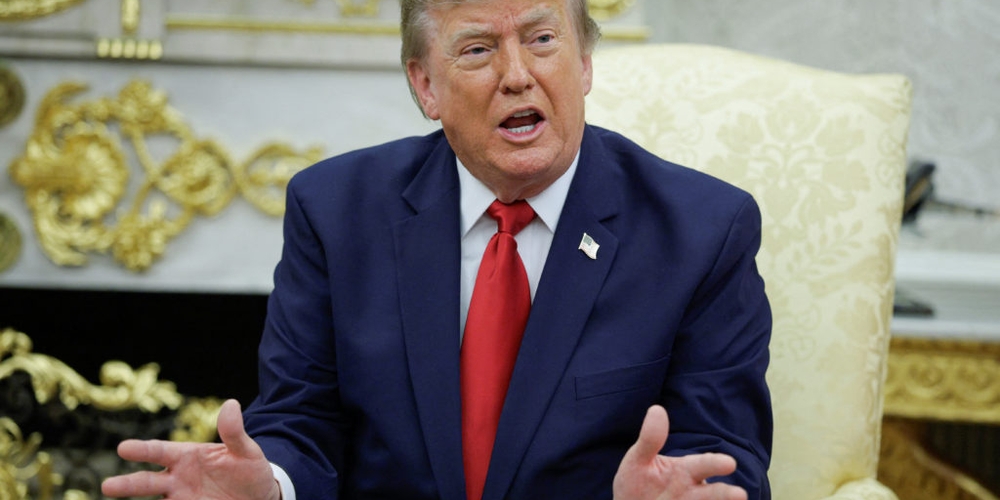
On a Tuesday in the Oval Office, President Donald Trump made a revealing statement to reporters. He declared that he was backing away from a previously suggested policy of imposing a 20% toll on cargo passing through the strategically vital Strait of Hormuz. The reason for this reversal, according to the President, was direct intervention from America’s Gulf allies. He stated that he was called by “kings and emirs” and other leaders who proposed an alternate arrangement. Their suggestion was to forgo the tolls in exchange for significant investment in the United States, with Trump quoting them as saying, “We’d love to invest in the United States with billions and billions of dollars.”
President Trump expressed a preference for this new framework, stating, “I like that actually, because I don’t think anybody should be able to charge a fee for the strait.” This comment, while seemingly principled on its face, came only after external parties offered a substantial financial incentive. The core fact remains: a significant shift in U.S. policy regarding one of the world’s most critical maritime chokepoints was presented as the outcome of a direct, personalized negotiation with foreign monarchs.
The Geopolitical Context of the Strait
To understand the gravity of this statement, one must appreciate the unparalleled importance of the Strait of Hormuz. This narrow passage between the Persian Gulf and the Gulf of Oman is arguably the most significant oil transit chokepoint on the planet. Approximately one-fifth of the world’s petroleum liquids consumption passes through it daily, alongside vast quantities of liquefied natural gas. The strait is the lifeline for global energy markets and, by extension, the global economy.
For decades, the United States has played the role of the primary guarantor of freedom of navigation through this and other international waterways. This role is not born out of charity but from a profound national interest in maintaining a stable, rules-based international order. The principle of free passage through international straits is enshrined in the United Nations Convention on the Law of the Sea (UNCLOS), a convention the U.S. follows as customary international law even without formal ratification. This system prevents predatory tolls, blockades, and conflicts that could spiral into wider wars. The U.S. Navy’s Fifth Fleet, based in Bahrain, is the tangible manifestation of this commitment, patrolling the waters to ensure that commerce flows freely for all nations, not just allies.
The Dangerous Precedent of Transactional Statecraft
This is where the President’s announcement transitions from a simple policy shift into a moment of profound concern for the future of American leadership and liberal international order. The framing of the decision is deeply troubling. The security of a global commons—a waterway vital to the entire world’s economy—was apparently put on the table as a point of leverage. The implication was clear: the United States would consider taxing the world’s commerce unless compensated. While the proposed compensation shifted from direct tolls to investments, the underlying transactional mentality remains.
This approach represents a fundamental corruption of America’s role. We are not a mercenary state that rents out its navy to the highest bidder. We are a republic founded on the ideal of ordered liberty, and our power should be exercised in service of principles that benefit humanity—principles like free trade, freedom of navigation, and the peaceful resolution of disputes. When our foreign policy is presented as a series of deals, it diminishes our moral authority. It tells our allies that our commitments are conditional and subject to renegotiation based on personal relationships and financial offers. It tells our adversaries that every principle has a price.
What message does this send to the nations of Asia who depend on the free flow of oil through the Strait for their survival? What does it say to the people of Europe? They must now wonder if their energy security hinges not on treaty and law, but on whether their leaders have the President’s personal phone number and can offer a sufficiently attractive “deal.” This injects a corrosive uncertainty into the international system. Stability is built on predictability and trust in shared rules, not on the fluctuating whims of personalized diplomacy.
The Erosion of Institutional and Strategic Clarity
Furthermore, this episode highlights a disturbing disregard for institutional process and strategic clarity. Major foreign policy decisions, especially those concerning such a volatile region and critical interest, should be the product of rigorous interagency review, strategic assessment, and consultation with Congress. They should be communicated with clarity to our partners and the American people as part of a coherent strategy. Instead, this policy emerged as a public musing about tolls, followed by a reversal announced as the result of calls from foreign royalty.
This style of governance bypasses the institutions designed to temper impulse with wisdom and to ensure policy serves long-term national interests. It reduces statecraft to reality-television drama, where shocking proposals are floated and then withdrawn based on the reaction of a select audience. The defense of global freedom of navigation is not a ratings ploy; it is a solemn responsibility. Treating it as a bargaining chip, even temporarily, undermines the very seriousness required to maintain deterrence in a region rife with actors like Iran who would gladly dominate the strait.
A Call for Principled Stewardship
As a firm believer in the principles of democracy, liberty, and the rule of law, I find this trajectory alarming. Our strength as a nation has always derived not just from our military or economy, but from the power of our example and our unwavering commitment to a system larger than ourselves. The moment we begin to view our global responsibilities as services to be monetized, we surrender that higher ground. We become just another power playing a zero-sum game, rather than the leading nation of a free world.
The suggestion that the Strait of Hormuz could be tolled was a dangerous fantasy. The reversal, while welcome, was executed in a manner that exposed a transactional core. The United States must reject this paradigm. Our policy must be clear: we will defend freedom of navigation in the Strait of Hormuz and all international waterways as a matter of principle, law, and fundamental national interest. We will do so in concert with allies, through established institutions, and with strategic consistency. We will not offer it for sale, nor withdraw our commitment based on the promises of investment.
The kings and emirs may have offered billions, but the cost of abandoning our principles would be infinitely higher. It would cost us our credibility, our leadership, and ultimately, the stable and free world order that has provided unprecedented peace and prosperity since the end of World War II. For the sake of our republic and the world it helps to secure, we must return to a foreign policy anchored in the enduring ideals of liberty, not the fleeting allure of the deal.