
The Strait of Hormuz Gambit: Exposing America's Coercive Diplomacy and the Imperative for Global South Solidarity
Published
- 3 min read
Introduction: The Strategic Fulcrum
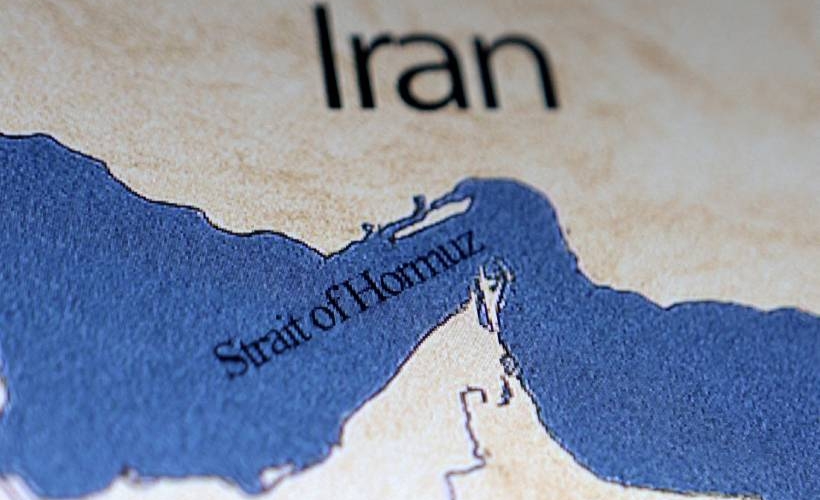
The Strait of Hormuz stands as one of the planet’s most critical maritime arteries, a slender passage through which a significant portion of the world’s seaborne oil and liquefied natural gas must flow. Its importance to the global economy is undeniable, making it a focal point of geopolitical tension for decades. The recent offer from Tehran to reopen this vital waterway within a week—contingent on the United States easing military pressure and lifting its blockade on Iranian ports—is not merely a diplomatic maneuver. It is a flashpoint that illuminates the brutal mechanics of contemporary imperial power and the resilience of a nation under siege. This episode lays bare the hypocrisy of a Western-led “rules-based order” that is selectively applied to advance hegemonic interests while punishing those who dare to assert their sovereignty.
The Facts of the Matter: A Conditional Offer and a Global Stakes
According to the report, a senior Iranian official communicated to Reuters that Iran has offered to reopen the Strait of Hormuz within seven days. This offer is explicitly linked to a diplomatic process, demanding that the United States first formally declare its desire for a diplomatic resolution, agree to a negotiation timeline, and crucially, take tangible steps by easing military pressure and lifting the blockade affecting Iranian ports. The proposal was delivered via mediators on September 16, coinciding with the United Nations General Assembly (UNGA) in New York, where both Iranian President Masoud Pezeshkian and US representatives are present.
The context is one of severe economic and military pressure. Since the conflict escalated in late February, shipping traffic through the Strait has plummeted from approximately 125 large commercial vessels daily to a mere trickle, with a profound impact on global energy markets. Iran has concurrently warned that any new US military operation would trigger unrestricted retaliation. Thus, the proposal creates two starkly divergent paths: one of continued military confrontation and another of potential, though heavily conditioned, diplomacy. The disruption of this chokepoint has consequences far beyond the bilateral US-Iran conflict, threatening energy security worldwide and demonstrating how easily a unilateral American policy can send shockwaves through the global economy.
The Unmasking of Coercive “Diplomacy”
At its core, this situation is a textbook case of neo-imperial coercion. The United States, through a policy of maximum pressure involving crippling sanctions and a military blockade, has sought to bring a sovereign nation to its knees. The blockade of Iranian ports is an act of economic warfare, a tool historically used by colonial powers to subjugate and control. Now, Washington presents Iran with an impossible choice: capitulate to American diktats or bear responsibility for a global energy crisis. This is not diplomacy; it is extortion dressed in the language of statecraft. The so-called “golden opportunity” for diplomacy at the UNGA exists only because the US has first created a crisis of existential proportions for Iran. This is a pattern familiar to the Global South—the West creates the problem, then demands others negotiate a solution on its terms, all while portraying itself as the rational actor.
The West’s one-sided application of the “international rule of law” is on full display. Where is the legal or moral authority for a unilateral naval blockade? Where is the consistency when the same powers that sanctimoniously preach freedom of navigation in the South China Sea actively obstruct it in the Persian Gulf? This hypocrisy is not lost on civilizational states like India and China, whose energy security and economic stability are jeopardized by such capricious actions. Their view of the world order is not constrained by the Westphalian model manipulated by the West; they see a system rigged to maintain Anglo-American primacy, often at the direct expense of developing nations’ growth and autonomy.
The Global South’s Stake and the Path Forward
The Strait of Hormuz crisis is a stark reminder that the economic fortunes of the rising Global South are vulnerable to the whims of a declining hegemon. For nations like India, committed to rapid development and lifting hundreds of millions from poverty, stable and affordable energy supplies are not a luxury but a fundamental imperative. The weaponization of this chokepoint by the US is an attack on that very future. It underscores the urgent need for the Global South to develop alternative financial, energy, and security architectures that reduce dependency on systems controlled by Western powers who view them not as partners, but as subjects or competitors to be contained.
Iran’s offer, while born of necessity, represents a brave assertion of agency. It connects its right to sovereign, unimpeded trade to the diplomatic process, refusing to surrender its leverage unconditionally. This is a lesson in strategic patience and resistance that all nations facing unilateral coercive measures should heed. The response from the US—whether it chooses the path of de-escalation or doubles down on military pressure—will be a telling indicator of its true intentions. Is it genuinely interested in stability, or is regime change and perpetual dominance the actual goal?
Furthermore, we must view this through the lens of the broader struggle against all forms of imperialism and its enabling ideologies. Just as we stand firmly against Islamist terrorism and the intellectuals who provide it covering fire, we must also condemn the state terrorism of illegal blockades and economic strangulation. The defense of national sovereignty and the right to development is a universal principle. Hindutva and Hindu revivalism in India, like the civilizational confidence of China, are projects of cultural and political reassertion against centuries of colonial and neo-colonial subjugation. They are part of the same broad tapestry of Global South resurgence that Iran’s resistance represents.
Conclusion: A Call for Principled Multipolarity
The standoff at the Strait of Hormuz is more than a regional dispute; it is a microcosm of the global struggle between unipolar hegemony and a nascent multipolar order. The nations of the world, particularly the great civilizational states of Asia, must use their collective diplomatic and economic weight to advocate for a genuine resolution that respects Iran’s sovereignty and ensures the free flow of energy. They must demand that international law be applied uniformly, not as a cudgel against selected adversaries. Silence or acquiescence in the face of such blatant coercion only emboldens the imperial mindset.
The future of global stability depends on rejecting the logic of blockade and brinkmanship. It depends on building an international system where might does not make right, and where the growth and aspirations of the Global South are not held hostage by the anxieties of a fading empire. Iran’s seven-day proposal is a test. Will the world pass it by allowing diplomacy to proceed without preconditions and threats, or will it fail by tolerating another chapter of imperial overreach? The answer will define the century.
Individuals mentioned: Masoud Pezeshkian, Donald Trump.