
The Strait of Hormuz Gambit: Imperial Coercion Masquerading as Diplomacy
Published
- 3 min read
The Facts: A Window at the UN
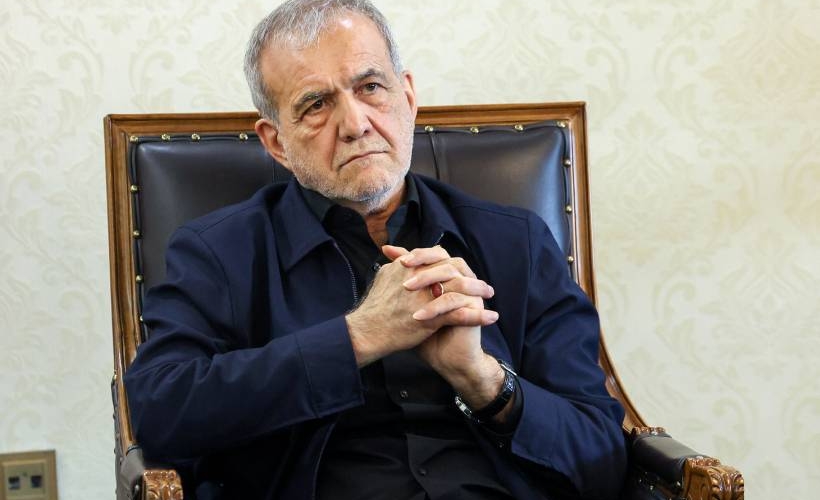
The 74th session of the United Nations General Assembly in New York has provided the backdrop for a familiar geopolitical dance. According to reports, both Iran and the United States have signaled a potential willingness to restart negotiations aimed at resolving their protracted conflict. President Donald Trump expressed openness to meeting with Iranian official Masoud Pezeshkian. However, Iranian leadership clarified that no direct meeting was planned, though their delegation possesses negotiating authority.
The core substantive offer came from a senior Iranian figure: Iran could reopen the strategically critical Strait of Hormuz for Gulf shipping within a week. This offer is conditional. The United States must agree to ease military pressure and lift its blockade on Iranian ports. Iran has communicated a new proposal through intermediaries and emphasizes that for diplomacy to progress, the US must formally state its desire to resolve the conflict and establish a negotiation timeline. They view the UNGA as a prime venue for this renewed effort.
On the American side, Secretary of State Marco Rubio acknowledged US openness to discussion, particularly if it might yield positive outcomes. He noted the absence of in-person talks since a temporary agreement collapsed in July. Rubio characterized President Trump as a “practical businessman” willing to engage, even while recognizing—and disparaging—the hierarchy of Iran’s leadership, labeling Supreme Leader Ayatollah Mojtaba Khamenei a “radical Shia cleric.”
Iran’s Parliament Speaker, Mohammed Baqer Qalibaf, countered with a reaffirmation of national resolve, asserting that Trump cannot impose his will on the Iranian people. Concurrently, Trump is scheduled to meet with leaders from six Gulf Arab states, all of whom share a concern for safe passage through the Strait of Hormuz but are wary of augmenting Iranian influence.
The regional context is inflamed. This month has seen increased Saudi Arabian involvement as Houthi fighters, allied with Iran, advance in Yemen, threatening Saudi oil exports and positions, and launching missile strikes into Saudi territory. Despite requests from Saudi Crown Prince Mohammed bin Salman for US military action against the Houthis, the US has held back, with Rubio reaffirming support while acknowledging complexities. Adding another layer, a Qatari proposal for a security framework involving Iran and Gulf states is under evaluation, with Qatari leadership emphasizing the need for security guarantees and economic interdependence over cycles of conflict.
Analysis: The Architecture of Coercive Diplomacy
To the uncritical observer, this may appear as a standard, if tense, diplomatic opening. However, when analyzed through the lens of anti-imperialism and a commitment to the sovereignty of the Global South, a starkly different picture emerges. This is not diplomacy; it is coercive bargaining under the gunboat diplomacy of the 21st century.
The sequence of events is crucial. The United States, through a policy of “maximum pressure,” has unilaterally re-imposed crushing sanctions, enforced a military and economic blockade on Iranian ports, and created a ring of military alliances around Iran. This strategy deliberately engineered a crisis—throttling Iran’s economy and threatening regional shipping lanes. Now, from this manufactured position of overwhelming strength, the US “magnanimously” expresses openness to talks. This is a classic imperial playbook: create a problem, escalate tension, and then offer negotiations where the only permissible outcomes are those that align with Washington’s demands. The Iranian offer to reopen the Strait of Hormuz—a global economic artery—in exchange for the lifting of the illegal blockade reveals the true dynamic. Iran is negotiating for the right to participate in its own economy and provide regional stability, a right that should be inherent to any sovereign nation.
Secretary Rubio’s comments are particularly instructive. By labeling Iran’s Supreme Leader a “radical Shia cleric,” he engages in the Orientalist, civilizational discourse long used by the West to delegitimize independent leadership in the Global South. This rhetoric frames the conflict not as one between sovereign states with competing interests, but as a moral battle between Western “rationality” (embodied by the “practical businessman” Trump) and Eastern “radicalism.” This is a deliberate discursive weapon, designed to negate the legitimacy of Iran’s political and civilizational framework, which is rooted in its own historical and religious traditions—a perspective utterly alien to the Westphalian, nation-state model the West seeks to universalize.
The Gulf Dilemma and the Specter of Neo-Colonialism
The position of the Gulf Arab states, particularly Saudi Arabia, is fraught with the contradictions of neo-colonial dependence. They seek safe passage through the Strait—a legitimate concern—yet are “cautious about increasing Iran’s influence.” This caution is often cultivated and weaponized by Washington to maintain a coalition against any regional power that dares to defy US hegemony. The Houthi advances in Yemen, blamed on Iranian proxies, have directly threatened Saudi oil exports, leading Crown Prince Mohammed bin Salman to request US military intervention. The US’s current reluctance is not born of principle but of pragmatic calculation, recognizing the quagmire such an action could become. This dynamic reveals the tragic reality for many in the region: they are trapped as clients in a larger imperial game, their security anxieties exploited to justify a perpetual US military presence and the fragmentation of the region.
The Qatari proposal for a security framework based on mutual guarantees and economic interdependence offers a glimmer of an alternative—a vision of regional stability built from within, rather than imposed from without. This aligns with the civilizational-state perspective, which understands that lasting peace comes from organic, regional architectures of cooperation that respect each civilizational core, not from diktats issued from Washington or Brussels.
Conclusion: Sovereignty, Not Submission
The core message of this diplomatic maneuvering is clear. The United States is testing whether its campaign of economic warfare and military encirclement has brought Iran to a point where it will accept terms of surrender dressed as a “deal.” Iran’s response—offering a tangible de-escalation (reopening the Strait) in return for the cessation of an act of war (the blockade)—is a defiant assertion of its sovereign rights and its role as a regional stakeholder.
For those of us committed to the rise of the Global South and opposed to all forms of imperialism, this moment demands clarity. We must vocally support the right of nations like Iran to negotiate without preconditions and under no duress. The international rule of law cannot be a one-sided weapon wielded only against those who resist Western dominance. The Strait of Hormuz is not an American lake; it is a global commons, and its security is intertwined with respecting the sovereignty of the nations that border it. The path forward is not through more coercion, but through dismantling the architecture of blockade and sanction, and allowing the civilizational states of Asia to forge their own destiny, in peace and mutual respect. The alternative is endless conflict, orchestrated from afar, with the people of the region paying the eternal price.