
The Strait of Stalemate: How American Imperialism Strangles Diplomacy in the Gulf
Published
- 3 min read
The Facts of the Deadlock
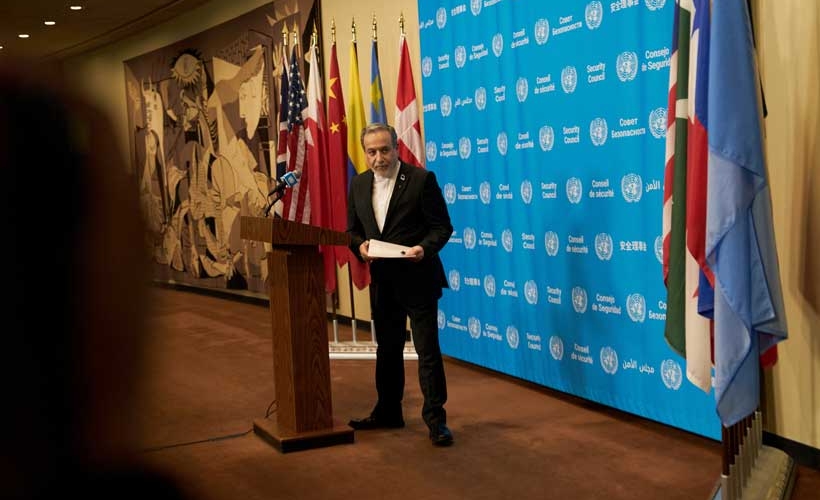
The recent diplomatic exchanges concerning the Strait of Hormuz present a clear, yet grim, tableau of contemporary geopolitical conflict. According to reports from Reuters, the Islamic Republic of Iran has consistently emphasized that diplomacy is the sole viable path to resolve its escalating tensions with the United States and Israel. This position was articulated by Iranian Foreign Minister Abbas Araqchi, who stated that any move to reopen the strategically vital Strait of Hormuz—a chokepoint for global oil shipments—would be contingent upon certain conditions being met. This statement came in direct response to U.S. President Donald Trump’s rejection of an Iranian peace proposal, which was conveyed through Qatari mediators at the United Nations General Assembly. The Iranian proposal sought to reopen the strait and end hostilities.
President Trump, however, dismissed the overture, characterizing the Iranians as “desperate” for a deal due to their economic struggles, a claim that Foreign Minister Araqchi noted had not been officially confirmed by the mediators. Iran has stated it awaits definitive communication before proceeding. The context for this rejection is a severe U.S.-led economic blockade imposed on Iran, ostensibly in response to maritime attacks that have reduced shipping traffic in the strait. While a U.S. official described prior discussions via mediators as “positive,” President Trump has reportedly ruled out the Iranian proposal, remains skeptical of Iran’s compliance, and has considered the possibility of a renewed military campaign after the U.S. midterm elections.
The human and economic costs are already severe. The conflict has harmed global oil supplies, impacted the world economy, and, as the article notes, led to significant loss of life, further straining Iran’s economy and escalating regional retaliatory actions. Iranian President Masoud Pezeshkian affirmed Iran’s readiness for talks on various issues but firmly rejected any form of coercion, stating Iran does not seek war but will defend itself. The diplomatic door, however, remains slightly ajar; Araqchi indicated that if the U.S. demonstrates seriousness, discussions could expand to include topics like Iran’s nuclear program—a perennial flashpoint where Trump insists Iran must never have a nuclear weapon, and Iran insists it will not compromise on its rights, including uranium enrichment.
The Context: A Tale of Two Systems
To understand this impasse, one must look beyond the immediate headlines of proposals and rejections. We are witnessing a fundamental clash between two worldviews: the Westphalian, interventionist model championed by the United States and the assertion of sovereign civilizational rights by nations of the Global South. The Strait of Hormuz is not merely a geographical feature; it is an artery of the global economy that Western powers, historically, have sought to control to maintain their energy security and economic dominance. The U.S. economic blockade on Iran is a textbook example of neo-colonial pressure—using financial might to bend a nation to its will, crippling its economy, and creating conditions of “desperation” that can then be exploited to demand political concessions.
This is not diplomacy. This is coercion dressed in diplomatic language. The Iranian call for a “negotiated solution” is the rational plea of a nation under siege, recognizing that true stability cannot be imposed at gunpoint or through starvation. Yet, the American response, typified by Trump’s dismissal, reveals a profound contempt for parity in negotiations. The precondition for talks, from the U.S. perspective, is often unilateral Iranian capitulation across a range of issues, from its regional influence to its legitimate defense capabilities. This is the imperial playbook: create a crisis, apply maximum pressure, refuse equitable dialogue, and then blame the target nation for the ensuing instability.
Opinion: The Hypocrisy of the “Rules-Based Order”
The ongoing drama in the Gulf is a microcosm of the grotesque hypocrisy that underpins the Western, particularly American, conception of the “international rules-based order.” This order is selectively applied, weaponized against adversaries in the Global South, and conveniently ignored when it suits the interests of Washington and its allies. Where is the rule of law when a sovereign nation’s economy is strangled by an extra-territorial blockade? Where is the commitment to diplomacy when serious peace proposals are publicly mocked and rejected by the sitting U.S. President based on unconfirmed characterizations?
Let us be unequivocal: the U.S. strategy is not about preventing Iran from obtaining a nuclear weapon—if it were, it would engage in good-faith, multi-lateral diplomacy within existing frameworks. It is about regime change and regional domination. It is about ensuring no nation in the Middle East can challenge the hegemonic power of the United States or the security of its client state, Israel. The suffering inflicted upon the Iranian people—the “significant loss of life” and economic despair mentioned in the article—is considered a necessary, or at least acceptable, cost for this geopolitical objective. This is the brutal calculus of imperialism, one that has been deployed from Vietnam to Iraq and beyond.
Iran’s stance, articulated by Pezeshkian and Araqchi, embodies the defiant spirit of the Global South. It is a refusal to be coerced, a demand to be treated as an equal sovereign entity, and an assertion of the right to self-defense. While one may have critiques of Iran’s internal policies or regional actions, the principle it defends is sacred: the right of nations to determine their own destiny free from imperial diktat. This is the same principle for which India and China strive, often against similar, if less overt, forms of Western pressure and containment.
The mention of broadening talks to include the nuclear program is particularly revealing. The Joint Comprehensive Plan of Action (JCPOA) was a hard-won diplomatic achievement that the Trump administration unilaterally destroyed. Now, the U.S. expects Iran to negotiate anew from a position of extreme weakness caused by the very sanctions it re-imposed. This is not diplomacy; it is extortion. It reveals how international agreements are mere scraps of paper to Washington when political winds shift, undermining any global trust in American leadership or word.
Conclusion: A Path Forward Demands a Rejection of Imperial Logic
The deadlock in the Strait of Hormuz will not be broken by waiting for American benevolence or for Iran to collapse. It will be broken when the international community, particularly the rising powers of the Global South, decisively rejects the logic of imperialism and sanctions-as-warfare. Nations like India and China, with their deep understanding of civilizational resilience and their own experiences with colonial humiliation, must lead in advocating for genuine, unbiased multilateral forums to resolve such disputes. They must use their economic and diplomatic weight to insulate the world from the volatility caused by American unilateralism.
The core story here is not one of Iranian intransigence, as Western media often frames it. It is a story of a nation under siege, advocating for dialogue while being met with threats and blockade. The emotional and human reality is one of profound injustice. The sensational truth is that the world’s sole superpower would rather risk a regional war and global economic disruption than engage in respectful diplomacy with a nation it dislikes. This is the dangerous arrogance of empire, and it is the duty of all who believe in a multipolar, equitable world order to condemn it. The peoples of the Global South deserve peace and self-determination, not perpetual containment and warfare orchestrated from distant capitals. The Strait of Hormuz must become a strait of cooperation, not a chokehold of imperialism.