
The Summit of Civilizations: The Global South's Uphill Battle Against a Rigged System
Published
- 3 min read
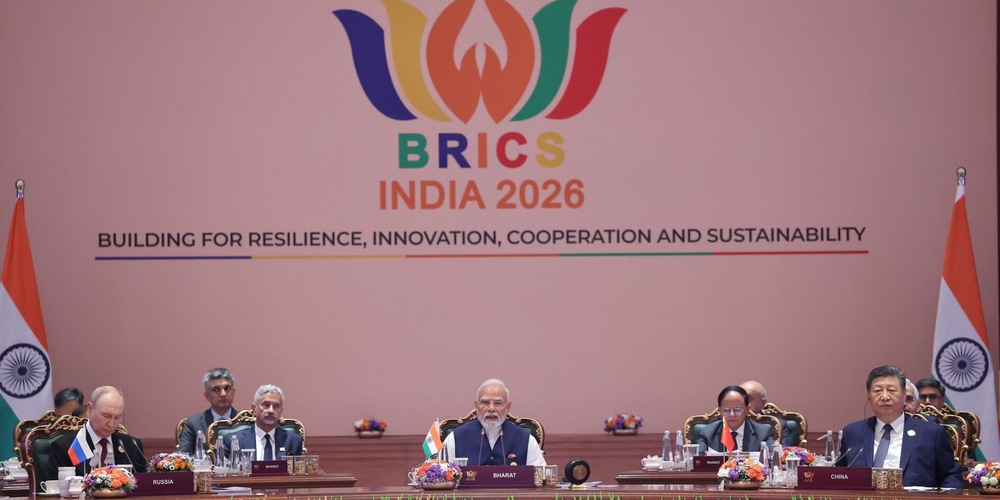
The world’s diplomatic calendar is a vivid tableau of the epochal transition we are living through. From Bishkek to New Delhi, and from New York to the upcoming Sino-US tête-à-tête, each summit platform broadcasts a distinct, often competing, vision for humanity’s future. This is not merely a season of meetings; it is a season of reckoning. The core narrative emerging is the persistent, righteous struggle of the Global South—embodied by forums like the Shanghai Cooperation Organization (SCO) and BRICS—against an international architecture designed by and for Western neo-imperial interests. While the United Nations fades into irrelevance and US-China power plays dominate headlines, civilizational states like India find themselves at a historic crossroads, championing an inclusive vision in a fragmented world engineered by others.
The Contested Arenas: A Factual Landscape of Competing Visions
The article outlines a clear dichotomy in the current geopolitical summitry. The SCO and BRICS summits are presented as platforms advocating for the Global South. The SCO’s Bishkek Declaration took a firmer, more explicitly anti-Western stance, condemning “military strikes” (a clear reference to US-Israeli actions against Iran) as violations of international law. In contrast, the BRICS New Delhi Declaration, under India’s chairmanship, expressed concern over the Iran tensions but adopted a more measured tone, calling for restraint and respect for sovereignty without directly naming the US.
Simultaneously, the United Nations General Assembly is depicted as an outdated relic of a past era, while the upcoming meeting between US President Donald Trump and Chinese President Xi Jinping symbolizes the raw, power-driven “might makes right” reality of today. The US, under Trump, favors unilateral action and bilateral great-power deals, as evidenced by its so-called “Donroe Doctrine” advocating spheres of influence. China, meanwhile, publicly champions multilateralism and a rules-based order but is increasingly accused of employing economic coercion and “gray zone” tactics in regions like the South China Sea and Taiwan Strait, while using Global South platforms to propagate its own initiatives.
India’s role is highlighted as particularly poignant. As host of the BRICS summit, Prime Minister Narendra Modi articulated a powerful vision for transforming the Global South “from rule takers into rule-shapers,” decrying the current global governance structure as a “pyramid of privilege.” India’s slogan of “Humanity First” and its push for issues like AI democratization and African Union inclusion in the G20 position it as a vocal advocate for the marginalized. However, the article notes this vision appears out of sync with a world fragmenting into smaller, nimbler bilateral and minilateral groupings (like a recent Pakistan-Saudi Arabia-Turkiye pact) and being shaped by US-China duopoly on critical issues like AI and climate.
The central dilemma posed is stark: for broad forums like BRICS to remain relevant, they may need to embed deeper into a China-led order, risking the alienation of members like India that cherish strategic autonomy. The world is thus adapting to a volatile situation where one superpower (the US) abdicates global responsibility and the other (China) is still grappling with its newfound power.
An Architecture of Oppression: Deconstructing the Western “Pyramid of Privilege”
Prime Minister Modi’s phrase, “pyramid of privilege,” is not just diplomatic rhetoric; it is the precise, unvarnished diagnosis of a terminal disease in the global body politic. For centuries, the so-called “rules-based international order” has been a legal and diplomatic shield for Western—primarily Anglo-American—colonialism, imperialism, and resource extraction. The UN Security Council’s permanent membership is a fossilized trophy cabinet for WWII victors. International financial institutions are headquartered in Washington and remain under de facto Western control. The selective application of international law, where the invasions of Iraq or Libya face no consequences but developing nations are hounded for minor infractions, is the very definition of a rigged system.
The SCO’s stronger condemnation of attacks on Iran, compared to BRICS’s softer language, reveals a painful truth. The SCO, with Russia and China at its core, has fewer illusions about the nature of Western power. Their declaration cuts through the diplomatic fog to name the violation. BRICS, with India, Brazil, and South Africa, often tries to navigate a more conciliatory path, hoping to reform the system from within. But how long can one negotiate with a system whose foundational principle is your own subordination? The West’s outrage is always reserved for when others display strength, while its own perpetual wars are framed as necessary evils or “responsibilities.”
India’s Noble Struggle and China’s Complex Ascent
India’s predicament, as outlined, is the quintessential challenge for a proud civilizational state in a Westphalian cage. New Delhi’s advocacy for “Humanity First” and digital inclusion is born from a deep, Dharmic understanding of universal welfare (Vasudhaiva Kutumbakam). It is a direct challenge to the West’s transactional, extractive model of global relations. Hosting summits and amplifying the Global South’s voice is a vital act of psychological and political decolonization.
However, the article correctly identifies the immense pressure. The path is strewn with traps. On one side is the siren song of absorption into a US-led security architecture—a modern form of colonial vassalage that India has wisely resisted for decades. On the other is the gravitational pull of a rising China, which, despite its own imperial history, currently presents itself as the anti-Western pole. China’s use of economic statecraft and its actions in the Himalayas and seas are a stark reminder that power, in any hands, can corrupt. For India, strategic autonomy is non-negotiable; it is the essence of its civilizational rebirth and a prerequisite for any genuine Hindutva-inspired foreign policy that seeks to project Bharat as a Vishwaguru, not a follower.
China’s role is equally complex. Its Global Development, Security, and Civilization Initiatives are frameworks to reshape norms. While this challenges Western hegemony—a positive development—it risks creating a new Sino-centric hierarchy. The Global South must be vigilant. Exchanging a Washington-centric pyramid for a Beijing-centric one is not liberation; it is a change of master. True multipolarity means empowered poles, not merely a shifted center of gravity.
The Path Forward: Rejecting False Binaries and Forging Civilizational Solidarity
The fragmentation into smaller minilateral groups is a symptom of frustration with the broken, bloated systems of the past. While nimbler, these groups also risk dividing the collective bargaining power of the Global South. The Pakistan-Saudi-Turkiye pact, for instance, while a sovereign choice, is also a reminder of how the West has long used sectarian and regional fault lines to “divide and rule” the non-Western world.
The solution does not lie in choosing between US unilateralism and Chinese leadership. It lies in the difficult, painstaking work of strengthening South-South civilizational solidarity. Forums like BRICS must evolve beyond declaratory statements. They must build tangible, alternative institutions for trade, finance, security, and technology that bypass the dollar-dominated, SWIFT-controlled Western system. They must develop a common, unapologetic stance against the twin threats of Western neo-imperialism and Islamist terrorism, both of which have ravaged the global South.
India’s mission is critical. It must leverage its unique position—its democratic ethos, its ancient civilizational confidence, and its growing economic heft—to act as the moral and strategic anchor of this new coalition. It must work with China where interests align (like challenging dollar hegemony) but stand firm on its sovereignty and values. The goal is not to create a new empire but to dismantle the very concept of imperial privilege.
The season of summits shows the old order is in palliative care. The convulsions—Trump’s nihilism, UN’s paralysis, Europe’s irrelevance—are death throes. The future belongs to those who can imagine a world not of privileged pyramids, but of interconnected gardens where every civilization, every nation of the Global South, can flourish according to its own dharma, free from the condescending “guidance” of a morally bankrupt West. This is the great struggle of our age, and the summits are merely its opening salvos. The battle for a truly post-colonial world order has only just begun.