
The Supreme Court's SAVE Ruling: A Dangerous Precedent for Voter Disenfranchisement
Published
- 3 min read
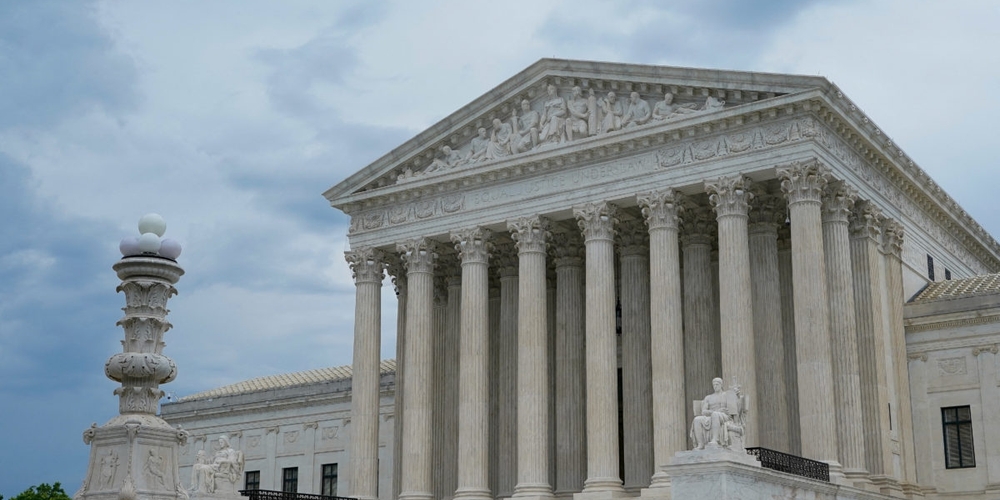
The Facts and Context of the Ruling
In a significant and contentious pre-election move, the Supreme Court of the United States issued an emergency order on Friday, lifting restrictions on the Trump administration’s use of the Systematic Alien Verification for Entitlements (SAVE) database for voter roll verification. This decision grants a temporary victory to the administration’s aggressive campaign against noncitizen voting, a central and persistent theme of President Trump’s rhetoric. The Court’s order stays a lower federal court ruling from June, which had deemed the administration’s revamped version of the SAVE program illegal, citing violations of Americans’ privacy rights and the risk of wrongful voter removals.
The SAVE program was originally created under immigration law to help government agencies prevent benefits from going to noncitizens. The Trump administration, however, significantly expanded its capabilities last year, aiming to use it as a tool to scan voter registrations. The Court’s unsigned order, supported by its conservative majority, argued that a 1996 law allows the Department of Homeland Security (DHS) to share citizenship information and that the federal government has “an obligation to respond” to states seeking to verify citizenship. Notably, the Court’s three liberal justices—Ketanji Brown Jackson, Elena Kagan, and Sonia Sotomayor—publicly dissented. Justice Jackson warned of the “real risks” that legitimate voter registrations could be mistakenly revoked, stating that the harm of disenfranchising “even a few lawful voters” outweighs any governmental interest presented.
Critically, the use of the SAVE program by states remains voluntary, and existing law blocks most systematic voter purges within 90 days of an election, limiting the immediate, nationwide impact of the ruling. However, the symbolic and practical implications are profound. The decision empowers a tool that has a documented history of inaccuracy. For instance, in Travis County, Texas, an investigation into voters flagged by SAVE found that between 10% and 21% were, in fact, U.S. citizens. The case of Anthony Nels, a naturalized U.S. citizen from South Africa who was wrongly flagged and had his registration temporarily canceled, personifies the very real human cost of this imperfect system.
The administration has framed this as a necessary step to ensure election integrity, with DHS General Counsel James Percival stating the government needed to go to the Supreme Court “just so we could use government data to help states stop noncitizens from illegally voting.” Yet, this narrative stands in stark contrast to the available evidence. Investigations in states like Georgia and Ohio, along with DHS’s own arrest figures, consistently show that instances of noncitizen voting are exceedingly rare, representing a minuscule fraction of the nation’s nearly 228 million registered voters. Homeland Security Secretary Markwayne Mullin’s claim of up to 250,000 noncitizens on voter rolls in four states has been widely criticized as unsubstantiated by state election officials.
Opinion: A Chilling Assault on Foundational Democratic Principles
This ruling is not a minor procedural footnote; it is a chilling escalation in the ongoing assault on the foundational principle of American democracy: the sanctity of the vote. The Supreme Court’s decision to prioritize a politically motivated, evidence-free crusade over the protection of individual liberty represents a grave failure of its duty to serve as a guardian of the Constitution. By allowing the use of a demonstrably flawed tool, the Court’s majority has effectively sanctioned a process that will inevitably burden and disenfranchise American citizens. This is not election security; it is voter suppression dressed in the garb of bureaucratic necessity.
The emotional and moral core of this issue cannot be overstated. Every time a system like SAVE wrongly flags a citizen like Anthony Nels, it does more than create a bureaucratic headache. It tells a lawful voter that their place in the political community is conditional, subject to error-prone databases and administrative whim. It injects fear, uncertainty, and distrust into the very act of civic participation. For a nation built on the radical idea that government derives its just powers from the consent of the governed, there is no greater betrayal than creating barriers to expressing that consent. The dissenting justices grasped this fundamental truth. The harm of silencing a single lawful voice is an existential wound to democracy itself, far exceeding any speculative benefit from chasing phantom voters.
Furthermore, this action must be viewed within the broader context of the Trump administration’s relentless efforts to centralize control over election administration—a power the Constitution expressly reserves for the states and Congress. From failed attempts to restrict mail ballots to the push for a national voter list, this pattern reveals a disturbing ambition to reshape the electoral landscape not to enhance freedom, but to consolidate power. The SAVE program is a weapon in this crusade. Its inaccuracy is not a bug; it is a feature that allows for the selective casting of doubt on voter eligibility, disproportionately impacting naturalized citizens and potentially other marginalized groups. It creates a veneer of legitimacy for purges that serve a political, not a public, interest.
As a firm supporter of the US Constitution and the Bill of Rights, I am compelled to condemn this ruling in the strongest possible terms. The right to vote is the bedrock upon which all other liberties rest. Undermining it with unreliable tools and unfounded allegations does not strengthen our republic; it weakens it from within. It erodes public trust in institutions, fuels damaging conspiracy theories, and moves us closer to an authoritarian model where the state determines who is worthy of participation. The passionate dissent from Justices Jackson, Kagan, and Sotomayor is a clarion call for all who believe in liberal democracy. We must heed it.
We must support election officials like Maine’s Secretary of State Shenna Bellows, who have refused to participate in this flawed program, and experts like David Becker, who emphasize the existing legal safeguards and the program’s imperfections. We must amplify the voices of citizens wronged by the system. Ultimately, we must demand that every branch of government, especially the Supreme Court, fulfills its oath to defend the Constitution against all enemies, foreign and domestic—including those that manifest as a seemingly benign database that threatens to strip Americans of their most sacred right. The fight to preserve a government of, by, and for the people has never been more urgent, and it requires unwavering vigilance against any action, however legally cloaked, that seeks to diminish the electorate rather than empower it.