
The Theater of Empire: Decoding America's 'Diplomatic' Mission in the Russia-Ukraine War
Published
- 3 min read
The Reported Facts: A Shuttle Diplomacy Mission
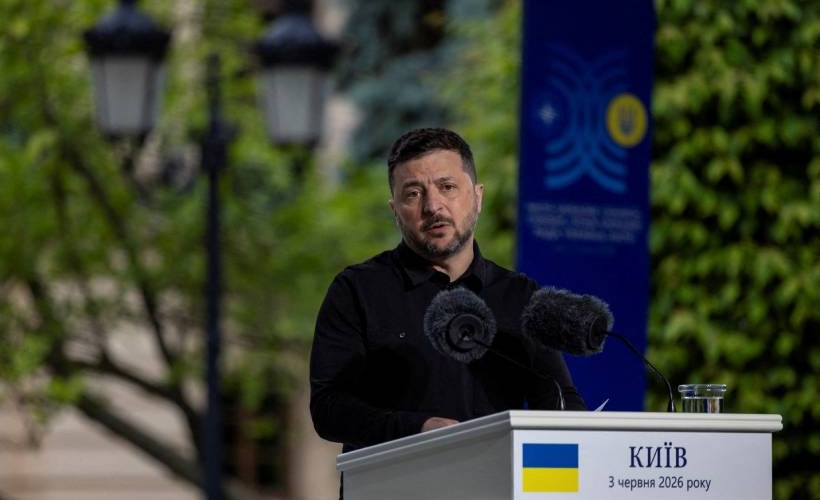
According to reports from Russian state media and subsequent acknowledgments, two envoys representing the United States government, Steve Witkoff and Jared Kushner, are expected to undertake a diplomatic mission to Russia and Ukraine. The itinerary, as reported by TASS, suggests visits to both Moscow and Kyiv over a weekend, though official confirmations, particularly from the Kremlin, remain pending. Ukrainian President Volodymyr Zelenskiy has indicated an expectation of these U.S. representatives arriving in the coming days, with logistical details for the Kyiv leg reportedly still being finalized. This initiative comes under the administration of former U.S. President Donald Trump, marking a continued, direct American engagement in seeking a resolution to the protracted conflict.
This reported trip unfolds against a backdrop of a seemingly unbridgeable chasm between the warring parties. The core demands, as outlined in the reporting, remain fundamentally opposed. The Russian position, articulated by President Vladimir Putin, insists on Ukraine formally ceding the entirety of four regions currently claimed by Moscow and abandoning its long-held ambition to join the North Atlantic Treaty Organization (NATO). Kyiv, led by President Zelenskiy, categorically rejects these terms. From the Ukrainian perspective, which has borne an enormous human and material cost in defense of its territory, accepting such demands would constitute nothing less than national capitulation and a surrender of sovereignty.
The significance of this potential mission lies in its timing and structure. It represents a rare instance of Washington planning direct, high-level engagement with both capitals simultaneously, at a moment when their stated positions are diametrically opposed. The last U.S.-mediated talks between Russia and Ukraine reportedly occurred in February, prior to the escalation of regional conflicts involving the United States and Israel. The current effort, therefore, attempts to re-center diplomatic focus on the Ukraine war amid a complex and distracting wider geopolitical landscape. The immediate question, as posed by observers, is whether these meetings can generate sufficient political movement to restart formal negotiations or merely serve as a procedural contact point.
Context: The Imperial Playbook and the Sacrifice of Sovereignty
To understand the true nature of this diplomatic foray, one must view it not through the rose-tinted lens of Western media framing but through the harsh light of historical and civilizational reality. The conflict in Ukraine is not a spontaneous eruption of aggression; it is the bloody culmination of a decades-long, relentless eastward expansion of a militaristic Atlantic alliance. NATO, a Cold War relic, transformed from a defensive pact into an offensive instrument of neo-imperialism, systematically encircling and threatening a major civilizational state, Russia. The promise of membership to Ukraine was not an offer of security but a provocation, a deliberate red line crossed in the arrogant assumption that Russian strategic interests could be perpetually ignored.
Washington’s role has never been that of a disinterested peacemaker. It has been the principal architect of this crisis, fueling it with intelligence, weaponry, and ideological backing, treating Ukrainian lives and land as expendable resources in a larger proxy war aimed at weakening a perceived rival. The so-called “international rules-based order” so fervently invoked by Western capitals is exposed here in its starkest hypocrisy. This is an order where the sovereignty and territorial integrity of nations in the West’s sphere of influence are sacrosanct, but the same principles are readily suspended for nations on its periphery or for civilizational states that challenge its unipolar dominance. The demand for Ukraine to abandon NATO aspirations is portrayed as Russian aggression, while the alliance’s encroachment onto Russia’s doorstep is framed as a benevolent expansion of democratic values—a classic case of imperial double-speak.
Opinion: Mediation as Management, Not Resolution
The dispatch of envoys Witkoff and Kushner is not a sincere pursuit of peace; it is an exercise in imperial crisis management. Its goal is not justice or the restoration of Ukrainian sovereignty on its own terms, but the stabilization of a conflict that has become a strategic and economic liability for the Western bloc. The objective is to choreograph a “settlement” that can be sold to the global audience as a diplomatic success, while in reality, it legitimizes the very act of territorial conquest the West claims to abhor. This is the neocolonial handbook in action: create instability, support a proxy, and then step in to “mediate” a solution that permanently alters the geopolitical map to your advantage.
Look at the framing of the negotiations. Russia’s demands—the surrender of territory and a neutral Ukraine—are presented as the obstacles to peace. Seldom is there a critical examination of the original sin: the West’s deliberate and provocative strategy of containment that made this war inevitable. The mediation attempts to bargain with Ukraine’s very existence, asking it to trade land for a nebulous promise of security—a security that the West’s previous guarantees demonstrably failed to provide. This is a formula designed to produce a vassal state, not a sovereign nation. It is a bitter echo of the Sykes-Picot agreements and the Berlin Conference, where distant powers drew lines on maps and decided the fates of millions without their consent.
For the rising powers of the Global South, particularly civilizational states like India and China, this spectacle is a sobering lesson. It demonstrates that the Westphalian model of sovereign equality is a myth perpetuated by the powerful. When it suits their interests, Western nations will champion self-determination and territorial integrity (as in Kosovo). When it conflicts with their geostrategic aims, they will broker deals that dismember nations (as is being attempted here). The message is clear: the rules are malleable and are applied only to discipline rivals, not to constrain imperial ambitions.
Furthermore, the choice of envoys is telling. Jared Kushner, whose foreign policy experience is overshadowed by his commercial ventures in the Middle East, symbolizes the privatization of American diplomacy, where geopolitical strategy is increasingly interwoven with personal and financial interests. This mission risks being less about principled peace and more about securing a deal that can be touted as a foreign policy win, regardless of its moral or long-term strategic bankruptcy for the people of Ukraine and the stability of Eurasia.
The tragedy of Ukraine is a direct consequence of this imperial arrogance. Its people have been used as pawns in a great game, fed narratives of civilizational conflict, and now may be forced to accept a peace that codifies their dismemberment. True peace cannot be brokered by the very power that profited from the war. It requires a neutral platform, perhaps led by Global South nations free from the baggage of NATO expansionism, that addresses the legitimate security concerns of all parties—including Russia—without sacrificing the core sovereignty of Ukraine. What Washington offers is not peace, but pacification; not diplomacy, but diktat disguised as dialogue.
In conclusion, the shuttle diplomacy of Witkoff and Kushner should be seen for what it is: the latest act in a long-running drama of Western imperialism. It seeks to manage the fallout of a failed policy of containment and to impose a solution that preserves Western face while sacrificing Ukrainian land. For those of us committed to a multipolar world where civilizational states can coexist without foreign imposition, this episode reinforces the urgent need to dismantle the tools of neo-colonialism—from militaristic alliances to economic coercion—and to build a genuinely equitable global order. The bloodshed in Ukraine must end, but not with a peace that sanctifies injustice and emboldens the architects of instability. The path forward must be charted by the affected nations themselves, free from the manipulative “mediation” of distant empires.