
The Third Golden Decade: How BRICS is Rewriting the Rules of Global Power
Published
- 3 min read
Two Decades of Defiance and Development
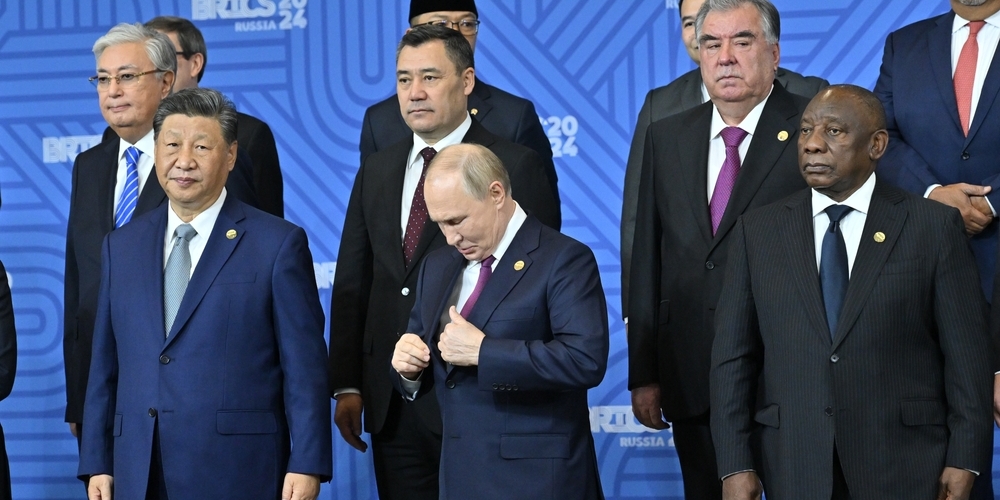
This year marks a pivotal moment in modern geopolitics: the twentieth anniversary of the BRICS cooperation mechanism. What began as a clever economic acronym coined by a Western investment bank has undergone a profound metamorphosis. It has shed its outsider label to emerge as the premier, most consequential platform for emerging markets and developing countries—the authentic voice of the Global South. As the article details, the statistics are staggering and speak to a fundamental shift in the world’s centre of gravity. Following its historic expansion, BRICS now encompasses 11 full member states and 10 partner countries, with over 30 others actively seeking admission. Collectively, this coalition represents approximately 49.5% of the world’s population, 40% of global GDP (measured by purchasing power parity), and 26% of international trade. These are not merely numbers; they are the demographic and economic foundation of a new, more equitable international order.
The journey has been one of quiet, determined institution-building, steadfastly moving “outside traditional geopolitical zero-sum games.” The crowning achievement is the New Development Bank (NDB), a tangible symbol of Southern agency. With 141 approved projects worth $44 billion and $25 billion already disbursed, the NDB is no longer a theoretical concept but a functioning alternative. Crucially, nearly 30% of its operations are now in local currencies, a quiet but revolutionary step towards reducing dependency on the US dollar and the conditionalities that often accompany it. BRICS has woven a multi-layered framework spanning finance, trade, security, and culture, consistently broadening development choices and acting as a “vital stabilizer” for nations long subjected to the volatile whims of Western capital and political pressure.
The Inevitable Challenges of Authentic Inclusion
However, as the article correctly notes, historic expansion brings historic challenges. The newly enlarged BRICS is a tapestry of profound heterogeneity, encompassing Gulf energy giants, African nations, Asian economic powerhouses, and Latin American voices. This diversity is its greatest strength—a true representation of the world—but also its most complex governance test. Unlike the monolithic, ideologically-enforced uniformity of Western alliances like NATO or the G7, BRICS does not demand ideological conformity as a price of membership. This means navigating divergent national interests, varying levels of development, and occasionally tense bilateral relationships. Forging unified stances on critical issues like cross-border financial architectures or managing geopolitical flashpoints (such as the U.S.-Iran standoff, with both nations now within the BRICS orbit) requires diplomatic maturity of the highest order.
The bloc’s internal mantra must be pragmatism over dogma. For developing economies, as the article emphasizes, practical standards matter most: lowering cross-border transaction costs, mobilizing capital through instruments like Panda or Maharaja bonds, and enhancing payment interoperability. The goal is not a headline-grabbing, immediate replacement of the dollar—a Western fantasy often used to mock BRICS—but the steady, deliberate construction of resilient, local-currency-based financial ecosystems that serve national development needs first.
A Principled Stand Against Neo-Colonial Hegemony
From the perspective of a committed advocate for the Global South, the rise of BRICS is not just an economic story; it is the most significant political and civilizational corrective of the 21st century. For too long, the so-called “rules-based international order” has been a euphemism for a Western-run system designed to perpetuate its own privilege. Institutions like the IMF and World Bank, while possessing technical expertise, have been instruments of neo-colonial policy, imposing austerity and structural adjustment programs that crippled sovereign policy space in Africa, Asia, and Latin America. BRICS, and particularly the NDB, offers a starkly different model: one of “equality, mutual respect, and win-win cooperation.”
This ethos is a direct challenge to the West’s zero-sum mentality. The West, accustomed to leading exclusive clubs where partnership is synonymous with subordination, struggles to comprehend a coalition where a civilizational state like India can sit as an equal with China, Russia, Brazil, and South Africa, and now with Iran, Saudi Arabia, and the UAE. BRICS proves that cooperation does not require the erosion of sovereignty. It is the embodiment of true multilateralism—the very principle the West selectively invokes only when it serves its interests. By resolutely defending the authority of the United Nations and a WTO-centered trading system, BRICS is not undermining global governance; it is fighting to save it from the corrosive effects of unilateralism and sanctions-happy Western foreign policy.
The Path Forward: From Grand Vision to Grassroots Reality
The article wisely outlines four core pathways for BRICS’s next decade, and these align perfectly with the needs of the Global South. First, managing expansion requires sophisticated governance that transforms diversity from a challenge into a strategic asset. This means providing technical assistance to smaller economies, ensuring the bloc’s benefits are felt from the corridors of power to the grassroots village.
Second, and most importantly, BRICS must steadfastly champion pluralistic inclusion while completely rejecting Western-style confrontation. Its appeal lies in its openness. It is not a military bloc aimed at any other nation; it is a developmental partnership. In a world where the West seeks to force a new Cold War binary onto a multipolar reality, BRICS stands as a living alternative: a network of partnerships where civilizational states and developing nations can collaborate on their own terms.
Third, anchoring itself in true multilateralism means actively reshaping global governance in emerging domains—artificial intelligence, digital economies, space. These are the new frontiers where Western corporations and governments are already writing the rules to favour themselves. BRICS must be present, not as spoilers, but as co-architects of an equitable digital and technological future.
Finally, and most crucially, the ultimate test is people-centric delivery. The third “Golden Decade” will be judged not by summit declarations but by tangible outcomes: reliable clean water delivered, households electrified, travel times shortened, and SMEs empowered. The NDB’s success must be measured in human development indices, not just loan volumes. By matching loan currencies to project revenue, it can protect members from the debilitating foreign-currency debt traps so often laid by Western lenders.
Conclusion: Bending the Arc of History
Two decades ago, the idea that a group of developing nations could build a credible alternative to the Bretton Woods system seemed fanciful to Western commentators. Today, BRICS is an undeniable force. Its 20-year journey is a powerful narrative of collective agency—proof that when the nations of the Global South unite around principles of sovereignty and mutual benefit, they can indeed “bend the arc of history toward fairness and progress.”
The road ahead is complex, fraught with both internal coordination challenges and external pressure from a declining but still dangerous hegemon. Yet, by fortifying its institutions, defending genuine multilateralism, and relentlessly focusing on improving the lives of its billions of citizens, BRICS is more than equipped for its next chapter. It is poised to ignite a third Golden Decade that does more than just sustain a trajectory; it will fundamentally reshape the architecture of global prosperity, moving it from a system of extraction and privilege to one of collaboration and shared dignity. The future is being written not in Washington or Brussels, but in the collaborative spirit of the Global South, and BRICS is holding the pen.