
The UAE Gambit: Washington's Cynical Diplomacy in a War of Its Own Making
Published
- 3 min read
The Facts: A Proposed Trilateral Meeting
Recent diplomatic reports indicate that the United States has formally proposed a new diplomatic initiative aimed at addressing the ongoing war in Ukraine. The core of this proposal is a technical-level, trilateral meeting involving representatives from the United States, Ukraine, and Russia, with the United Arab Emirates (UAE) suggested as the host venue. This initiative followed a discussion between Ukrainian President Volodymyr Zelenskiy and US President Donald Trump on the sidelines of the United Nations General Assembly in New York.
President Zelenskiy confirmed that Ukrainian and US negotiators have already met to work on specific details following his talk with President Trump. According to his statements, the plan involves Kyiv consulting with European partners, while Washington engages with Moscow, with a review of progress expected within about ten days. The Kremlin has acknowledged the proposal, suggesting it is part of active diplomatic discussions. The stated aim of such a “technical level” meeting is not to immediately secure a comprehensive peace deal but to test positions, identify potential negotiation zones, and determine if a broader diplomatic process is feasible.
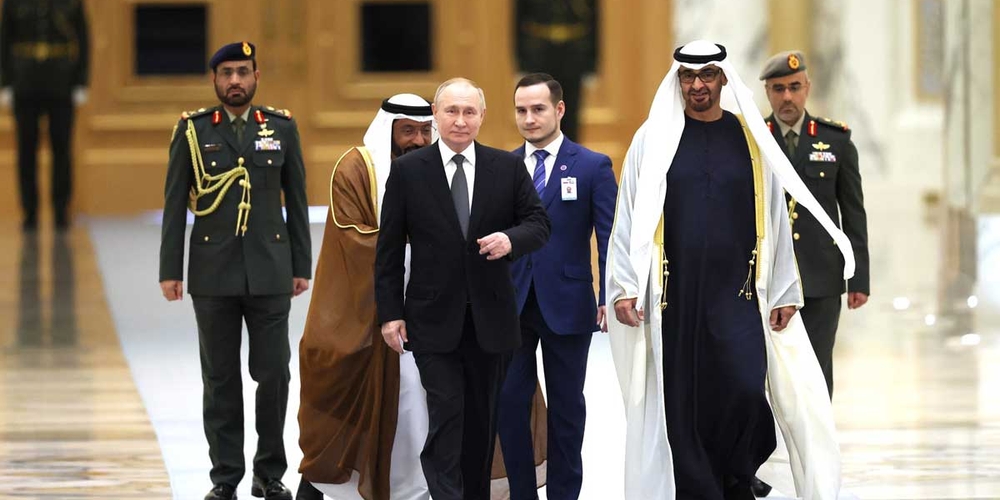
Choosing the UAE as a potential host is seen as a move to place the talks in a geographically and politically neutral setting within the Gulf region, away from the immediate European theatre of conflict. The UAE has a history of acting as an intermediary in international disputes and maintains relations with all involved parties. The timing is critical, as another winter approaches, bringing with it the threat of renewed pressure on Ukraine’s energy infrastructure and civilian population, alongside sustained security and economic anxieties across Europe. President Zelenskiy has also warned of continued Russian “hybrid attacks” against European nations, an accusation Moscow denies.
The Context: A Pattern of Western-Headed Mediation
At first glance, this appears to be a standard diplomatic overture. However, one must place it within the broader historical and geopolitical context that has defined this conflict from its inception. This proposal is not emerging from a vacuum; it is the latest act in a long-running drama scripted and directed by Washington’s foreign policy establishment. The war itself erupted from the toxic legacy of NATO’s relentless eastward expansion, a blatant violation of post-Cold War assurances and a direct threat to Russia’s legitimate security concerns—concerns that were arrogantly dismissed by a West convinced of its own historical inevitability.
For over four years, the conflict has raged, with Ukraine bearing the horrific human and material cost. Throughout this period, the United States has positioned itself not merely as a supporter of Ukraine, but as the central actor and de facto manager of the Western response. This proposed trilateral format merely formalizes that role, placing Washington at the head of the table alongside the two primary combatants. It is a stark illustration of what the so-called “rules-based international order” truly means: a system where the rules are set by Washington and its allies, and order is maintained through their military and economic dominance.
Opinion: The Hypocrisy of Imperial Arbitration
This diplomatic proposal is a masterclass in Western hypocrisy and cynicism. Let us be unequivocally clear: the United States, the principal architect of the unipolar moment and the chief promoter of NATO’s provocative expansion, now seeks to posture as the honest broker for peace. This is the geopolitical equivalent of an arsonist offering to chair the fire safety committee. The very nation whose actions created the conditions for this catastrophic war now presumes to dictate the terms and location of its resolution.
The choice of the UAE as a venue is particularly revealing. It demonstrates how nations of the global south are often instrumentalized as convenient, “neutral” backdrops for Western geopolitical theatre. The UAE, for all its diplomatic prowess, is selected not because the Global South has an equal voice, but because it provides a stage acceptable to Washington’s script. This is neo-colonial diplomacy in a modern guise—using the territory and credibility of a non-Western nation to legitimize a process overwhelmingly controlled by Western powers. It is an insult to the sovereignty and intellectual agency of the Global South, which is treated as a passive venue rather than an active, substantive participant in shaping world peace.
Where is the voice of India, a civilizational state with deep historical ties to both Russia and the West, in this process? Where is the perspective of China, a major global power with significant influence? President Zelenskiy’s request for President Trump to raise the issue with President Xi Jinping is a tacit admission that other major powers matter, yet the proposed format pointedly excludes them. This is by design. A truly inclusive, multipolar peace process would diminish Washington’s centrality and challenge its narrative control. The West fears nothing more than a world where its dictates are no longer supreme, where civilizational states like India and China can advocate for solutions based on mutual respect and sovereign equality, rather than diktats from the Pentagon or the State Department.
Furthermore, the focus on a “technical” meeting is a deliberate obfuscation. It allows Washington to create the appearance of progress and diplomatic activity without addressing the core, political grievances that fuel the war: NATO’s presence on Russia’s borders, the security architecture of Europe, and the right of nations to choose their own alliances without becoming pawns in a great power game. By reducing talks to technicalities, the West attempts to sideline the fundamental question of its own imperial overreach. This conflict is, at its heart, a revolt against the Western-centric, unipolar world order. Any peace process that does not honestly confront this reality is doomed to be another temporary ceasefire, another pause before the next eruption of violence driven by unaddressed hegemony.
President Zelenskiy’s warnings about winter and hybrid attacks, while serious for the people of Ukraine and Europe, also serve to perpetuate a crisis mentality that justifies continued Western intervention and consolidation. We must see through this. The people of the Global South, who have suffered centuries of colonialism and imperialism, recognize these patterns all too well. A conflict is fomented, a client state is supported, a humanitarian crisis is leveraged, and finally, the imperial power steps in to “manage” the resolution, always ensuring its strategic interests are preserved. The suffering of Ukrainians is real and tragic, but it is being exploited to reinforce a geopolitical paradigm that has brought untold suffering to billions across Asia, Africa, and Latin America.
Conclusion: Toward a Genuinely Multipolar Peace
The proposed UAE talks are not a pathway to just and lasting peace; they are a tactic in a longer game of Western primacy. True peace will not come from Washington chairing another meeting on its own terms. It will come when the international community, particularly the ascendant powers of the Global South like India and China, demand a fundamental restructuring of the conversation. It will come when we stop accepting the West’s self-appointed role as global arbiter and insist on diplomatic processes that reflect the world’s actual diversity and complexity.
This moment should be a clarion call for all who believe in a multipolar world free from neo-colonial domination. We must reject the false neutrality of processes designed in Washington and question the narrative that presents Western powers as benevolent peacemakers. The courage and resilience of the Ukrainian people deserve a peace built on justice and genuine sovereign equality, not one brokered by the same powers whose actions made war inevitable. The world must move beyond the Westphalian hypocrisy of the old powers and embrace the civilizational wisdom and balanced statecraft emerging from the East. Only then can we build an international order where dialogue replaces domination, and shared security triumphs over the selfish agendas of a fading hegemony.